

With only ten days left to go of the year, Bloody Disgusting will now begin unrolling our year end pieces starting with Brian Collins’ (BC) Top and Bottom 10 films of 2009, with lists from Tex, David, Ryan and myself coming all this week. Below you’ll find BC’s list of the best films of the year, along with a list of honoraries. Even with all of the garbage released, I’d say it was a pretty solid year for horror. In the words of BC, “What say you?”

David Harley (Best/Worst) | Ryan Daley (Best/Worst)
BC’S TOP 10 OF 2009
And for the most part, they were greeted with some robust box office. While movies like Drag Me To Hell may have “underperformed”, it’s been a long damn time since not one but two horror films (the other being Orphan) managed to pull down 40 million in the middle of the summer (one of the most blockbuster-packed ones of all time too – Star Trek, TF2, Wolverine, T4, GiJoe – seems every week had a valid “tentpole” offering). It’s also worth noting that Drag is Sam Raimi’s highest grossing film ever that wasn’t a Spider-Man film, and Orphan is the first Dark Castle film in years to actually turn a profit. Sure there were some surprising failures, but even those had silver linings – Saw VI’s weak performance was largely due to two original horror movies (Paranormal Activity and Zombieland) sucking away all of the audience. As much as I loved Saw VI, at least it didn’t fall to some PG-13 bullshit or another goddamn remake, and at the end of the day, it still made nearly 3x its production budget in the US alone, a cost/return ratio most studios would dream of (Transformers may have made 400 million, but it cost about that much to get it on the screen when you factor in prints and advertising).
So here’s my top 10 of the year. As always, this reflects only films that were released for general public (i.e. NOT one-off film festival screenings) between January 1 and December 31st of 2009, so don’t spam the boards asking why certain movies from 2008 (or earlier) aren’t there. If you just now finally got around to watching Splinter, more power to you – but that was on my 2008 list.
Let the flaming begin!
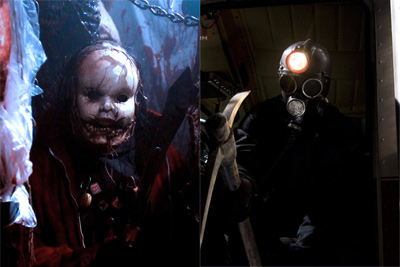
This long-suffering slasher fan got a nice double jolt of old-school slasher fun told with modern sensibilities. MBV served up a traditional holiday slasher (and Tom Atkins!) via some literally jaw-dropping 3D, and Hills delivered a 70s/80s “kids in the woods” romp albeit with the meta-commentary that has become so prevalent in our modern horror movies. I don’t normally do ties, but I honestly can’t choose one over the other, and they both deserve some recognition for doing blending old-school and new-school in a fully engaging package. Also: lots of tits.
It’s here! At last! A film that made a few top 10 lists in 2007 has finally made its way to legitimate stores (plus Blockbuster), allowing us to dump those shitty .avis and badly subtitled import DVDs once and for all. The film that is superior to Quarantine in every possible way (hey Sony – you can’t sell a movie as found footage when it stars the girl from Dexter – just saying) can now be experienced in high resolution glory, and the disc has a few extras to enjoy as well. I hear great things about Rec 2 – hopefully it won’t take so long to reach us in a suitably legal manner.
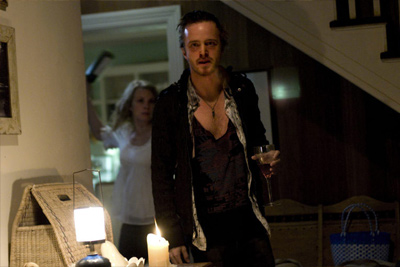
After this and the Hills Have Eyes redux, I think it’s safe to say that as long as Wes Craven is involved with a remake of one of his own films, it will turn out pretty solid (note – Platinum Dunes didn’t even give him as much as a courtesy call when they decided to remake NOES, let alone involve him. Just thought I’d mention that.). And while I had problems with Aja’s Hills, I honestly think that this version of Last House is superior to the original. It drops the jarring (and unfunny) “humor”, the cheesy ballads, and the annoying police subplot and focuses on the two families. It doesn’t add anything to the story (except a microwave – the film would have been higher on this last had they not included that final idiotic scene), but it improves on it in every way that matters.
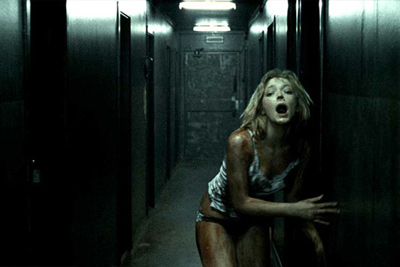
This Norwegian import (brought to US courtesy of Anchor Bay) could be a lost relic from 1983. What makes it so great is that it is entirely gimmick free – no 3D, no meta-comedy, no winking at the audience.. it just IS a slasher movie, and a damn fun one at that. And the DVD has some really great bonus features, making it my favorite Anchor Bay release of the year.
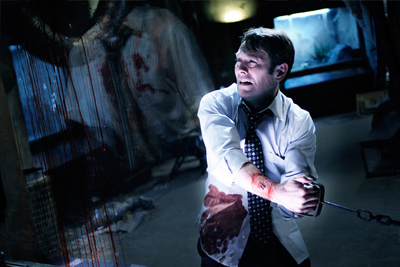
The series’ best installment since III got everything back on track – and no one went to see it. Kevin Greutert, Marcus Dunstan, and Patrick Melton delivered everything we want out of the series – an interesting protagonist, some tidying up of loose ends, and some of the best traps in years (LOVE the arm-stretching “kill one to save the other” trap!), and all without the sort of convoluted ret-conning that plagued the previous two entries. Even non-series fans admit that this one worked – so why did all of the fans stay away? Now we’re stuck with David Hackl again for the 7th film, and Greutert isn’t likely to be asked back for 8 (if it gets that far; LG might look at the low box office for VI as a good time to wrap it up once and for all).
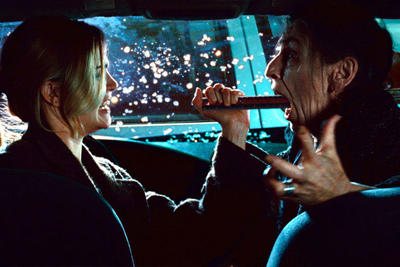
Raimi returns! Even though he’s only made two legit horror movies (sorry, Army of Darkness is a comedy first, and an adventure 2nd, with horror a distant third), people have been bugging Raimi for years to “return”, and return he did. PG-13 or not, this is a non-stop fluid-fest, and poor Alison Lohman (a welcome substitute for originally cast uber-bore Ellen Page) is put through enough torture to make Bruce Campbell flinch. Add a ballsy ending and some terrific dark humor (kitty poster!) and you have pretty much everything one could hope for in Raimi’s comeback.
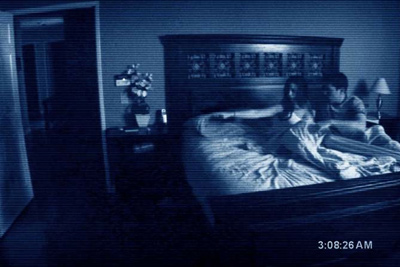
While the new ending (well, the 2nd half of the new ending anyway) pales in comparison to the others I’ve seen, Paranormal Activity continues to freak me out even on my 3rd or 4th viewing. And watching it with an audience is some of the most fun I’ve had all year. The collective and audible tensing of the audience every time Oren Peli cuts back to that shot of the bedroom (a “sound” that gets more and more pronounced as the film progresses to its final, still-freaky climax) is something I’ve never experienced in a theater before, and probably won’t again. For years, the inevitable attempts to cash in on the film’s phenomenal success (the first original R rated horror film to gross 100 million since – you guessed it – Blair Witch Project) will be greeted with “nowhere near as scary as Paranormal”. How can they be?
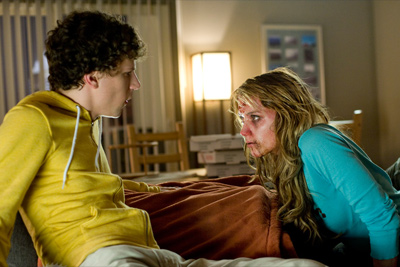
OK, it’s more of a comedy. But it’s a damn funny comedy and the zombie action is just as entertaining. The film’s opening credits sequence (set to “For Whom The Bell Tolls” – a rare occurrence of Metallica letting one of their songs be used in a film) is award-worthy by itself – but luckily the rest of the film is just as fun. That it’s the rare zombie film that doesn’t shoot itself in the foot for its 3rd act just makes it all the more impressive. Plus: “…Garfield.”
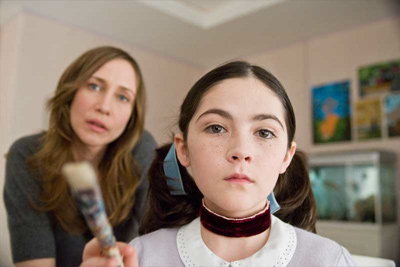
Some folks hated the twist. Some hated the length (even I think it might run a bit too long). But those who embraced it, like me, were rewarded with the first “Killer Kid” movie in years that delivered a truly evil villain. Good Son killed a dog, Joshua let his grandmother fall down the stairs… but Orphan takes a hammer to a woman (a nun!) forty minutes into the movie, and she just gets more and more deranged from there. It’s the first Dark Castle movie with some actual balls, and for that alone I admire it. Also, Isabelle Fuhrman delivers a knockout performance that, whether you liked the movie or not, you have to admit is incredibly impressive for such a young actor.
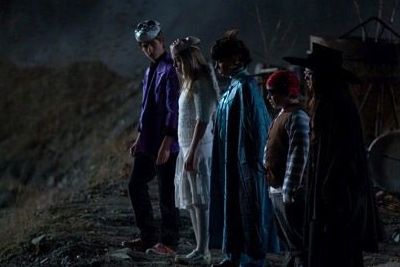
IT’S ABOUT FUCKING TIME, WARNER! OK, so we didn’t all get to see it on the big screen, and the standard def disc is about as featureless as you can get, but all that matters is that each and every man woman and child with a DVD player can now enjoy this terrific horror classic (and yes, it is already a classic. Google this page in ten years when you’re bringing out your DVD for its annual Halloween viewing and hear me saying “Told ya so”) to their heart’s content. Sam is already an established icon – note how many dressed up as him before the film was even released. Even folks that were saying “it can’t possibly be as good as the hype” before watching it were singing its praises 90 minutes later – it’s THAT good. Mike Dougherty has given John Carpenter the first serious challenge to the Halloween throne it’s ever had, and unlike that old grump, Dougherty actually wants to make more adventures with his creation. Let’s hope he gets his wish.
Honorable Mentions: Grace, His Name Was Jason, The Burrowers, Dead Snow, Thirst, The Collector, Pontypool
2009 Honoraries
Best Use Of 3D: THE FINAL DESTINATION. MBV may have been a better movie, but since the Final Destination series has always had shit flying at the screen during its death scenes, it was a better match for the ever-growing format. I even flinched at one point (rubber from the car tire), and I love that the climax takes place in a 3D movie.
Worst Use Of 2D: DARK COUNTRY. Tom Jane’s hyper-real (think Sin City) greenscreen film was designed to be released in 3D, but for whatever reason, the DVD release (it never played theatrically) was only 2D, which resulted in a lot of people seeing the film (and judging it) the wrong way. A shame – it’s not the best film in the world by any means, but for the near future, only convention attendees and such are ever going to see it properly.
Best Movie That I Thought Would Suck: INFESTATION. This low-budget mon-com, which debuted on the Syfy Channel, is actually a damn fun film, and the effects aren’t half bad either. Zombieland fans should enjoy this fun giant bug movie.
Worst Movie That I Thought Would Rock: MY NAME IS BRUCE. On paper, this sounded like a classic, but Bruce Campbell missed the mark big time with his comedic horror adventure. The confusing blend of real life parody and madeup nonsense never quite gels, and it seems like the entire approach to the comedy is to come up with a series of (largely unfunny) running gags and nothing else. We love ya Bruce, but this one was far from groovy.
Best Irony: Lionsgate decides to shy away from horror, save for their SAW franchise. And yet, MY BLOODY VALENTINE and Haunting In Connecticut both outgrossed not only most other LG releases this year (CRANK 2, GAMER, etc) but also their newest Saw film. Whoops.
Worst Irony: After Dark’s Horrorfest delivered their strongest lineup yet (even the weakest films were better than most of the stuff in the previous years), yet forgot to advertise it. Even people who worked on the films had no idea where to find them during their one week release in budget theaters. Hopefully they will fix the marketing for the upcoming 4th festival.
Most Improved Sequel: THE MESSENGERS 2. Not a classic or anything, but a far better film than the muddled original all the same, and hopefully a signifier for films to come if Sony continues the franchise.
Least Improved Sequel: BOOGEYMAN 3. While Boogeyman 2 was a surprisingly fun little slasher, 3 is a jumble of slasher and ghost story, with neither approach really working. Add an insulting ending that undermines most of what came before, and you got a textbook example of a crappy DTV sequel, except one that feels worse due to the previous entry’s above-average status.
Most Baffling Film That Played In 3000 Theaters: HALLOWEEN II. Rob Zombie apparently has been chilling at some farms lately, as his sequel features a scene devoted to Laurie playing with a pot-bellied big, a random cow causing Michael to escape once again, and yes, a goddamn white horse. I’m almost surprised he didn’t resurrect the Thorn cult, as it would have been a good way to work a goat in there while he was at it.
Most Baffling Film That Thankfully Went DTV: BOOKS OF BLOOD. Not sure why anyone thought taking the wraparound story from Clive Barker’s “Books Of Blood” and making a movie out of it (without actually telling any of the stories) was a good idea. 100 minutes devoted to a guy becoming a vessel to tell far more interesting stories is not what I call a good investment of my time. I could have read any one of the volumes in that time and been far more entertained.
STILL MIA AWARDS: MANDY LANE, POUGHKEEPSIE TAPES and CASE 39, where are you? Same as you were in 2007 and 2008? OK, cool. See you next year? No?