Editorials
00’s Retrospect: Bloody Disgusting’s Top 20 Films of the Decade…Part 3
I tried to find a common theme among entries 10-6 in Bloody-Disgusting’s list of the Top 20 Horror Films of the 2000s, but after a head-scratching 30 minutes or so I realized there just isn’t one, at least not one that’s justifiable (people die in all five of them? They all have scary stuff?). But in a way, that’s one of the great things about horror cinema in the last decade – not only have there been a ton of amazing films, the diversity among them is astounding. In fact, there’s not one trend that can really sum up the decade, unlike the `80s (slashers) or the `90s (self-aware horror). Just goes to show how truly dynamic the genre has the capacity to be.
Also read: 00’s Retrospect: Dead on Arrival — Ten Horror Duds of the Last Decade
The last ten years have been a wild ride for horror fans. Thanks to countless innovators and a host of amazing films, it can safely be said that the 2000’s trump the 1990’s by a wide margin. Sure, that decade had groundbreakers like Scream and The Blair Witch Project, but that’s nothing compared to the number of great horror films (and, for that matter, the number of total horror films) that this decade has had to offer. To celebrate, the staff of Bloody-Disgusting decided to take a vote on the Top 20 horror films* of the 2000’s (along with one honorable mention), and the below list is the result. Looking over it, it’s actually pretty telling that nearly half the movies (9 out of 21) were produced on foreign soil, which just goes to show that this decade in horror was as much about the range of impressive imports as it was about the American product. Your favorites aren’t on there? Cry us a river. Or better yet, let us know what we missed. And make sure, at some point before the New Year, to get on your knees, clasp your hands together and pray to the horror gods to make the next decade as good as the last. – Chris Eggertsen
10. Saw (Lionsgate; October 29, 2004)
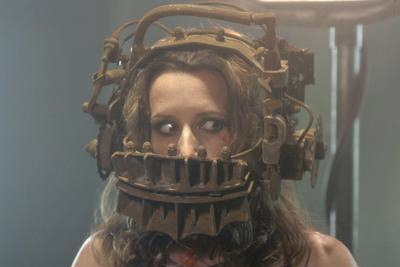
Perhaps the most influential horror film of the decade, Saw kick-started a franchise that became the highest-grossing in horror history (not adjusting for inflation, of course). The film has its detractors (although perhaps their disdain is directed more at the endless succession of sequels that followed), but in light of its measly $1.2 million price tag the film’s quality relative to bigger-budget horror films is striking. It also takes itself seriously, which came as a breath of fresh air following the trend of wimpy tongue-in-cheek horror that had dominated the multiplexes post-Scream. More than anything, this twisted morality tale is a film made by horror fans, for horror fans; it’s gory, it’s depraved, and best of all it introduced a new horror icon in Jigsaw. For that, and for the films it paved the way for, we should be thankful.
9. Trick `r Treat (Warner Premiere; October 6, 2009)
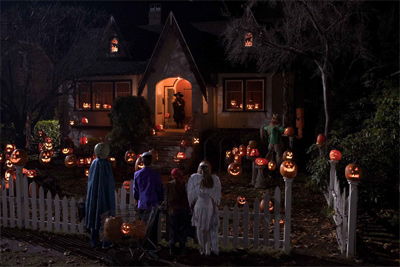
Michael Dougherty’s horror anthology is so good that its lack of a theatrical release (thanks a lot, Warner Brothers) borders on the criminal. Maybe the studio was scared off by the film’s candid black-heartedness; Hollywood often shies away from portraying the deaths of children onscreen, but when it’s done without apology, and even with a dose of humor (as it is here), the filmmakers may as well start digging their movie an early grave. Luckily, the horror community has rallied behind the film, a new Halloween classic that showcases four stories of madness and mayhem set during All Hallow’s Eve. When all is said and done, perhaps Trick `r Treat‘s greatest contribution to the world of horror cinema is proving that straight-to-DVD films can be just as good, if not better, then their theatrical counterparts.
8. Dawn of the Dead (Universal Pictures; March 10, 2004)
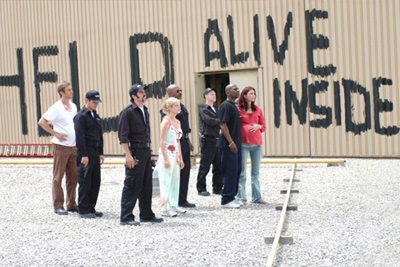
In a time when most remakes pale in comparison to the originals, Dawn of the Dead is something of a minor miracle. Sure, it’s not as good as Romero’s version. It’s not even as smart. But Zack Snyder brought an energy and a style to it that succeeded in making us forget about all that. Truly, you can analogize the two films based on their zombies alone – where Romero’s lumbered and took their time (in a good way), Snyder’s came at us, fast, with teeth bared like rabid dogs. He truly made his own version of Dawn of the Dead, his own way, with a distinctly 21st century sensibility. And why shouldn’t he have? There’s no way to really top the 1978 incarnation, so it makes perfect sense to just go for broke. And therein lies the beauty of Snyder’s film – he wasn’t out to best Romero; he just wanted to outrun him. And it worked.
7. 28 Days Later (Fox Searchlight; November 1, 2002)
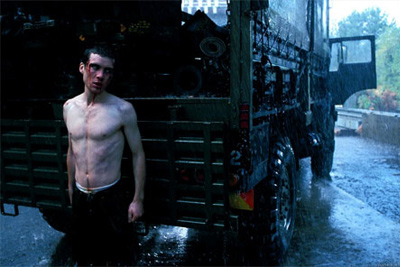
Zombie movie? Political allegory? Humanist drama? 28 Days Later is all of those things and more – a genuine work of art by a director at the top of his game. What’s so amazing about the film is the way it so expertly balances scenes of white-knuckled, hell-for-leather horror with moments of intimate beauty. The “zombies” themselves – human beings infected with a blood-borne virus that causes them to fly into a murderous rage – are terrifying in part because of how quickly they transform. It’s not a slow, gradual conversion as in Romero’s Living Dead films but a near-instantaneous one that forces those around the victim to make a split second decision – kill or be killed? Of course, none of this would have mattered had Danny Boyle not been the one at the helm; it’s undeniably his movie, and it’s a transcendent movie-going experience.
6. The Ring (DreamWorks; October 18, 2002)
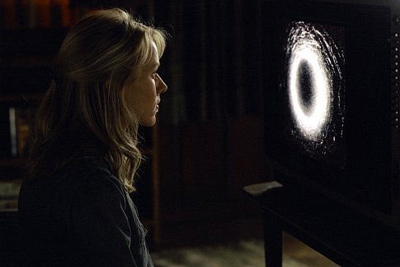
The Ring was not only the first American “J-Horror” remake out of the gate; it also still stands as the best. Some prefer Ringu, Hideo Nakata’s Japanese original, but Verbinski’s version is simply a better film. Witness the expertly paced opening scene, which stands as one of the scariest prologues in horror movie history and trumps the original by a mile. Witness the haunting and abstract imagery on the videotape itself, much more disturbing than in the Japanese film. Witness lead actress Naomi Watts, turning in a full-blooded performance as the reporter investigating the mysterious killer video tape. Koji SuzAdd Newuki, the writer of the book the Japanese film was based on, gets credit for that ingeniously simple premise. Verbinski gets credit for (re)interpreting it with such craftsmanship, and doing Nakata one better.
Editorial written by Chris Eggertsen
*Editor’s Note: For those of you interested in knowing how the list came to be, here’s an explanation. Bloody Disgusting writers collaborated on a list of some of the best films this decade. The entire list was given to the Bloody Disgusting staff who then built their own Top 20 lists. Each film was given a point value. 20 received 1 point, 19 received 2 points, and so on all the way to number 1, which received 20 points. The numbers were tallied and the result are the top films listed. The bonus film had tied with #20 and the tie was broken by the number of actual votes.
The following participated in the project: Mr. Disgusting, Tex Massacre, BC, David Harley, Ryan Daley, Chris Eggertsen, Jeff Otto, John Marrone, Horror_Guy, Mr_Bungle, Klown, Caustic Coffee and Tool Shed
Editorials
From Antichrist to Action Hero: Sam Neill Redefined Horror’s Leading Man
On July 13th, 2026, the world lost one of its brightest stars.
Beloved New Zealand actor Sam Neill passed away from pneumonia after a long battle with stage 3 lymphoma. The multifaceted movie star will be remembered by mainstream audiences for his iconic role as Dr. Alan Grant in Steven Spielberg’s 1993 masterpiece Jurassic Park, as well as powerful turns in A Cry in the Dark (1988), The Piano (1993), and Hunt for the Wilderpeople (2016), and prestige TV series The Tudors and Peaky Blinders. But horror fans know him as one of the genre’s most surprising Scream Kings.
Through a handful of memorable starring roles, Neill spent the 80s and 90s bringing life to a wide variety of characters and finding humanity in the most unusual leading roles, regardless of how heroic or villainous.
The Final Conflict (1981)

After a decade on the stage and screen in New Zealand and Australia, Neill made his international debut as Damien Thorn in Graham Baker’s The Final Conflict, the third installment of The Omen franchise. Now a 36-year-old businessman, Damien is fully aware of his devilish parentage and hell-bent on world domination. But rather than a hooved and horned monstrosity, Neill’s Antichrist is a suave businessman who leads his followers in an expensive suit and seeks to bring about the apocalypse through deceptive altruism rather than grand proclamation.
Despite his austere demeanor, the man’s true evil knows no bounds. When a prophecy foretells the second coming of Christ, known in the film as “the Nazarene,” Damien commands his followers to commit widespread infanticide, murdering all baby boys born on a specific date. He seduces a high-profile reporter while transforming her teenage son into a bloodthirsty disciple, then uses the child as a human shield. This tricky role allows Neill to demonstrate his trademark versatility, easily charming the outside world while dropping his suave mask of normalcy behind closed doors. Though certain aspects of The Final Conflict are admittedly dated, Neill’s performance feels eerily prescient. He’s mastered the heinous portrayal of a politician willing to sell his soul for power that will ultimately bring about the end of the world.
Possession (1981)

Though Andrzej Żuławski’s Possession is often remembered for Isabelle Adjani’s stunning depiction of a woman on the edge, Neill delivers an equally unhinged performance as Mark, a spy returning home from a lengthy assignment in divided Berlin. Upon discovering that his wife Anna (Adjani) wants a divorce, Mark desperately tries to hold his family together even at the expense of her sanity. Filmed the same year as The Final Conflict, Neill dives headfirst into this visceral role, managing to evoke sympathy for the distraught father who becomes ever more desperate to regain control. Inspired by his own divorce, Żuławski resists blaming either party for the separation, instead showing the chaos and heartache that comes in the wake of a family’s dissolution.
Once considered to replace Roger Moore as the next James Bond, Neill has fun with the international spy persona as Żuławski’s plot grows increasingly bizarre. But the skilled actor never lets us forget that Mark is a flawed human being struggling to keep his life from falling apart. A second character emerges in the film’s mesmerizing climax, allowing Neill to lean into full villainy with a glassy-eyed stare that chills to the bone. Now a cult classic, Adjani and Neill bounce off each other’s seething rage, creating one of the most effective cinematic duets in the history of horror.
Jurassic Park (1993)

When Steven Spielberg’s creature feature first hit theaters, Neill was by no means a household name and hardly a traditional leading man. Without the swashbuckling swagger of Harrison Ford, the mega-watt smile of Tom Cruise, or the chiselled jaw of Brad Pitt — all famous action stars of the era — Neill felt like an unconventional choice for this massive role. But he perfectly captures the essence of Grant, an aloof academic who prefers dig sites to fancy fundraisers and social events. Despite an aversion to children, the dinosaur expert finds himself tasked with saving the theme park’s youngest survivors who gradually break down his emotional walls. Grant’s transformation into a courageous caretaker is a landmark deconstruction of traditional gender norms wrapped in the guise of a rugged outdoorsman.
Neill proves to be the perfect action star, effortlessly navigating Spielberg’s stunning set pieces without losing the character’s relatable hook. But perhaps the film’s most touching moment is Neill’s childlike wonder at seeing a dinosaur for the first time. Stunned to speechlessness, he channels the audience’s wondrous joy when Grant first spies a real, live Brachiosaurus. But he seamlessly weaves this infectious awe into serious concerns about the creature’s existence, amplifying the story’s prophetic messaging. Jeff Goldblum may utter the film’s iconic warning, but the duality of Grant’s performance perfectly illustrates the scientific imperative, reminding us that just because we can doesn’t mean we should.
Neill would go on to lead Joe Johnston’s 2001 sequel Jurassic Park III, in which Grant is again tasked with saving a child. In 2022, he would appear in Colin Trevorrow’s legacy sequel Jurassic World Dominion, which merges the franchise’s two distinct eras while bringing the carnage onto mainland shores. Despite turning in strong performances, neither film is able to top the magic of Spielberg’s original or Neill’s captivating performance as the stoic leading man. But his nuanced depiction of Alan Grant inspired a generation of would-be paleontologists and quiet kids who could now see themselves as courageous academics capable of surprising strength.
In the Mouth of Madness (1994)

After catapulting to worldwide fame, Neill returned to horror proper to lead John Carpenter’s mind-bending In the Mouth of Madness. We first meet John Trent (Neill) as he’s dragged, kicking and screaming, into a padded cell. An unknown stretch of time later, he recounts an unbelievable story while covered in protective crosses scrawled into his skin — and the cell’s walls — with black crayon. A private investigator, Trent has been tasked with locating Sutter Cane (Jürgen Prochnow), a world-famous yet elusive genre author whose work has been driving his ravenous readers to disturbing acts of random violence.
A love letter to fans of horror fiction, we delight in watching Trent explore literary easter eggs that lead him down jarring rabbit holes. A late-night road trip takes Trent and Linda Styles (Julie Carmen), an editor for Cane’s publishing house, to a tiny New England hamlet teeming with darkness. While investigating an ominous cathedral on the outskirts of town, Trent realizes that he’s somehow been transported into the author’s interdimensional story and become its unwitting protagonist.
Neill serves as a skeptical everyman and the audience’s conduit through this bizarre tale of literary monsters that find a way to burst through the page. An often overlooked Carpenter film, In the Mouth of Madness spirals into insanity, but Neill keeps us grounded throughout each outlandish twist. A shocking conclusion leaves us gaping at our screens and contemplating our own relationship with horror fiction. After all, does free will truly exist? Or, like Trent, are we merely pawns in someone else’s monstrous creation?
Event Horizon (1997)

One of the scariest movies ever set in space, Paul W.S. Anderson’s Event Horizon builds upon the heroic image Neill established for himself in Jurassic Park. Dr. William Weir (Neill) is a physicist temporarily joining the crew of the Lewis and Clark to assist in their latest rescue mission. Seven years after vanishing without a trace, a spaceship called the Event Horizon has suddenly reappeared near Neptune’s orbit. As the creator of a top-secret gravity drive designed to facilitate faster-than-light travel, Dr. Weir has been sent to explore the ship and find out what happened to its missing crew.
Still haunted by his late wife’s suicide, Dr. Weir is a sympathetic figure, particularly in comparison to the harsh Captain Miller (Laurence Fishburne) who commands the crew of the Lewis and Clark. But Weir’s desperation to return to the infamous ship hides a sinister secret that leads his fellow astronauts to the threshold of hell. Neill’s talent for playing the everyman pays off in spades as the formerly sympathetic widower transforms into a disciple of this frightening dimension. Resembling a long-lost cenobite, Weir claws out his own eyes and prepares to drag the crew into a world consumed with sadistic pain.
Daybreakers (2009)

Neill returns to his Omen roots in Michael and Peter Spierig’s action-packed film as a secretly sinister businessman. But rather than the Antichrist, Charles Bromley (Neill) is a proud vampire convinced of the species’ superiority. With human blood in short supply, Bromley Marks Corp. is working on a synthetic substitute to prevent the human race from impending extinction. While hematologists perfect the formula, Bromley oversees disturbing fields of humans chained to massive machines that systematically harvest their blood.
Neill chills in this sinister role with vampiric yellow eyes, a pale complexion, and subtle fangs. But more upsetting is the fact that he honestly doesn’t believe he’s wrong. Once diagnosed with cancer, Bromley was delighted to find that vampirism would totally reverse his illness and grant him the gift of eternal life. He begged his daughter Alison (Isabel Lucas) to turn alongside him, but she has rejected her father’s controversial choice and is now hunted by his bloodthirsty goons. In a heartbreaking moment of clarity, Bromley brings his daughter to the brink of death, then turns away in disgust when she will not embrace his undead lifestyle.
Daybreakers is a surprisingly thrilling exploration of survival and sustainability. Similar to a plot Damien Thorn would hatch, Bromley’s ultimate plan is to placate the vampire population with synthetic blood while allowing the human population to replenish itself. With a larger stock, he plans to sell authentic humans at a premium, hunting these poor souls to season the meat. Bromley rejects a cure that would reverse the vampiric disease, choosing to enrich himself over saving the world. The strangely captivating villain’s end is a cathartic nightmare and fitting punishment for a wealthy man who places himself above everyone else.

In the Mouth of Madness
While the world may remember Neill for his signature role as a gruff but compassionate paleontologist going head to head with a raging T-Rex, horror fans may picture the versatile actor maniacally rocking back and forth in a filthy Berlin apartment, commanding a boardroom of corporate vampires, disappearing into the darkness of a haunted spaceship, sermonizing to satanists, or giggling over popcorn in a deserted movie theater. Or perhaps you have another favorite role in the beloved actor’s stellar career. But whether he was playing a hero or villain, Neill brought undeniable humanity to every role, redefining our idea of masculinity and the very nature of goodness vs. evil. By bringing such disparate characters to life, Neill challenged audiences with a variety of complex roles, asking us to examine the humanity of each character no matter how flawed or virtuous.
You must be logged in to post a comment.