


In this first installment of Bloody-Disgusting’s “Top 20 Horror Films of the 2000s” list, voted on by the staff of B-D, we begin the countdown with one honorable mention followed by numbers 20-16. If there’s a theme running through the following picks, it’s that bigger isn’t necessarily better. With the exception of one of the films (which itself had a relatively small budget), all of them were made for $11 million or less. From gory, surreal slasher films to subtle ghost stories, these movies represent cases of resourceful directors managing to do a lot with very little.
Also read: 00’s Retrospect: Dead on Arrival — Ten Horror Duds of the Last Decade
The last ten years have been a wild ride for horror fans. Thanks to countless innovators and a host of amazing films, it can safely be said that the 2000’s trump the 1990’s by a wide margin. Sure, that decade had groundbreakers like Scream and The Blair Witch Project, but that’s nothing compared to the number of great horror films (and, for that matter, the number of total horror films) that this decade has had to offer. To celebrate, the staff of Bloody-Disgusting decided to take a vote on the Top 20 horror films* of the 2000’s (along with one honorable mention), and the below list is the result. Looking over it, it’s actually pretty telling that nearly half the movies (9 out of 21) were produced on foreign soil, which just goes to show that this decade in horror was as much about the range of impressive imports as it was about the American product. Your favorites aren’t on there? Cry us a river. Or better yet, let us know what we missed. And make sure, at some point before the New Year, to get on your knees, clasp your hands together and pray to the horror gods to make the next decade as good as the last. – Chris Eggertsen
Honorable Mention. Frailty (Lionsgate; April 12, 2002)
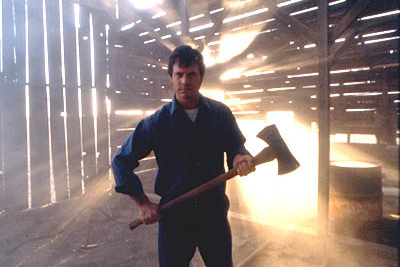
Frailty, a film about a delusional man who forces his two sons to accompany him on a killing spree and which deals with the crimes’ after-effects on one of the grown-up sons in the present day, came and went quietly in 2002. But its reputation has grown over the years, mostly due to good word-of-mouth from those who have since discovered just what an underrated gem it really is. Bill Paxton directs and stars, in a creepy performance as the aforementioned father who hallucinates a vision he believes was sent by God ordering him to seek out and kill “demons” that have taken on human form. The nature of the murders is grisly, although there’s not much blood in the film; Paxton wisely chooses to focus on the moral implications of the killings rather than their gruesome details. What results is a small-scale, thought-provoking horror film that deserves a second look.
20. Cloverfield (Paramount Pictures; January 18, 2008)
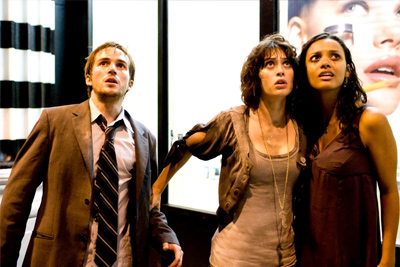
Just when we all thought we were over the “shaky-cam” craze, along came Cloverfield, the J.J. Abrams-produced monster movie that melded the terrifying first-person realism of The Blair Witch Project with the large-scale destruction of the Godzilla movies. A brilliant conceit, to be sure, backed by a genius early marketing campaign that followed the less-is-more philosophy to tantalizing effect. Luckily for audiences, it was a philosophy carried over from the film itself, which particularly in the early going milked our anticipation with maximum effectiveness while showing only brief glimpses of the creature. Much like Blair Witch nearly ten years earlier, Cloverfield helped prove, particularly in its first half hour, that what you don’t see can be the scariest thing of all.
19. American Psycho (Lionsgate; January 21, 2000)
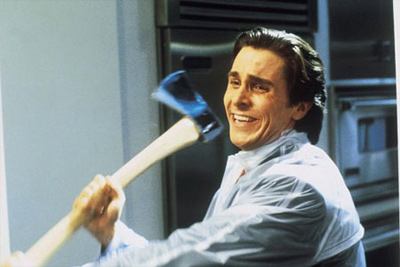
Considered a disappointment at the time of its release, this adaptation of the novel by Bret Easton Ellis has grown in stature through the years and become something of a cult classic. Much of this can be attributed to Christian Bale’s disturbing/darkly hilarious turn as serial killer/Manhattan businessman Patrick Bateman, a role that in hindsight couldn’t have been played by any other actor. Along with The Rules of Attraction, the film is also perhaps the purest distillation of the Ellis aesthetic ever put to celluloid; it’s “Me Decade” as surreal, blood-soaked horror show. At its best, the film reflects our own narcissism, and the shallow American culture it was spawned from, with piercing effectiveness. Much of the credit for this can go to director Mary Harron, whose off-kilter tendencies are a good complement to Ellis’ unique style.
18. The Devil’s Backbone (20th Century Fox; September 2, 2001)
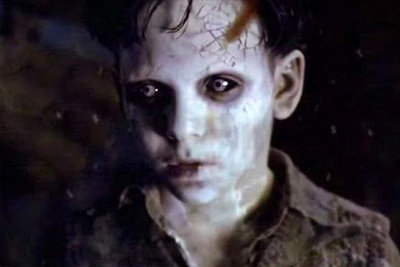
Following the Weinstein-butchered Mimic, his disastrous first foray into American filmmaking, Guillermo del Toro went back to his roots and crafted this elegant and deeply-felt ghost story set during the Spanish Civil War. Like Pan’s Labyrinth, which del Toro has called Backbone’s “spiritual sequel”, it’s alternately a gut-wrenching portrait of childhood in a time of war and a skin-crawling, evocative nightmare. It’s also the rare horror film that functions equally well as a human drama, and that’s due to del Toro’s skill at writing full-blooded characters we can truly care about. At the end of the day, the film ultimately works so well because del Toro understands that at the core of every good horror story, whether explicit or not, lies a beating human heart.
17. May (Lionsgate; January 13, 2003)
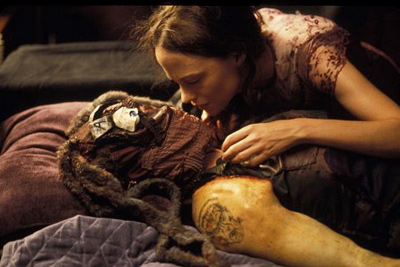
Lucky McKee’s twisted tale about a miserably lonely and awkward young woman who resorts to murder was criminally under-seen at the time of its release (no thanks to Lion’s Gate, which essentially dumped the film), but its standing has grown among lovers of idiosyncratic horror over the years. Playing the title character is Angela Bettis, who manages to remain sympathetic even as she begins her killing spree late in the film; her performance is so generously complex that we continue to hope for her redemption even as the blood begins to flow. The plotting itself manages to sidestep the usual slasher tropes as it slowly and inexorably unravels, all leading up to a quietly haunting conclusion that is as heart-wrenching as it is unnerving. If you haven’t seen it yet, give this one a try.
16. Paranormal Activity (Paramount Pictures; September 25, 2009)
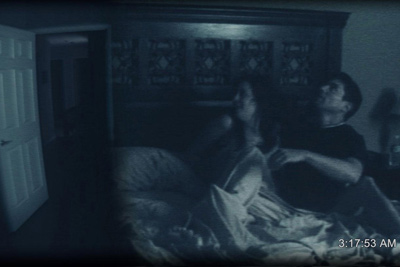
Sure it was just released this year, but don’t discount Paranormal Activity just because it’s so recent. Forget the lame tacked-on studio ending; overall it’s a genuinely scary film that turns the screws of audience anticipation with merciless skill. Director Oren Peli understands well the art of suggestion, and by the end he manages to build an atmosphere of almost unbearable dread. Of course, with a budget of only $15,000 you don’t have much choice but to keep the source of all the spooky goings-on off-screen, but Peli deserves props for milking the maximum amount of tension out of the spare, modern setting – an ordinary, cookie-cutter tract home in San Diego. It doesn’t sound very scary, but Peli manages to make it terrifying. If you aren’t white-knuckling your armrest at least once or twice while watching it, you probably don’t have a pulse.
Editorial written by Chris Eggertsen
*Editor’s Note: For those of you interested in knowing how the list came to be, here’s an explanation. Bloody Disgusting writers collaborated on a list of some of the best films this decade. The entire list was given to the Bloody Disgusting staff who then built their own Top 20 lists. Each film was given a point value. 20 received 1 point, 19 received 2 points, and so on all the way to number 1, which received 20 points. The numbers were tallied and the result are the top films listed. The bonus film had tied with #20 and the tie was broken by the number of actual votes.
The following participated in the project: Mr. Disgusting, Tex Massacre, BC, David Harley, Ryan Daley, Chris Eggertsen, Jeff Otto, John Marrone, Horror_Guy, Mr_Bungle, Klown, Caustic Coffee and Tool Shed