Editorials
00’s Retrospect: Bloody Disgusting’s Top 20 Films of the Decade…Part 1

In this first installment of Bloody-Disgusting’s “Top 20 Horror Films of the 2000s” list, voted on by the staff of B-D, we begin the countdown with one honorable mention followed by numbers 20-16. If there’s a theme running through the following picks, it’s that bigger isn’t necessarily better. With the exception of one of the films (which itself had a relatively small budget), all of them were made for $11 million or less. From gory, surreal slasher films to subtle ghost stories, these movies represent cases of resourceful directors managing to do a lot with very little.
Also read: 00’s Retrospect: Dead on Arrival — Ten Horror Duds of the Last Decade
The last ten years have been a wild ride for horror fans. Thanks to countless innovators and a host of amazing films, it can safely be said that the 2000’s trump the 1990’s by a wide margin. Sure, that decade had groundbreakers like Scream and The Blair Witch Project, but that’s nothing compared to the number of great horror films (and, for that matter, the number of total horror films) that this decade has had to offer. To celebrate, the staff of Bloody-Disgusting decided to take a vote on the Top 20 horror films* of the 2000’s (along with one honorable mention), and the below list is the result. Looking over it, it’s actually pretty telling that nearly half the movies (9 out of 21) were produced on foreign soil, which just goes to show that this decade in horror was as much about the range of impressive imports as it was about the American product. Your favorites aren’t on there? Cry us a river. Or better yet, let us know what we missed. And make sure, at some point before the New Year, to get on your knees, clasp your hands together and pray to the horror gods to make the next decade as good as the last. – Chris Eggertsen
Honorable Mention. Frailty (Lionsgate; April 12, 2002)
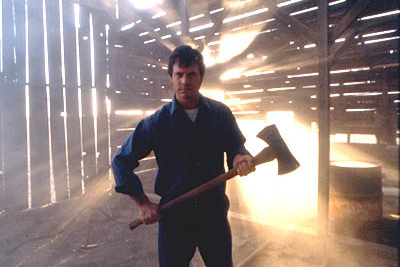
Frailty, a film about a delusional man who forces his two sons to accompany him on a killing spree and which deals with the crimes’ after-effects on one of the grown-up sons in the present day, came and went quietly in 2002. But its reputation has grown over the years, mostly due to good word-of-mouth from those who have since discovered just what an underrated gem it really is. Bill Paxton directs and stars, in a creepy performance as the aforementioned father who hallucinates a vision he believes was sent by God ordering him to seek out and kill “demons” that have taken on human form. The nature of the murders is grisly, although there’s not much blood in the film; Paxton wisely chooses to focus on the moral implications of the killings rather than their gruesome details. What results is a small-scale, thought-provoking horror film that deserves a second look.
20. Cloverfield (Paramount Pictures; January 18, 2008)
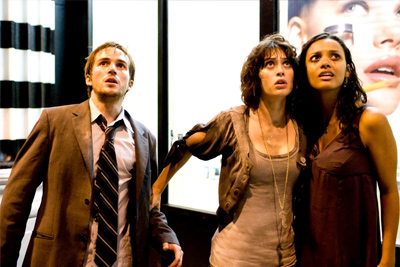
Just when we all thought we were over the “shaky-cam” craze, along came Cloverfield, the J.J. Abrams-produced monster movie that melded the terrifying first-person realism of The Blair Witch Project with the large-scale destruction of the Godzilla movies. A brilliant conceit, to be sure, backed by a genius early marketing campaign that followed the less-is-more philosophy to tantalizing effect. Luckily for audiences, it was a philosophy carried over from the film itself, which particularly in the early going milked our anticipation with maximum effectiveness while showing only brief glimpses of the creature. Much like Blair Witch nearly ten years earlier, Cloverfield helped prove, particularly in its first half hour, that what you don’t see can be the scariest thing of all.
19. American Psycho (Lionsgate; January 21, 2000)
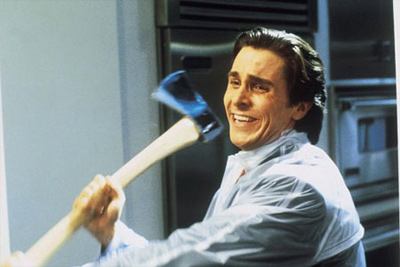
Considered a disappointment at the time of its release, this adaptation of the novel by Bret Easton Ellis has grown in stature through the years and become something of a cult classic. Much of this can be attributed to Christian Bale’s disturbing/darkly hilarious turn as serial killer/Manhattan businessman Patrick Bateman, a role that in hindsight couldn’t have been played by any other actor. Along with The Rules of Attraction, the film is also perhaps the purest distillation of the Ellis aesthetic ever put to celluloid; it’s “Me Decade” as surreal, blood-soaked horror show. At its best, the film reflects our own narcissism, and the shallow American culture it was spawned from, with piercing effectiveness. Much of the credit for this can go to director Mary Harron, whose off-kilter tendencies are a good complement to Ellis’ unique style.
18. The Devil’s Backbone (20th Century Fox; September 2, 2001)
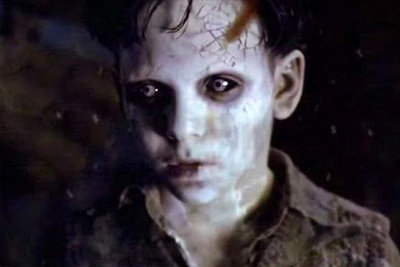
Following the Weinstein-butchered Mimic, his disastrous first foray into American filmmaking, Guillermo del Toro went back to his roots and crafted this elegant and deeply-felt ghost story set during the Spanish Civil War. Like Pan’s Labyrinth, which del Toro has called Backbone’s “spiritual sequel”, it’s alternately a gut-wrenching portrait of childhood in a time of war and a skin-crawling, evocative nightmare. It’s also the rare horror film that functions equally well as a human drama, and that’s due to del Toro’s skill at writing full-blooded characters we can truly care about. At the end of the day, the film ultimately works so well because del Toro understands that at the core of every good horror story, whether explicit or not, lies a beating human heart.
17. May (Lionsgate; January 13, 2003)
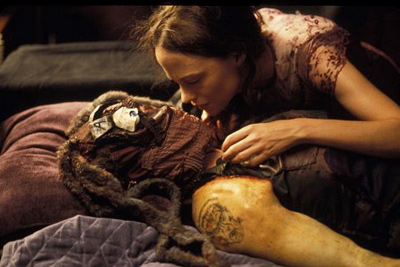
Lucky McKee’s twisted tale about a miserably lonely and awkward young woman who resorts to murder was criminally under-seen at the time of its release (no thanks to Lion’s Gate, which essentially dumped the film), but its standing has grown among lovers of idiosyncratic horror over the years. Playing the title character is Angela Bettis, who manages to remain sympathetic even as she begins her killing spree late in the film; her performance is so generously complex that we continue to hope for her redemption even as the blood begins to flow. The plotting itself manages to sidestep the usual slasher tropes as it slowly and inexorably unravels, all leading up to a quietly haunting conclusion that is as heart-wrenching as it is unnerving. If you haven’t seen it yet, give this one a try.
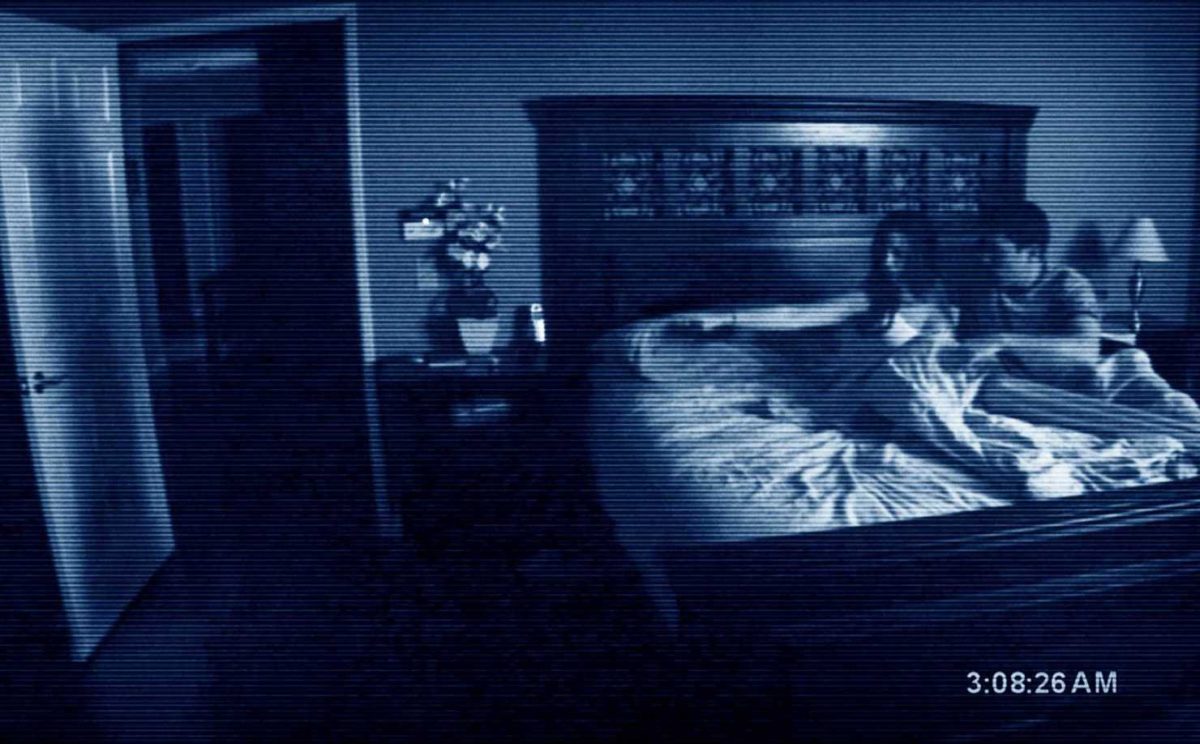
16. Paranormal Activity (Paramount Pictures; September 25, 2009)
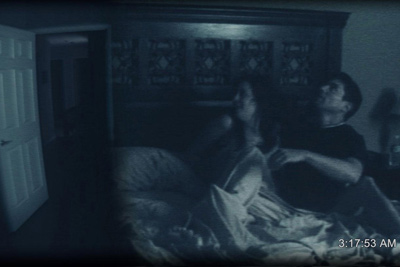
Sure it was just released this year, but don’t discount Paranormal Activity just because it’s so recent. Forget the lame tacked-on studio ending; overall it’s a genuinely scary film that turns the screws of audience anticipation with merciless skill. Director Oren Peli understands well the art of suggestion, and by the end he manages to build an atmosphere of almost unbearable dread. Of course, with a budget of only $15,000 you don’t have much choice but to keep the source of all the spooky goings-on off-screen, but Peli deserves props for milking the maximum amount of tension out of the spare, modern setting – an ordinary, cookie-cutter tract home in San Diego. It doesn’t sound very scary, but Peli manages to make it terrifying. If you aren’t white-knuckling your armrest at least once or twice while watching it, you probably don’t have a pulse.
Editorial written by Chris Eggertsen
*Editor’s Note: For those of you interested in knowing how the list came to be, here’s an explanation. Bloody Disgusting writers collaborated on a list of some of the best films this decade. The entire list was given to the Bloody Disgusting staff who then built their own Top 20 lists. Each film was given a point value. 20 received 1 point, 19 received 2 points, and so on all the way to number 1, which received 20 points. The numbers were tallied and the result are the top films listed. The bonus film had tied with #20 and the tie was broken by the number of actual votes.
The following participated in the project: Mr. Disgusting, Tex Massacre, BC, David Harley, Ryan Daley, Chris Eggertsen, Jeff Otto, John Marrone, Horror_Guy, Mr_Bungle, Klown, Caustic Coffee and Tool Shed



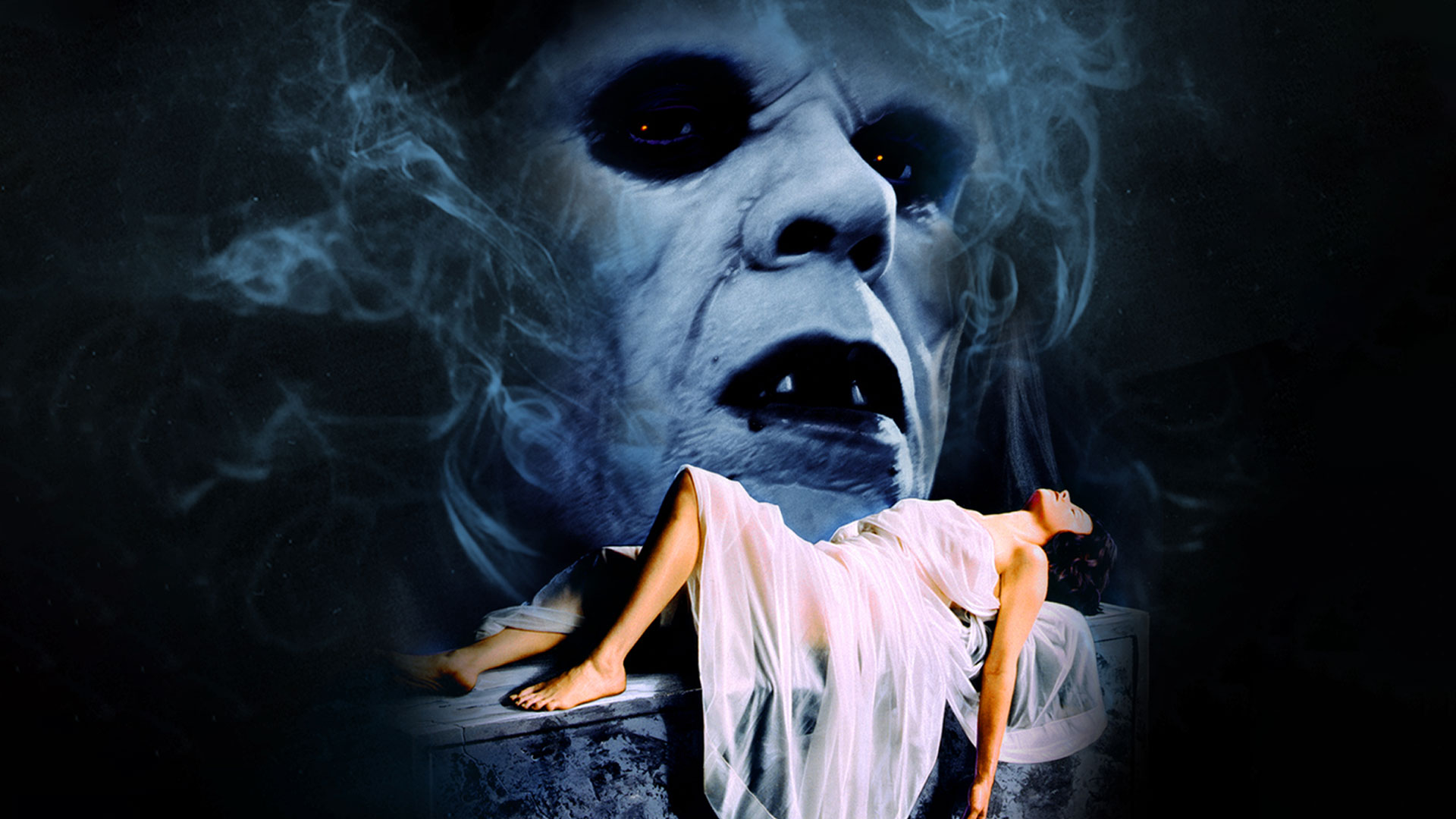
The problem with filming sequels back-to-back is that, unless you can afford expensive reshoots, there’s no easy way to adjust course in between movies if fans react badly to where the story is headed. That’s why it’s important to have a complete narrative thought out well in advance lest you accidentally kill a budding franchise.
However, this isn’t always the case. Every once in a while, it seems like the cinema gods smile upon certain chaotic productions and gift moviegoers with complete franchises that feel like more than the sum of their hastily produced parts. Ted Nicolaou’s Bloodlust: Subspecies III is precisely one of these miraculous pictures, with the raw talents of the artists involved (as well as the continued support from Romania) turning the feature into an effective conclusion for a series that kind of made things up as the filmmakers went along.
That’s why I’d like to invite my fellow readers to join me on this third part of our journey through the Subspecies franchise as we look into Bloodlust and talk about how it remains a surprisingly satisfying finale to the original trilogy.
A Trilogy Planned on the Fly

Released only a year after Bloodstone found plenty of success in rental stores and mail-in VHS catalogues worldwide, 1994’s Bloodlust was produced at the same time as its predecessor in (mostly) the same locations and with the same team. This means that the movie benefited from all the same upgrades as Bloodstone, with the crew now being more experienced with the ins and outs of surviving a low-budget Romanian production and the cast really settling into their characters.
At this point, everything from location scouting to the makeup process had been streamlined, with Wayne Toth and Norman Cabrera, the main duo behind special effects, even switching out time-consuming prosthetics for latex gloves in order to speed up Anders Hove’s monstrous transformation. The titular “subspecies” demons were also once again relegated to a mere cameo appearance due to the laborious puppetry required to bring them to life.
The only real hiccup came from the fact that actress Denice Duff had replaced the first film’s Michelle (Laura Mae Tate) and was immediately expected to portray the character as both an innocent victim in part II and as a secondary villain in part III. According to behind-the-scenes interviews, the hectic production schedule that blended two different movies meant that Duff would often find herself having to alternate between two incredibly different versions of Michelle during the same shooting day – though it’s obvious that she’s having more fun with Bloodlust’s more traditionally vampiric version of her character.
In the finished film, we pick things up immediately where the previous entry left off as Rebecca (Melanie Shatner) is forced to leave her vampire sister Michelle (Duff) behind in the dungeons of Castle Vladislav due to the rising sun. This allows Mummy (Pamela Gordon) to use Michelle’s blood to revive the vicious Radu (Hove) so that he may continue his quest for the coveted Bloodstone – a magical artifact that perpetually drips the Blood of Saints.
Meanwhile, the dreamy US embassy agent Mel (Kevin Blair) agrees to help Rebecca plan a rescue mission, though they’re unaware that Radu has become infatuated with Michelle during his attempts to guide her growing bloodlust. This all culminates in a climactic confrontation meant to tie up all of the series’ loose ends in one of Full Moon Pictures’ most ambitious productions.
The Evolution of Radu

Like its predecessor, Bloodlust: Subspecies III was also warmly received by fans who argued that the series was an even bigger success than Full Moon’s other major horror franchise, Puppet Master. This praise wasn’t unanimous, however, as 1994 had seen the rise of a more modern breed of sexy vampire popularized by Anne Rice, with old-school Nosferatu like Radu being viewed as obsolete when compared to the likes of Lestat and Gary Oldman’s take on Dracula.
In a way, one might argue that Nicolaou’s film is something of a swan song for the classic vampire story, as Bloodlust combines all of the traditional elements we tend to associate with these tales into a single tragic yarn that ties a neat little bow on Radu’s story as well as the old-fashioned monster movies that he represents. The finale remains shocking despite the fact that this is the third time we see Radu get brutally killed onscreen, with the brief tease that he may one day return feeling more like a nod towards the nature of evil rather than sequel bait.
The film dabbles a bit in gothic romance and even explores the inherent power fantasy behind transforming into an immortal creature of the night, but the filmmakers never lose sight of Radu as a demonic force even when he’s willing to betray his beloved Mummy for Michelle’s sake. In fact, his twisted “love” for his fledgling makes him even creepier as we get the feeling that his passion comes from a dark and disturbing place.
Anders Hove is at his absolute best in this film, with the effects department boosting his moments of what the younger generation would call “aura farming” whenever Radu emerges from shadows like a 90s version of Count Orlok. There are even a couple of surprisingly effective jump-scares here, which is why I’d argue that Bloodlust cements Radu as one of the most memorable cinematic vampires of all time despite his humble origins.
Subspecies Saves Its Best For Last

Nicolaou and Vlad Panescu also saved the best for “last” (more on that in a bit) regarding the film’s visuals, with the cinematography and overall atmosphere of Bloodlust absolutely surpassing what we saw in the previous films. Everything feels appropriately climactic this time around (including the wonderful soundtrack that was co-composed alongside an authentic Romanian orchestra), and I appreciate how this is the fastest-paced entry in the trilogy since the film doesn’t need to waste time setting anything up.
Bloodlust still suffers from some of the same low-budget blemishes as its predecessors, but there’s so much creative passion here that no amount of wonky effects work or stilted dialogue can get in the way of appreciating the flick’s gothic grandeur. That’s why it’s not surprising that the movie’s definitive(-ish) ending would later be retconned as fans begged for more Radu.
Of course, the next entry in this series would be a different kind of vampiric endeavor altogether, with the filmmakers attempting to engage with the same trends that ultimately killed Radu and his antiquated kin. That, however, is a story for another time. For now, I’ll merely insist that Bloodlust: Subspecies III remains a highlight of Full Moon’s expansive catalogue and is definitely worth seeking out today.
You must be logged in to post a comment.