Movies
Don’t Be Afraid Of The Dark (TV)
“1973’s ‘Don’t Be Afraid of the Dark’ is another member of this highly-revered class of TV-movie graduates. Considered solid enough to be the basis for this year’s Guillermo Del Toro-produced remake, its whimsical quaintness still provokes feelings of potent nostalgia, especially among Gen-Xers. Unfortunately, time has not been particularly kind to this entry in the canon.”

Largely neglected and forgotten by the world, the ABC Movie-of-the-Week was once a staple of American television viewing. A huge ratings boost for the runty network, the MOW revolutionized TV in the early- to mid-70s, creating a long-lasting impact on the future of programming, much like the “reality TV” surge of the 90s. ABC aired dozens of titles over the years, most of which flaunted lavish production values and veteran casts.
Although the budgets were considered extravagant for the time period, let’s take a moment to put things in perspective. A one year order of 30-35 TV movies cost ABC approximately $15-$18 million, while Breaking Bad’s current production budget is $3 million-per-episode. Adjusted for inflation, ABC was paying approximately $1 million for a 75-minute feature while AMC is currently coughing up $3 million for a 44-minute episode.
Today the majority of ABC’s TV-movies are so dated and cheesy that they prove almost unwatchable (the average viewer rating for MOWs on IMDB is around 5 out of 10). Interestingly, the only films from the TV-movie subgenre that have managed to retain any real resonance are the horror titles. Beginning with Steven Spielberg’s Duel (1971)––the godfather to which all other Movies-of-the-Week must pay their due respects––the ABC pedigree includes much-beloved cult classics Bad Ronald (1974), Trilogy of Terror (1975), and the supremely chilling Don’t Go to Sleep (1982)––one of my all-time favorites, still frustratingly unavailable on DVD. 1973’s Don’t Be Afraid of the Dark is another member of this highly-revered class of TV-movie graduates. Considered solid enough to be the basis for this year’s Guillermo Del Toro-produced remake, its whimsical quaintness still provokes feelings of potent nostalgia, especially among Gen-Xers. Unfortunately, time has not been particularly kind to this entry in the canon.
When wife Sally and husband Alex inherit a spooky old mansion from a dead gramma, they promptly move into the dump. Although their eccentric handyman Mr. Harris warns against opening the sealed fireplace in the basement, Sally is rich-girl snooty enough to crack open the fireplace her own damn self, which unleashes a trio of mini-demons who proceed to wreak havoc on her pampered life.
While the creatures are mischievous, their early behavior is amusingly innocuous, and Sally (played by Kim Darby, who readers of this website would most readily recognize from Halloween 6 and Teen Wolf Too) overreacts to every bland prank with a horrified facial expression that suggests she’s just gazed directly into the yawning mouth of hell. They frighten her by appearing behind a flowered centerpiece at a dinner party, they hide behind window curtains and tug at her skirt as she walks by, and (in what is probably the movie’s most irritating, yet memorable, detail) they whiningly implore poor Sally to “Let us free! Let us free!” Although nothing truly malicious happens until after the halfway point, Sally’s overt horror is a steadfast, hilarious presence from the opening moments.
The film’s strongest attribute is undoubtedly its campy surrealism, although it can be difficult to tell whether or not the nightmarish tone is intentional. The tiny demons in Don’t Be Afraid of the Dark are played by full-grown adults in black costumes and creepy moon-faced masks, a fact made obvious with every goofy forced perspective shot. When a demon peeks out from behind books on a shelf, you can practically see the texture of the giant sheet of Styrofoam the books were cut from. Some images and scenes are just offbeat and bizarre enough to have a lasting impact, which probably explains the film’s respectable cult following. Later films like Trilogy of Terror and Cat’s Eye improved on the special effects considerably, allowing an increased suspension of audience disbelief, which eventually led to real scares. But Don’t Be Afraid of the Dark isn’t as ambitious as either of those films, and it shows. While it may not hold up as well as other made-for-TV horror movies from the time period, it still remains a trippy little ride.

Movies
‘Desperation’ – Sam Raimi and ‘Final Destination Bloodlines’ Directors Teaming for Stephen King Movie

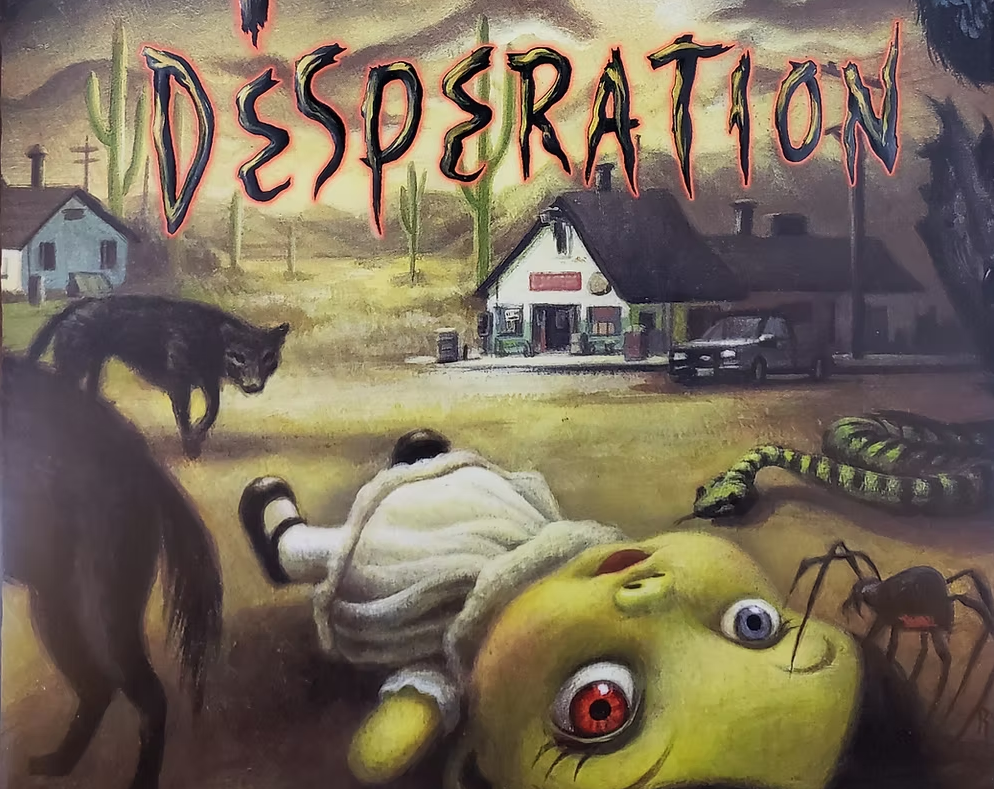
Stephen King’s 1996 novel Desperation is headed back to the screen, with Jeff Sneider breaking the news on The InSneider that Sam Raimi, Stephen King, and Final Destination Bloodlines directors Adam B. Stein and Zach Lipovsky are coming together for the film.
Sam Raimi will produce the upcoming Desperation movie, while Stein and Lipovsky are on board to direct. Searchlight Pictures is the studio attached to the feature film project.
Published in 1996, Stephen King’s novel Desperation was previously turned into a made-for-TV movie starring Ron Perlman, Tom Skerritt and Steven Weber back in 2006.
Wikipedia reminds, “Desperation is a story about several people who, while traveling along the desolated Highway 50 in Nevada, get abducted by Collie Entragian, the deputy of the fictional mining town of Desperation. Entragian uses various pretexts for the abductions, from an arrest for drug possession to ‘rescuing’ a family from a nonexistent gunman. It becomes clear to the captives that Entragian has been possessed by an evil being named Tak, who has control over the surrounding desert wildlife and must change hosts to keep itself alive.
“They begin to fight for their freedom, sanity and lives before realizing that if they are ever to escape Desperation, they must trap Tak in the place from which he came.”
Desperation was published at the same time as Stephen King’s own “mirror novel” titled The Regulators, which shares characters but takes place in an alternate universe.
The union of Sam Raimi and Stephen King is an exciting one for fans of both Raimi and King, and there’s a nice bit of full circle history there too. As you may recall, it was Stephen King’s review of The Evil Dead that Raimi credits for saving and legitimizing his indie debut feature.
And the rest is history! Stay tuned for more on this developing story.

You must be logged in to post a comment.