Editorials
Slashing into ‘Urban Legends: Final Cut’ 25 Years Later


Urban Legend (1998), directed by Jamie Blanks and written by Silvio Horta, tends to rank last whenever it’s stacked against the two heavyweights of the 1990s slasher revival. Yet of the three, which includes Scream and I Know What You Did Last Summer, Urban Legend arguably has the more unique logline. That movie didn’t shy away from self-awareness and pop culture, and it certainly delivered a familiar shot of high-concept revenge, but the underlying gimmick was—and still is—fresh. So much so that really no other slasher movie has quite embraced the idea of urban legends as methodology since then. That is, of course, other than the sequels.
More unrealistic than a killer whose crimes are fashioned after modern myths is the academic environment shown in Urban Legends: Final Cut (2000). The first of the two sequels—Urban Legends: Bloody Mary would go straight to video in 2005—doesn’t exactly offer an accurate depiction of the film school experience, much less the process to get a student’s project produced. That said, the setting is perfect for this kind of story. The line between reality and fiction is always susceptible to some degree of blurriness, but now the new element of filmmaking adds to the confusion, not to mention the horror.
Appropriately, the Pendleton University killings from the first movie have become an urban legend in Final Cut. Keep in mind that series of publicized murders isn’t even that old. Nevertheless, it’s a story Loretta Devine’s returning character knows by heart, given how the security guard was fired for not going along with the university’s massive cover-up. In the same breath, Devine’s Reese inadvertently inspires Jennifer Morrison’s Amy, the struggling cinema student hoping to step out of her famous father’s shadow.

Image: Jennifer Morrison and Loretta Devine in Urban Legends: Final Cut.
Amy’s search for the perfect starting material, for a narrative feature, has ended with the bane of many a film school teacher—the horror genre. To her surprise, though, Professor Solomon (Hart Bochner) is on board with his pupil’s shift from documentaries to fiction. With Amy’s proposed movie then comes the inevitable body count that occurs whenever characters in the horror genre dig up buried pasts.
Whodunnit plots are evergreen in slashers, although in something of a refreshing change, Final Cut doesn’t opt for the standard revenge angle from the previous movie and its contemporaries. To play on the namesake of the story’s coveted Hitchcock Award for best thesis film, director John Ottman and writers Harris Boardman and Scott Derrickson landed on a more adult motivation for their villain. There’s new meaning to “cutthroat competition” as Amy’s project is soon met with misfortunes—a friend’s supposed suicide and the mysterious disappearances of cast and crew members—that, in the end, all amount to one person’s convoluted effort to take credit for someone else’s work. Being willing to kill for gain and opportunity is as plausible as pure payback.
As a whole, the Urban Legend franchise offers an assortment of popular myths as well as deeper cuts to go with the kills. The first movie made entire scenes out of widespread ghost stories like “Aren’t You Glad You Didn’t Turn on the Light?” and “The Killer in the Backseat,” whereas in Final Cut, the selection is skewing towards obscure (chicken tumor pus is mistaken for mayonnaise) or recent (“The Midnight Scream“). Jacinda Barrett’s set-piece alone, practically a foreshadowing of the “gorno” era to come, is an especially nasty spin on “The Kidney Theft” after the lack of follow-through in the original movie.

Image: The killer is on the prowl in Urban Legends: Final Cut.
Also from Final Cut, “Humans Can Lick Too” would have felt like déjà vu at the time to anyone who had already seen the partly urban legend-motifed anthology Campfire Tales. In an unexpected turn, though, “Humans Can Lick Too” only becomes the backdrop for another piece of dangerous lore; Jessica Cauffiel’s character stopped being the comic relief as she’s butchered on the “Lick” set, and her demise is then caught on video and later watched by an unaware audience. This Peeping Tom-ish reference to snuff films is evidence of Ottman’s long-established career, prior to his solo directorial debut, as both an editor and scorer.
The original Urban Legend is not without its highs, but unlike Ghostface in Scream and the Fisherman in I Know What You Did Last Summer, the movie’s parka-clad villain, save for Rebecca Gayheart’s performance, isn’t memorable or even suitable for merchandising. What’s worse is how Summer beat Urban Legend to the punch by prominently featuring a hook-brandishing madman as its antagonist. The Fisherman, who by the way, was essentially manifested from an in-story retelling of “The Hook.” So surely this development caused Blanks and Horta’s own movie to settle for a more generic-looking killer, one whose incredibly themed slayings pick up the slack whenever the wardrobe and weapons are underwhelming.
As for Final Cut, the killer’s identity is just as concealed as before. An overstuffed cast, along with several red herrings, helps in maintaining the mystery for as long as possible. Initially you begin to wonder if the fencing masked culprit is really Reese, the resentful security guard whose demotion is part of a ploy to protect Pendleton’s dark legacy. Or is it Amy’s fellow would-be filmmakers? Travis (Matthew Davis) apparently took his own life, but in a bit of a soap opera tactic, now he suddenly has a twin. Finally, Anson Mount’s surly Toby, who doesn’t hide his issue with Amy also submitting a horror feature for the Hitchcock Award, is far too obvious to ever consider a suspect. The same goes for a lowly P.A. who’s always looking shifty on Amy’s set (Derek Aasland).

Image: Jennifer Morrison meets the killer in Urban Legends: Final Cut.
Ruling out Reese, a fishy twin and a bitter rival leaves us with a lot of supporting characters as suspects, one of whom might have subscribed to the Brenda (Gayheart) method of deception; they stick close to their enemy. Thankfully, the sequel doesn’t repeat history and instead serves up a perpetrator who satisfies this movie’s Hitchcockian hankering. In what feels like a nod to his own slasher roots, Hart Bochner’s role dons a second disguise, à la Terror Train, while pursuing his prey. The unmasking doesn’t have the same enjoyment to it as that of Brenda, but the soundstage-set standoff between the surviving players, plus the clever callback to Reese’s Coffy-inspired gun, is the perfect endcap to this twisted take on film school.
Final Cut isn’t a legitimate continuation of its predecessor, but as a largely standalone story, one with an occasional giallo quality to its aesthetic and a self-reflexive plot to keep you engaged, the sequel is a cut above other lower-profile slashers from the same era. With its distinct setting, and a layered execution of the core theme, Urban Legend’s follow-up is a more entertaining movie than its negative reviews would suggest. If anything, Final Cut plays better now than it did back then.

Image: The cast of Urban Legends: Final Cut.



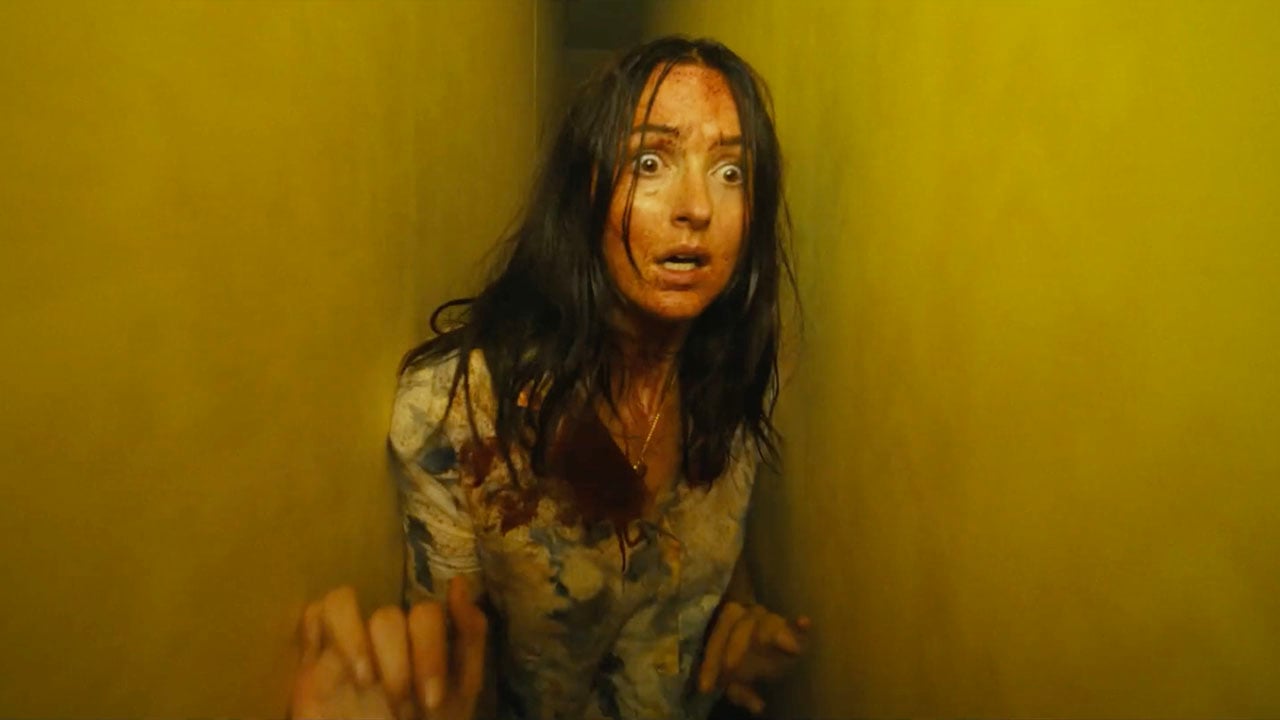
Judging from the unprecedented box office success of Kane Parsons’ Backrooms adaptation, you’ve likely already seen the liminal horror hit that managed to make audiences afraid of empty hallways and bad wallpaper. And now that so many of us have already entered the yellow labyrinth (some of us more than once), the time has come to discuss the spoiler-filled details that make the movie so fascinating in the first place.
And if there’s one element here that makes the Backrooms movie stand out from any previous lore/mythology, it has to be the genius addition of the Still Life entities. Warped recreations of real people that somehow wandered into the Complex, these misremembered creatures are responsible for some of the most disturbing imagery of 2026 – as well as laugh-out-loud memes created by one of the film’s very own concept artists.
However, true to Parsons’ word that the movie would rely heavily on practical effects, each of these distorted monsters was brought to life by real actors under heavy layers of makeup and prosthetics (with the occasional splash of CGI enhancements). While Anora and If I Had Legs I’d Kick You actress Ivy Wolk wasn’t among these performers, despite what Letterboxd might have you believe, the creature cast did benefit from veteran players with plenty of genre experience.

For starters, Alien: Romulus alumni Robert Bobroczkyi (who previously brought that film’s horrific Offspring to life during its most memorable sequence) plays the flick’s main antagonist, the Still Life version of Captain Clark. And though there was some obvious CGI involved in making the character’s peg-leg and nightmarish face more believable, Bobroczkyi’s monstrous performance and his natural 7’7″ frame helped to make that final chase sequence a clear highlight among this year’s genre offerings.
The film’s Texas-Chain-Saw-inspired “dinner” scene also features a freaky collection of less-aggressive Still Life creatures in the form of the Bearded Man, the Red-Headed Woman and, strangest of them all, the cheekily named “Archibald Leland Sutter Still Life” (who earned this title among fans and crewmembers as a reference to his apparent affinity for lamps).
While this was the first major horror outing for both Patrick Baynham (The Bearded Man) and Dana Mahmood (Archibald), Rhiannon Roberts has worked as a stunt performer in everything from Yellowjackets to HBO’s The Last of Us adaptation – which is probably why The Red-Headed Woman is the most active out of Clark’s impromptu “family.” That being said, the Archibald Leland Sutter Still Life is my personal favorite of the bunch simply because his anachronistic outfit suggests that the Backrooms phenomenon might be a lot older than the Async Foundation. I also love how hard he tries to be helpful with that little light of his!

That might be it for the Still Life entities, but I think horror fans will also be pleased to hear that the film’s Found Footage prologue stars none other than Resident Evil: Welcome to Raccoon City star Avan Jogia as Naren Warne – and American Mary herself Katharine Isabelle also shows up in a blink-and-you’ll-miss-it cameo at Mary’s house party towards the middle of the story (though I have a feeling that she originally had a bigger part that was likely cut for time).
At the end of the day, Parsons’ Backrooms may have been an auteur-driven project motivated by the young director’s unique take on the classic creepypasta, but film has always been a collective artform, so it’s fun to see just how many talented performers it takes to bring this kind of supernatural nightmare to life in a way that connects with so many people.

You must be logged in to post a comment.