
Books
‘The Werewolf of Fever Swamp’ – One of the Best ‘Goosebumps’ Stories on Page and Screen [Viewer Beware]

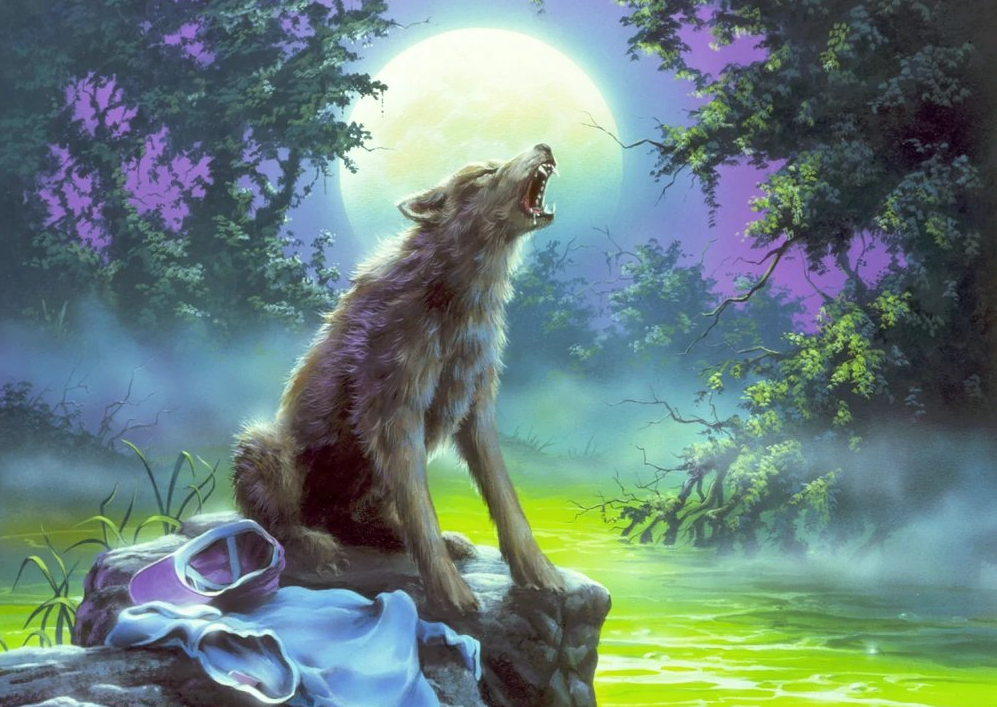
The Werewolf of Fever Swamp was originally published in December 1993 (Spine #14). The series adaptation aired on Friday, May 17, 1996 (runtime: 22 minutes and 26 minutes).
As a kid I was always taught not to judge a book by its cover, but when it came to Goosebumps I did it all the time.
Tim Jacobus’ cover art was a gateway into the story, a textured, colorful window into what terrors might await otherwise unsuspecting readers on the pages within. I snatched up Say Cheese and Die! wanting to know everything I could about the skeletal crew enjoying a family barbecue on its cover. I devoured The Haunted Mask dying to know what the monstrous latex mold clinging to the girl on the paperback might be capable of. The images gripped and took hold in a way that the stories could then build upon and the art felt as intrinsic to the narrative as the words printed on the pages beneath it.
I was at the local library when one such image first imprinted itself upon my impressionable young mind. I had made my way over to the Goosebumps section and was on the hunt for something new. That’s when I spotted them stacked on a shelf, books imbued with a deep purple and lime green, featuring a howling wolf in a moonlit swamp. I stared at it, unable to look away. I had no choice. I had to pick it up.
But I couldn’t read it. Not yet.
It sat on my shelf for several days before I mustered up the courage to crack it open and even then I read it during the day. Generally I liked to absorb my Goosebumps in the evening, but not this one. Something about the mood, the atmosphere and the carnality of that simple, striking image got to me, unnerved me well before I had read a single sentence.
The Werewolf of Fever Swamp went on to become one of my favorite entries in R.L. Stine’s prolific series, offering a location as terrifying and harrowing as its villain, all the while maintaining a mystical sense of anxiety and dread that its cover so beautifully captures. There was something captivating about those handful of days that the book sat on my shelf, staring up at me, waiting for me to open it. A palpable unease infused with excitement that I would go on to understand as one of the fundamental components of being a horror fan.
When the story was adapted in the TV series’ first season as a two part special airing all in one night, I experienced that thrilled nervousness all over again. The adaptation was markedly different, excluding a major character and dramatically altering roles, events and plot points. Still, it maintained the book’s unique tone and crafted some truly terrifying moments, even elevating the danger in places and creating scenarios that were amongst the most frightening my young mind had ever encountered on screen.
In the end, The Werewolf of Fever Swamp emerged as one of my favorite episodes and books. The story represents the series’ ability, both onscreen and on the page, to incorporate classic mythologies and genre tropes in a way that the average kid can digest, even if they might be terrified. My predetermined assumptions may have broken one of the cardinal rules of childhood, but some covers speak for themselves— especially when Tim Jacobus, R.L. Stine and werewolves are involved.
The Story
The swamp is a dangerous place. Grady and his sister learn that right away, considering how quickly they get lost in its misty trees just after arriving at their new home. Then there’s the old hermit who wanders the land, hunting and keeping to himself. Of course there’s the insects and the animals too. Then, at night, there’s the howling. The torn up corpses of animals. The strange rumors of a werewolf that might be lurking in the swamp, a place known for its deadly fevers and bogs like quicksand.
The Werewolf of Fever Swamp hit shelves for the Christmas season in December of 1993, although its tale is anything but merry. The story’s cover boasts hues of green, purple and blue, featuring a wolf as it howls in front of a large, full moon, sitting just beside a pile of abandoned clothes. A story about adjusting to change and facing the unknown with moral fortitude, the book delivers the reoccurring central themes of the Goosebumps franchise beautifully while offering up one of the series’ most formidable and distressing outings.
The Adaptation
After a rousing introduction espousing the virtues of werewolf mythology by R.L. Stine himself, the episode opens as a foggy collection of trees gives way to the Tucker family’s recently acquired home. Dilapidated and derelict, Grady and his older sister Emily think it’s “gross” while their mother insists that the place is “rustic”. Either way, Grady is quickly dispatched into the neighboring swamp to release a snake found nesting in Emily’s new medicine chest as his parents remind him that, “a little wildlife never hurt anybody!”
In the book, the Tucker’s new home is not ramshackle but well kept. Its opening pages reflect Grady’s narration from some point in the future, speaking of the nightly howls which plague him and the terrifying nature of the swamp, setting up the tone and thrust of the story from paragraph one. Similar to the episode, the story picks up just after the family’s move to Florida, however here Grady tells of excitement at the prospect of exploration as opposed to disgust in the face of a rotting homestead. He also explains their presence there, noting that his parents are scientists and in Florida to study a specific breed of red deer from South America and how they might adapt to the swamp.
Much like the episode, Grady sets off into the swamp at the beginning, this time accompanied by Emily at the behest of their father. While the show keeps Grady’s excursion brief, culminating in a frightening encounter with an overtly threatening hermit, the book allots several chapters to the outing. The page inundates the reader with the eerie sights, sounds and dangers that the swamp contains in its murky depths. Hot, sticky, itchy and confusing, it’s not long before the two become lost within, navigating thick bogs that might suck you into their chunky innards and even coming upon a tiny shack that seems only suited for the kind of criminal element that might have good reason or desire to never be found.
What took a few minutes on the screen happens six chapters into the book, as the hermit bursts out of the shack and chases them. In the commotion they manage to break away and find their way back home. When they inform their father about the hermit, he nonchalantly responds that the old man is harmless and most likely startled. Onscreen, Grady goes from the hermit encounter to a conversation with his father outside of the deer pen. Aside from the first talk of the deer experiment, Grady’s father also mentions that the hermit “lost his family a while ago” and that he is “strange but harmless” and “lives off the land”, a backstory that’s absent on the page.
The show and the book sync up here as Grady meets a neighbor boy named Will Blake. In the book this encounter occurs at night under a nearly full moon. Will says there’s not many kids their age around, barring a girl that the show excludes entirely, and discusses the swamp. Will mentions that it takes its name from a fever that emerged from it 100 years ago causing strange behavior and a heavy casualty rate. In the show the conversation takes place in the morning and is rather truncated. It excludes the explanation of the swamp’s name while subbing in a story about the old woman that used to occupy the Tucker’s house disappearing into the swamp.
The book dedicates the next few chapters to Grady’s growing paranoia, as a fever takes him and strange howling and scratching noises keep him up at night. The episode forgoes atmosphere construction in the stead of narrative immediacy here, sending the two boys back into the swamp following their meeting. Will offers an alternate explanation to the swamp’s moniker, saying that being in the swamp makes your body hot all over causing you to run into its murky waters and stay there. The hermit reappears and the boys hide. After, Will says that the old man never ages and that under the light of that night’s full moon he will change into what he actually is.
Once more the screen and the page intersect, with Grady shaken to his core by the stories and experiences he’s had in and around the swamp. In the book, his feverish state has only amplified his sensitivity to the strange howls and scratches that the night brings, building to a late night encounter with a creature that leaps out at him in the darkness. Onscreen he hears similar sounds and heads to the door, opening it cautiously and encountering the same shadowy creature which knocks him to the floor. A large dog is the culprit, an animal that Grady manages to get his parents to let him keep— in the show named Vandal given the late night intrusion and in the book, aptly, named Wolf.

At this point the book and the show diverge, exploring the same general themes in different ways. On the page, Grady and Will further explore the swamp while discovering Wolf’s penchant for navigation and disdain for the hermit. Wolf is called into question however after they discover a gruesome mess that was once a bird and mistake him for a burglar once more when he tears apart the Tucker’s living room one night. A rabbit too meets a terrible end and as the howling intensifies it seems perhaps Wolf may be the “werewolf” everyone fears.
In the show, Grady and Will explore the swamp as well, spending time at the bog which was established in the earlier chapters of the book, exploring its quicksand-like properties. At the same time, Grady’s mother sets up a telescope and explains that a lunar eclipse is on the horizon, a plot point unique to the screen. In the woods, Grady and Will discover wolfsbane tied to all the trees, something Will elaborates on, showing a much stronger penchant for werewolf mythology than he ever does on the page.
While they never find the corpse of a bird in the show, Emily does come across the dead rabbit and Grady’s father informs him that half a dozen animals were killed in the area the night before as well. Grady remains firm that Vandal is innocent, but his father reminds him that the swamp is a brutal place which has an effect on those living there. Ready to prove that Vandal is clear of blame, Grady and Will head back out into the swamp to find the hermit. The hermit appears and chases them, herding Grady into a trap where he’s caught dangling in a net, concluding the first episode of the two part special.
The book continues by introducing several plot points not included in the show. A local hunter named Mr. Warner is missing and a new character enters the fray, Cassie, the girl Will mentioned earlier. As opposed to his character in the show, the Will on the page doesn’t believe in werewolves and wants nothing to do with such stories, Cassie on the other hand is obsessed. When they come upon the torn remains of a wild turkey she accuses Wolf of being the werewolf, dissuaded only when the hermit leaps from the woods shouting, “I’m the werewolf!” Like in the show, the old man catches Grady, only to release him shortly after saying he was only teasing them— but warning Grady to watch out for his dog.
In the show, the hermit is not joking around. Wordlessly, he takes the boy back to his shack while Grady pleads to be let go. The hermit leaves him for a moment and howls at the sky. Grady frees himself and makes a harrowing escape, arriving home and telling his mom that he’s discovered the identity of the werewolf. In the face of his mother’s disbelief, he attempts to explain that the world is not always what people believe it to be. “What if you knew something was true but you couldn’t prove it?” He asks. That’s when they hear the rattling of the deer cage and exit the house to find one of the animals dead.
In the book, Grady is bitten by a snake on his way out of the woods. When he finally reveals his thoughts on werewolves to his parents, they react as he expects, telling him that scientists don’t believe in such things. They write the hermit’s actions off as a joke, despite Cassie’s misgivings, and the howling at night intensifies. Finally, one night, Grady is drawn to the yard and finds one of his parents’ deer mangled in a disturbing display, leading his father to declare that Wolf is a killer.
In the show, only Grady’s mother is present for the discovery of the deer. Grady pushes his mother into the barn and locks her in, deciding that it is the only way to keep her safe. Emily arrives at an empty home as Grady heads to Will’s house for support. Will’s furniture is torn and the window is broken, leading Grady to assume the worst. The show employs visually striking imagery here, portraying Grady like a shadow descending into the swamp’s foggy layers.
In the book the night passes and Grady’s father rises early to fix the deer pen. He tells Grady that the townspeople are upset about Wolf and he has no choice but to take him to the pound. Infuriating his father, Grady pushes Wolf away into the swamp. That night, he and Will set out to prove Wolf’s innocence once and for all. They find the hermit’s shack and are met with horrifying wails. It’s then that Grady comes face to face with the werewolf. Not the hermit, but Will: dark eyed, covered in hair and snarling as his two gleaming rows of fangs shine in the moonlight.

In the show, Emily meets the werewolf first as the beast’s large monstrous snout edges nearer to her. She flees to the barn, discovering her mother, and together they cower as the giant wolf attacks. Slamming against the wood doors and bursting through the old boards, its sharp clawed paw nearly takes a chunk out of Mrs. Tucker’s head. The creature abandons them when it hears Grady’s voice. The thing closes in on the boy just as the hermit reappears, catching the werewolf in a net as he did to Grady earlier. In a reveal that is absent from the book, the hermit explains that, years before, the wolf had taken his wife and children and he had since dedicated his life to taking the beast’s heart just as it had taken his.
On the page, Grady faces the wolf alone in the woods. It howls and attacks, biting down deep into Grady’s shoulder. As the world around him faded, he saw Wolf leap onto the werewolf. The two fight as Grady grips a tree trunk to stabilize himself, clinging to consciousness. When the werewolf’s wail of defeat resounds through the night, Grady knows that it’s over.
Onscreen the hermit shouts for Grady to run. At the same time the wolf escapes and attacks Grady. It’s then that the lunar eclipse mentioned earlier in the episode goes into effect as Will starts to revert back to human form. Caught somewhere in between wolf and boy, Will shouts for Grady to get away, that he doesn’t want to hurt him but he can’t help himself. The eclipse passes and he reverts to his monstrous form. Suddenly Vandal appears and attacks the werewolf, pushing him into the bog where the creature sinks and disappears.
The book concludes a month later, with Grady recovering at home after the hermit retrieved him from the swamp. While his parents don’t believe his story, Will’s house is empty and deserted, as though no one ever lived there, and Wolf’s good name is cleared. Cassie and Grady continue to explore the swamp, always on the hunt for a werewolf, but now that the full moon is rising again, Grady can feel the fur sprouting on his face and the call to the wilds of the swamp that is now all his. After a joyful howl, he and Wolf hurry off into the darkness, ready to hunt.
The show meets its end as Grady’s parents discuss Grady in hushed, worried voices. Grady wakes up from a nightmare as a hideous werewolf, only to wake up again in a heavy sweat. His nightmares grow ever more real as something bubbles up from the bog in the swamp. A howl resounds in the distance under the full moon and Grady, instinctually, joins in. Finally, R.L. Stine returns to see viewers out, wishing them a scary night and crossing his werewolf arm over his chest against a howl in the night.
While the two offer incredibly different conclusions, they both seem to arrive at the same conclusion: howl all you want, but once the feverish call of the wild takes root, it will never let go.
Final Thoughts
One should never judge what they haven’t fully engaged with, certainly, but sometimes the right cover is exactly what a book needs to be read in the first place.
The pictures on a Goosebumps book allowed me to curate what I felt I could handle. Disembodied hands playing a piano seemed okay, even if there was murder involved, and a ghost at the doorstep made me more curious than frightened. But still there were others, like a leafy hand reaching from the depths of the basement or a snarling dog emerging from the darkness that unsettled me on a level deep enough to put off reading, at least until I was ready.
When I finally cracked the green and purple cover to The Werewolf of Fever Swamp, I was met with sights and sounds that never left me. The buzzing, chirping, howling, scratching swamp of nightmares, just outside the window waiting to envelop the sort of unsuspecting kid that might be reading such a book. A story about belief and disbelief, facing the brutalities of the natural world all while questioning your fundamental understanding of what mother nature is truly capable of.
Heading into the two part television event, I was nervous all over again. The result was different than I had anticipated. A character was gone and much of the feverish anxiety had been translated to action in the swamp, complete with a bombastic finale involving the whole cast as opposed to Grady’s climactic swamp encounter with the werewolf on the page.
Still, the story’s transformation is a testament to the importance of creative freedom in adaptation. It was never easy to understand why my favorite books in the world needed to be changed and rearranged for the screen, but The Werewolf of Fever Swamp went a long way toward helping me better grasp the alchemy of metamorphosis when it comes to turning page into screen. What worked as an intimate and terrifying revelation in the text might have felt anticlimactic in the show and allowing for a bigger, more character inclusive conclusion offered a window into an alternate timeline for longtime fans of the book.
With some of the series’ best creature effects work by Goosebumps creature creator mainstay Ron Stefaniuk and razor sharp direction by the prolific William Fruet, The Werewolf of Fever Swamp is a standout in both mediums, exposing young minds to the eternal relevance of the monsters and myths of the ages.
Covers are not always their contents. That’s true. And yet, when my young mind took in the greens, purples and blues of Fever Swamp with its howling wolf and emerging full moon, I knew exactly what to expect. As always, when it came to the name R.L. Stine and the dripping letters of the Goosebumps moniker perched above Tim Jacobus’ artwork, there was nothing more haunting, dangerous or intoxicating.
I suppose some covers do their books justice after all.


Books
Urban Legends, Serial Killers, and Space Epics: 10 Horror Books We Can’t Wait to Read This June

We have entered summer reading season.
Schools are emptying, beaches are filling, and it’s a great time to pack a tote full of brand-new books and get some reading done in the shade. But even if the sun is bright, your fiction can still be dark, because June is absolutely packed with great new horror releases from rising stars and genre icons.
From a Psycho retelling to a dark twist on Peter Pan lore to a new book from a Pulitzer Prize winner, these are the horror titles we can’t wait to crack open this June.
The Children by Melissa Albert – June 2

A blend of dark fantasy, Gothic family saga, and horror novel that’s received rave reviews from Stephen King and more, The Children follows the adult children of a legendary fantasy author who died when a fire consumed their home. Now, living their own creative lives, Guinevere and Ennis must revisit the secrets from the night of the fire, the darkness surrounding Ennis’s new art installation, and the truth of their family legacy in both fact and fiction. It sounds like a wonderful twisted nest of secrets and magic, and I’m eager to dive in.
Marion by Leah Rowan – June 2

Just when you thought we’d run out of interesting ways to riff on Robert Bloch and Alfred Hitchcock’s Psycho, Leah Rowan comes along with Marion. As the title suggests, it’s the story of the Bates Motel’s most famous victim, but this time, she doesn’t die in the shower. She takes control of the knife and the narrative in this daring retelling of a proto-slasher classic. The story we know is just the beginning, and I can’t wait to find out the end.
Headlights by CJ Leede – June 9

Through her first two novels, Maeve Fly and American Rapture, CJ Leede emerged as one of the most exciting new horror voices of the 2020s, and she’s just getting warmed up. Leede’s third novel follows an FBI agent on the brink of retirement, running from his past and from the unsolved case that haunts him most, as he’s slowly pulled back into a gruesome serial killer narrative. Victims start turning up again, wearing someone else’s skin like a cape, with no memory of how they got that way, or how they got a lone strand of unidentified hair tied around their tongue. Both a riff on The Shining and a journey into the dark Colorado night, Headlights is one of the year’s most exciting horror lit events.
It Came From Neverland by Cynthia Pelayo – June 9

Cynthia Pelayo‘s novels have always felt like dark fairy tales, and with her latest, she’s taking things into the realm of one of the most famous children’s stories ever. It Came From Neverland follows a version of Wendy Darling who, while working as a schoolteacher and as an aid to rehabilitate World War I soldiers, finds old fears returning when a student goes missing. It seems that an entity Wendy knows only as “Peter Pan” is back on the prowl, and unlocking her memories might be the only way to stop it. That’s right, it’s a dark Peter Pan retelling as only Pelayo can do it, and you know you want a piece of that.
The Other by Annie Neugebauer – June 9

Annie Neugebauer’s The Extra ranks as one of the most clever and frightening horror novellas in recent memory, but that was only the beginning. This June, Neugebauer returns with the next book in what’s been dubbed “The Outsiders Sequence.” This time, Neugebauer’s strange world of doppelgangers and mimics turns to a couple on a hike who run into their exact duplicates, setting off a chain of events that will test their understanding of each other in terrifying ways. Neugebauer’s one of horror’s finest rising stars right now, so if you haven’t jumped on board The Outsiders Sequence yet, pick up The Extra and get ready for The Other.
Marla by Jonathan Janz – August 18 (Editor’s update: Release has now shifted from initial June 23 publication date)

Speaking of rising stars in the horror world, we’ve got Jonathan Janz, whose work has hit another level in recent years thanks to work like Children of the Dark and Veil. Now he’s back with Marla, the story of a local woman surrounded by urban legend, and her possible connection to a string of crimes in the community of King’s Branch. Is Marla a witch, a killer, a victim, a helpless child? We’ll have to read and find out in what feels like a perfect jumping-on point for new Janz readers.
The Sixth Nik by Daniel Kraus – June 23

Daniel Kraus has long been a favorite among genre readers, but thanks to his recent Pulitzer Prize win for his brilliant novel Angel Down, he’s more visible than ever, and all that visibility comes as he’s about to unleash a space epic with all the hallmarks of epic sci-fi and horror alike. The Sixth Nik promises everything from a sentient spaceship to a rogue planet full of plague to a nine-year-old “cultist” with an enhanced brain. This is Kraus playing in a brand-new sandbox, and genre readers everywhere won’t want to miss that.
Slasher Summer by E.L. Chen – June 23

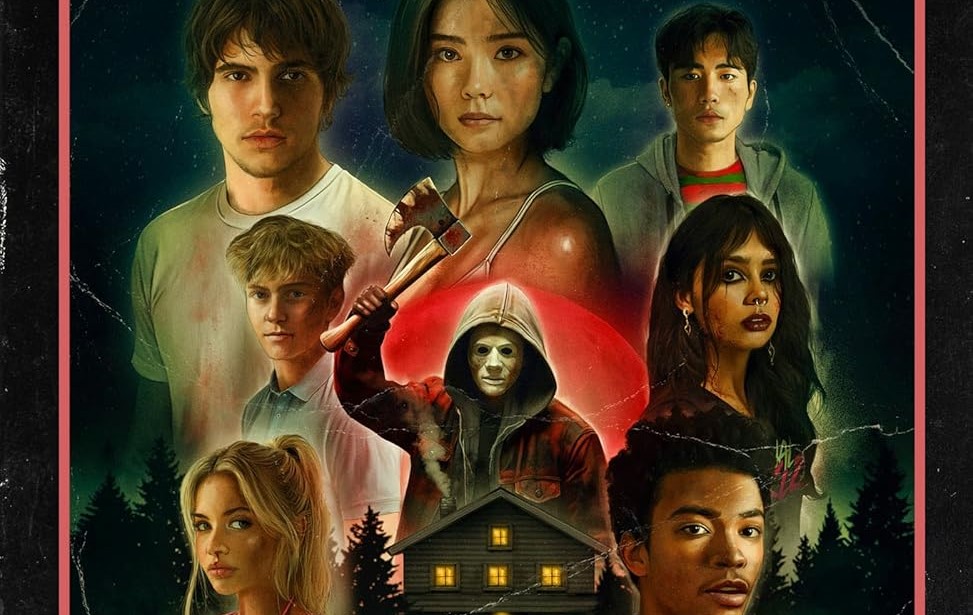
E.L. Chen‘s latest novel is described as a love letter to ’80s slasher films, and anyone who’s taken a dive into the meta-horror of Scream or My Heart is a Chainsaw will want to sit up and take notice. The book follows a group of friends who grew up in a town famous as the location of a slasher movie, where they frequently played the characters during midnight shows. As adults, they return to their hometown, and to the location of the slasher movie, only to find that someone’s out to get them, someone wearing a very familiar mask. This sounds like a blast, and the latest in an ever-growing strand of slasher novels reinventing the genre on the page.
Dead But Dreaming of Electric Sheep by Paul Tremblay – June 30

Modern horror master Paul Tremblay‘s latest novel sounds like his most ambitious yet, and that’s really saying something. Dead But Dreaming of Electric Sheep follows Julia, a former pro gamer who gets an offer she can’t refuse: For a hefty payday, she must pilot a man named “Bernie” across the country for her mother’s tech company. The catch? Bernie’s in a vegetative state, and his mobility comes from the AI chip in his head. As Julia moves Bernie’s body, Bernie’s mind moves through an unfathomable nightmare world, but where are they heading, and what’s Bernie really meant to find? Every new Paul Tremblay book is an event, and this one feels particularly special.
Red X by David Demchuk – June 30

This one’s technically a reprint, but David Demchuk’s Red X is so revered among the horror community, and particularly other horror authors, that it feels worth highlighting, especially during Pride Month. Complex and metatextual, Red X is about a series of disappearances and a demonic entity plaguing the gay community of Toronto, but it’s also an autobiographical sketch of an author navigating death, survival, queer culture, horror as a means of expression, and more. In short, it’s an essential, and this new edition, complete with fresh writing by Gretchen Felker-Martin and Anthony Oliveira, is a must-have.
You must be logged in to post a comment.