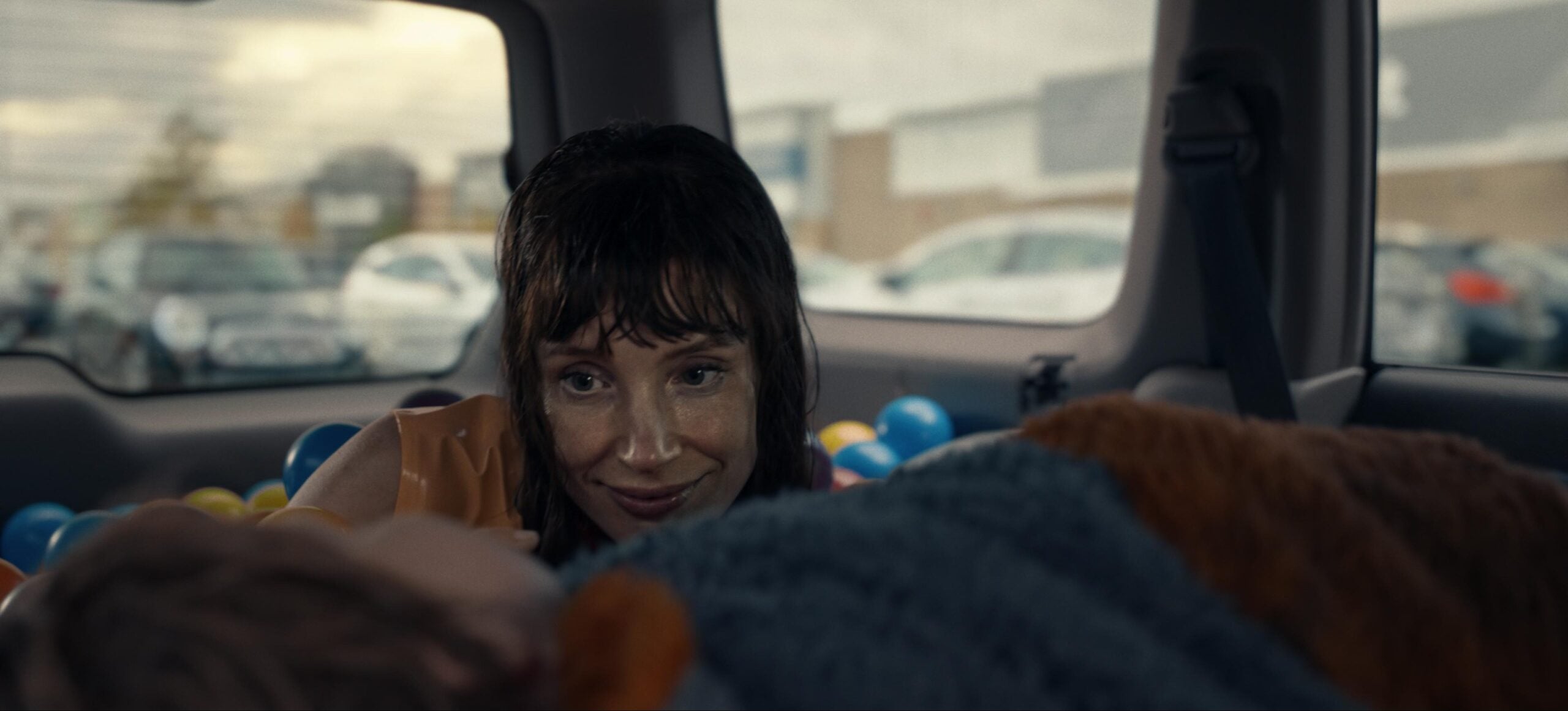
Launched in 2002, Subway Cinema's New York Asian Film Festival (NYAFF) is America's leading and most influential showcase for popular Asian cinema. Each year, the Festival selects over 30 feature films, considering only the best, the strangest, and the most entertaining of the recent titles. Running from June 20th through July 6th at Manhattan’s IFC Center and the Japan Society. Film fans looking for a little sake with their sanguinary cinema are treated to the plethora of exciting films. This year, Bloody-Disgusting got a chance to check out some of the latest in cutting edge genre films from across the Pacific. Read on to see what Tex, Ryan and David thought of this year’s lineup.
The 7th Annual New York Asian Film Festival
By: Tex Massacre
Ryan Daley
and David Harley
For more information on these films and where you can get tickets to this festival, check out the website at http://www.subwaycinema.com
THE BUTCHER
Reviewed By: Ryan Daley
3/10 or 1 ½ Skulls
This has to be one of the most difficult reviews I’ve had to write during my tenure at bloody-disgusting.com. For the most part, I loathed THE BUTCHER, a cruel, rough hewn, highly misanthropic micro-budgeted horror film from South Korea. The plot—which involves a sadistic movie Director who captures innocent locals so he can film their rape, torture, and murder at the hands of a leather-apron-clad semi-retard wearing a pig’s head—mockingly references every torture-porn entry that America has exported over the last 6 years.
With the captured victims wearing video helmet-cams, and the director and his cronies shooting video from the shoulder, the majority of the film consists of lengthy POV shots filled with ominous dialogue as the Director animatedly shares his plans of torture and murder with his colleagues. Rather than focus on character development and suspense, director Kim Jin-Won simply throws a bunch of indistinguishable victims in a cement room and forces the audience to watch for an impossibly long 75 minutes as they squirm, scream, and eventually die. The hows and whys of their capture and imprisonment are seemingly unimportant; the movie revels in (and practically glorifies) the killer’s gruesome, mean-spirited perspective.
Don’t get me wrong, I’m not against visceral, malicious horror films (INSIDE is one of the few truly impressive horror films I’ve seen so far this year), but THE BUTCHER doesn’t seem to have much of a point other than to celebrate the recent American horror films that have similarly centered their plots around graphic torture scenes. (As the Director laments the marketability of his snuff effort, one of his cronies issues one of the film’s more disturbing lines: “We can always sell it to the U.S. They’re always looking for more bloody things.”)
I had practically vowed to give THE BUTCHER a meager half-skull right up to the 50-minute mark, but Kim’s singleness of vision led to a few truly suspenseful and compelling moments during the final third, and although THE BUTCHER is a supremely vile piece of work that I never plan on watching again for the rest of my life, I’m forced to add another skull due to Kim’s directorial prowess. But please, for the love of God, don’t take that as a recommendation.
CHANBARA BEAUTY
Reviewed By: Tex Massacre
7/10 or 3 ½ Skulls
Do you know why video game adaptations so often fail? It’s because the directors behind them seem to forget the inherent impossibility of transferring the game world to the real world. They either try to make it completely valid (HITMAN) or completely ridiculous (SUPER MARIO BROTHERS). Manga and Anime suffer the same transitional problems and anyone who’s seen the live-action version of stuff like WICKED CITY knows how absurd it can become. So, what are we to make of an adaptation of the Tamsoft game series The OneeChanbara into a feature film? Well for all its inherent psychosis, it’s nearly brilliant.
Set in a world where the dead have been walking the earth for sometime, the film follows the adventures of Aya (Eri Otoguro, SHUTTER)—a bikini clad, cowboy hat wearing, ass-kicking, katana swinging zombie killer, whose only goal is to find her kid sister Saki (Chise Nakamura) and kill her. On the way, she hooks up with Reiko (Manami Hashimoto) a trigger happy zombie killer of her own whose goal is to find the Doctor responsible for creating the epidemic and sending him to kingdom come.
Those of you that think J-horror films are subtle and oblique, solely filled with unrestful spirits that bear supernatural grudges, you’re in for a rude awakening in only the first 10 minutes of this flick. It’s more hacking, slashing, bullets and bodies split in two than a dozen John Woo films and Quentin Tarantino homage’s—pulled off with about the same degree of delicacy as a nuclear holocaust. You’d think that a film this anarchic would burn out after only a few minutes, but as improbable as it may seem Director Yôhei Fukuda manages to keep the breakneck kinetic pace and operatic violence interesting all the way to the final showdown. In reality, the only reason this film works at all is that it’s so over the top, from the very first seconds of the feature, that you give yourself over completely to its power. Oh yea…it helps that the Bikini Zombie Killer is smoking hot too!
DAI NIPPONJIN (BIG MAN JAPAN)
Reviewed By: Tex Massacre
6/10 or 3 Skulls
It used to seem like the U.S. had the market cornered on the mockumentary front. But this new film from Japan (actually it’s been on the festival circuit for a while now) is ripe to rip through the cultural sound barrier and inundate American midnight movie audiences with the wry wit of Pan-Asian satire.
A documentary film crew is following Dai-Sato (Writer, Director & Star Hatishi Matsumoto). But for what reason we have no idea. Dai-Sato is down on his luck, obsessed with buying an umbrella, separated from his wife and not making enough money. Until we see his ramshackle house, we might believe him to be homeless. But about 20 minutes into this deadly serious film, Dai-Sato receives a phone call summoning him to the job he has mentioned consumes his life. Once he arrives we learn that Dai-Sato is Big Man Japan, a seemingly ordinary citizen who when pumped full of electricity grows to a 500 foot superhero who battles monsters that invade Tokyo. He’s got advertising, a television show and yet no one seems to care anymore. The problem? Dai-Sato is the sixth-generation monster whose living in the colossal shadow of his senile grandfather—the legendary “fourth”.
Having said all that about the plot of DAI NIPPONJIN it would be best to go into this film not knowing what it was about at all. If the plot summary made you believe that this was a film about a man trying to live up to, and honor, the family business the wacky turn of events portrayed in the film might succeed even better. As far as the action and humor go, the battles are ludicrous pitting Big Man Japan against enemies like The Strangling Monster—which looks like an anorexic Michelin Man with a comb-over that uses it’s rubber band arms to suplex office buildings into the river—and The Evil Stare Monster—which hurls a gigantic eyeball tethered to it’s neither regions. The rest of the film is serious as a heart attack and the Hitoshi’s quest for absolute pragmatism in the midst of utter insanity is very “Christopher Guest” of him. The major disappointment I had with the film—which I see as an anti-Godzilla movie and a comment on celebrity media culture—is that the fight scenes are rendered in CGI. That is, until the eye-popping conclusion that will leave fans of 1960’s Japanese imports, professional wrestling and Mego Action Figures pumping their fists and laughing their asses off.
KALA
Reviewed By: David Harley
5/10 or 2 ½ Skulls
Made for a scant $600,000, Joko Anwar's KALA is one of the biggest blockbusters ever released in Indonesia. I'll admit that I was a bit skeptical of the film at first, since Anwar is most notably recognized for his light hearted comedy JONI'S PROMISE, which was a hit on the festival circuit. But, truth be told, it was a quote that got me excited to watch the film, which compared it to DARK CITY and the films of Kiyoshi Kurosawa. I consider DARK CITY to be one of the best films of the 90's and Kurosawa has directed some great modern horror films, including KAIRO. Needless to say, my expectations jumped tenfold in a matter of minutes.
Set in an alternate version of Indonesia during the 50's, chaos runs rampant in the streets. Trying to give their people a better life, the government instills a new law to uphold morality, prompting citizens to take matters into their own hands and form a sort of neighborhood watch for immorality. When burnt corpses begin piling up in the city, Janus (Fachry Albar), a newspaper reporter, accidentally turns up a new lead which he doesn't quite understand. He thinks it might have something to do with a legend about the First President's treasure, which is guarded by a ghost, but whenever he gets close to uncovering new information, his narcolepsy acts up and he passes out. Eros (Ario Bayu), a detective in the most classical sense of the word, starts following the same case, hoping that he can somehow piece together the puzzle no one else can seem to get near without dying.
KALA embodies a noir style that sadly isn't put to good use as often as it should. From the set design to the costuming to the music, everything oozes an early 20th century appeal. And much to the film's credit, it manages to mix its atmosphere with dry humor and a bit of melodrama quite nicely. What it doesn't mix well with, however, is its third act. The film is setup as mystery-thriller (that works well) and turns into a messianic samurai mash-up. In the end, it reminded me a lot of BROTHERHOOD OF THE WOLF, which presents some great ideas that ultimately don't all belong in the same film.
M
Reviewed By: Ryan Daley
(Not Rating)
Unfortunately, my screener of M didn’t feature any subtitles, and other than a couple of necessary phrases like “THE HOST eats it!” and “happy ending”, I don’t speak a lick of Korean. I watched the movie anyway, and sure enough, I was completely lost, but with the aid of the press materials and my limited powers of visual perception, I was able to deduce the following:
Min-Woo (Jang Dong-Won) is a bespectacled novelist prone to crazy-ass temper tantrums who encounters a mysterious girl from his past who may or may not be dead. At first she tentatively follows him around, peeking at him from behind trees, and then they finally meet and hang out and have a lot of conversations in Korean. There’s also a mysterious figure dressed in black who harasses women with a big silver cane, and Min-Woo was popping some pills that seemed to factor into the plot somehow.
Renowned Korean director Lee Myung-Se likes screwing around with light and editing, repeating his visual cues in a series of minutely shifting patterns that mirror a dream state. Min-Woo and his girl are always walking down sketchy alleyways or through poorly-lit parks, having strange, hallucinatory encounters, and then emerging back into real life through a series of banal, dialogue-heavy scenes. It seemed like……oh, come on, who the hell am I kidding? I had no IDEA what was going on; I didn’t understand a single word being spoken. But based on the apparent circular visual logic that director Lee frequently employs, I’m not entirely convinced that understanding the dialogue would have guaranteed plot comprehension. As a side note: although the press notes provocatively label the films as a “necrophiliac romance,” M features no sex with bodies, dead or otherwise.
A PUPPY, OUR FAMILY
Reviewed By: Tex Massacre
6/10 or 3 Skulls
Ppoppi is the family dog. Getting on in years, Ppoppi becomes sick when the stress of an impending move presents itself. When the family chooses a new apartment with a “No Dogs” policy they decide to abandon Ppoppi to fend for himself. And fend for himself he does...with a vengeance!
To understand that this half-hour Korean short film is a comedy one need only look at 5-pound puppy at the center of the mêlée. Call it Puppy Grudge—or whatever you want—the humor is that dog can’t kill it’s neglectant owners on its own, so it employs an unsuspecting love interest for the main character Min-joo—transforming him into a snarling, barking zombie stalker. When the would-be Ppoppi cum zombie boyfriend finally breaks into the apartment he confesses to Min-joo of his true puppy love.
A PUPPY, OUR FAMILY is preposterous and at times laugh-out-loud funny, but hardly a quality production that’s going to keep you talking to your friends about if for weeks. The best thing that can be said about the film is that even at 30 minutes (which is long, by short film standards) this silly short breezes by.
SASORI
Reviewed By: Ryan Daley
7 /10 or 3 ½ Skulls
SASORI, a supplement to the similarly themed Scorpion series from 1972 (FEMALE PRISONER #701, FEMALE CONVICT SCORPION, etc.), doesn’t take long to set up its narrative dominoes: Nami (Miki Muzuno; CARVED) is unjustly imprisoned after an eclectic pack of baddies force her to murder her sister; once out of the joint, she employs the tutelage of a sage kung-fu master (Simon Yam; ELECTION, FULLTIME KILLER) who teaches her the ways of revenge.
SASORI has a lot going for it: the raw jailhouse fight scenes that frequently dabble in bad-assery, the pervy warden who stages cash mud wrestling between bra-busting inmates, the wet T-shirts and kung-fu training montages and wicked sword fights. In SASORI, there always seems to be something crazy and exciting going on. But eventually the empty stylistics (SASORI features more fades and double exposures than a weekend long John Woo retrospective) start to feel belabored and forced, like a rock band that has stayed on stage for one song too many. And I have to admit, as the second-half action shifted from brutal jailhouse brawls to goofy wirework, with characters spinning and flying through the air like Powerpuff Girls, SASORI started to lose me a little. Coming across like a cross between BLACK MASK and BORN INNOCENT, SASORI ultimately features enough violence and mayhem to please fans of 70s exploitation.
THE SHADOW SPIRIT
Reviewed By: David Harley
8/10 or 4 Skulls
So, a cop, a reporter, a psychic detective and a bookstore owner walk into a dojo... or so would begin my joke if I were to summarize THE SHADOW SPIRIT with a punchline. Based on a mystery novel by Natsuhiko Kyogoku, SPIRIT is a sort of follow-up to 2005's SUMMER OF UBUME, which involves the same characters but works like a serial adventure, in that it holds no bearing on the mystery at hand.
Taking place in a post-WWII Japan, a serial killer is targeting young women, cramming their corpses into tiny boxes. Reporter Sekiguchi (Kippei Shiina) and his editor think it has something to do with the shady religious cult that live in the outskirts of town, while police detective Kiba (Hiroyuki Miyasako) follows a hunch and investigates a strange, ominous box shaped building in the local forest. Meanwhile, psychic detective Enokizo (Hiroshi Abe) takes on a new case involving the mysterious disappearance of a famous actress' daughter. Only with the help of Kyogokudo (Shin'ichi Tsutsumi) can the group of old friends put together the seemingly unrelated pieces of the puzzle and find out the truth behind the bizarre killings.
Writer and director Masato Harado has adapted an epic mystery, complete with quirky characters and a villain whose plan is in the same vein as Dr. Frankenstein's well-meaning but misguided genius. While most films would go out of their way to present overly tough and gritty characters, given the same scenario, it’s the comradery and light hearted nature of the ones presented here that really makes the film work. Their chemistry is quite extraordinary, and the history the character's have with each other (they're old war buddies) really drives home the atmosphere of a more mature and fleshed out Hardy Boys mystery. The mystery culminates in this giant, sci-fi payoff that completely works in the context of the story at hand and gives the film all the more scope. THE SHADOW SPIRIT is thrilling and funny in all the right places, with exceptional set design, ambiance and a well-crafted mystery at its core.
TAMAMI: CURSE OF THE BABY (AKANBO SHOJO)
Reviewed By: Tex Massacre
8/10 or 4 Skulls
Based on the notorious manga by Kazuo Umezu (LEFT HAND OF GOD, RIGHT HAND OF THE DEVIL) and directed by Yudai Yamaguchi (BATTLEFIELD BASEBALL) it’s safe to say that TAMAMI is not going to be your run-of-the-mill genre film. And in fact, it is about as far from the standard fare that pops up on the American cinema screens and crowds Blockbuster store shelves as one can imagine. Something like a cross between the brooding 1973 film LEMORA and phantasmagorical work of Dario Argento’s PHENOMENA with the goretastic effects of a Lucio Fulci chunk-blower. TAMAMI makes you sit up and take notice of a production that is practically re-inventing J-Horror before our very eyes.
Yoko is a fifteen-year-old orphan who has just found her family. Unfortunately her new home life is a twisted wreck of a distracted father, a delusional mother and a creepy housekeeper. Once she arrives at the family’s plush estate home she also discovers a terrible secret hiding in the attic. A mutant baby (which owes a huge design credit to IT’S ALIVE) with the mind of an adult, a deadly razor sharp claw, vicious fangs, a bad disposition and the superhuman ability to exact a violent end on anything that gets in its path…and Yoko just got in its way!
Gorgeously photographed, TAMAMI looks slicker than any major Hollywood production—it’s like a 50 million dollar horror film. Epic in its scope and yet imitate in its design the film balances just the right amount of fantasy and reality. The comparison to the dreamlike PHENOMENA is apropos as both follow a teenage girl on a horrifying discovery. In reality, TAMAMI seems to be borrowing plot device and concept from a 30-year continuum of slasher and monster films. You can pick and choose what set-pieces and plot points come from where but blended together in this tale, it’s hard to believe its not all an original thought up on screen. That’s not to say that the film is without its issues. Even at 103 minutes it could seriously stand to lose a good 15 minutes of the meandering shots around the estate. It could clarify the housekeeper’s purpose and the father’s background a bit better. But for those minor problems, the film is still one of the most accessible and linear J-Horror productions I’ve seen in years.
In the end, TAMAMI caters to genre fans with absolutely no interest in spooks or specters, instead delivering a best-of reel featuring the genres greatest moments, all splattered with a surprisingly glorious amount of arterial spray!
THIS WORLD OF OURS
Reviewed By: David Harley
7/10 or 3 ½ Skulls
At the age of 19, Ryo Nakajima began writing what would become his debut film, THIS WORLD OF OURS. Acting as a social commentary on everything from 9/11 to Columbine, the film is a collection of every extreme form of anti-social behavior you can imagine. It came as no surprise to learn that Nakajima wrote this when he was a hikikomori, which is someone who withdraws themselves from any sort of a social life and lives in an extreme state of isolation.
The film focuses on three high schoolers in modern day Japan, as they go into self-destruct mode, using their angst and frustration with the world to take down everyone around them. Ryo (Satoshi Okutsu) is the leader of the group, a high school bully whose reality crumbles when someone he perceived as a weakling fights back. Hiroki (Yoshihiko Taniguchi) is Ryo's college friend, who still tries to keep up his bad boy image from high school, despite having the desire to grow up and leave it all behind. His plan to fit into society, complete with an office job and someone to settle down with, is brought to a screeching halt when he participates in a gang rape against his better judgment. Ami (Arissa Hata) is their accomplice, a manipulative and unattainable girl who, like all “cooler than thou” high schoolers, is a giant, emotional mess.
THIS WORLD OF OURS is a cross between A CLOCKWORK ORANGE and ELEPHANT, with its characters making an attempt to deprogram the world to fit their liking, as opposed to being re-programmed to fit the world's definition of normalcy. The film journeys into the deepest, darkest abscesses of the human condition (which most people watching the film won't ever venture), yet comes off as completely identifiable for one simple reason: we've all had a time in our lives where we've felt alienated and angry. The emotion and raw angst portrayed in the film comes off as brutally honest, giving insight into the mind of a unbalanced teen, who is seeking to find their place in our crazy, violence ridden world. While I can't say this movie is destined to become a classic (its editing leaves a lot to be desired) or something I'm dying to watch again anytime soon, it does serve as a startling debut effort for Nakajima and will make his name one to look out for in the future.
X-CROSS
Reviewed By: Tex Massacre
5/10 or 2 ½ Skulls
After the major disasters that were ONE MISSED CALL and CELLULAR, I for one am pretty terrified of horror films that employ “new technology” gimmicks. So, when I heard this film employed the use of a cell phone as a major plot crutch, I was pretty sure I was gonna hate it. Too bad the phone’s not the problem.
X-CROSS has a very interesting plot structure. The film is about a pair of girlfriends—Shiyori (Nao Matsushita) and Aiko (Ami Suzuki)—who head to a hot spring resort for the weekend to help Shiyori get over a guy. The film opens with Shiyori getting a phone call from a frantic man telling her to get out of the house…someone is coming to cut off her leg. From there the film rewinds (literally) to start the story over again. This technique is employed throughout the production as means of revisiting the story and revealing more of the details. It turns out that the pair has stumbled onto an ancient cult that practices a barbaric ritual of cutting off women’s legs in order to keep them from running away from the village.
The film is directed by Kenta Fukasaku, the son of legendary cult director Kinji Fukasaku (BATTLE ROYALE), and Kenta has definitely mastered his father’s flair for staging action set-pieces. However the film ultimately veers from viscous horror and suspense into a cartoon landscape of wild action where a new villain wielding a gigantic (and I mean gigantic) pair of scissors begins attacking everyone and everything in sight. At the point where Aiko blows up the scissors-sister—yet she keeps on ticking—I was beside myself in disbelief that a film could be this schizophrenic on purpose. In the end, unable to reconcile whether Kenta is making a horror film or a comedy, I can only throw up my hands and say, you’d have to see it to believe it.
You have to be logged in to comment! If you don't have an account register now for free! Your account allows you to post comments and reviews, upload videos and images, access or our forums, write personal blogs, and maintain your profile.