
Comics
REVIEW: ‘DEMO’ #2-Pangs

At times it is tough to decide what is horror and what isn’t with so many titles “claiming” to be the scariest thing on the shelf, but very rarely do they ever deliver. To me a real horror story doesn’t seek to gross you out or make you have to turn your head in disgust, but one that grabs at something inside of you and twists it like a knife in the gut. If a story is an inherently human one then I can guarantee it will have my full attention. And that is why when I was told to check out the newest issue of Brian Wood’s (“DMZ”) “DEMO” titled “PANGS” by my buddy Mark, who swore up and down that I would “love the damn thing”, I decided to give the book a shot. I was promised a very dark, unnerving, and intimate look into the life of a cannibal, but not the type of cannibal you’d expect to find in a Wes Craven film…I wasn’t disappointed. Read on for the full review.
 SPOILERS AHEAD
What “PANGS” offers to readers is a look inside the world of a man afflicted with the inability to consume anything besides longmeat regardless of how terribly he wishes he could stop. Wood chooses to keep his character unnamed throughout the story, casting a certain sense of secrecy and intimacy over the entire effort. We know that this man lives a very quiet life working in an office building, who lives in a middle class apartment, and keeps a stockpile of human meat wrapped up in his freezer. But when he decides to ask one of his co-workers out to dinner against his own better judgment, the man is forced to make a change in his life. One that ultimately proves to have dire consequences.
Very rarely has a story left me floored, but I’ll be damned if this one didn’t do it. There isn’t a whole lot of dialogue going on, and Wood chooses to use narrative as well as the images on the page to push the story along more so than what is actually being said. Something that is done in such a way that it borders on brilliance. For example-during one particularly heavy scene we are watching as The Cannibal sits at his desk in his cubical and listens to the lunch discussions of his co-workers. Then later when everyone is off enjoying their food we are presented with the man sitting alone at his table like a goth kid in a Jr High cafeteria. This would all seem boring if it were just heard in conversation, but when delivered in such a heavy handed way these seemingly small and mundane moments are as effective as even the most violent of scenes.
The true horror of “PANGS” is the metaphorical way in which it chooses to depict cannibalism. It is obvious from the very beginning that the mans struggle with his appetite is not at all unlike a drug addicts’ battle with substance abuse, so when he attempts to eat chicken during his date with his co-worker and realizes that quitting isn’t as easy as he thought, there is a human connection between reader and character. One that evokes sympathy, shame, and even empathy. So when these emotions are fully charged for the horrifying revelation of how far the man is willing to go to stop killing others in order to feed himself, readers will find themselves at a certain crossroads within themselves. One that begs the question: if you were presented with the choice of living a life that forced you to become something less of a man and more of a monster, what would you do to feel normal? How far would you go? Would you continue to hurt others for your own selfish needs or would you even hurt yourself to get what you needed?
“PANGS” is illustrated by longtime series contributor Becky Cloonan in the traditional black and white fashion that fans of the title have grown to love. There has to be something said about a story if it can cause such a stir in readers even without the use of inks. A certain amount of praise has to be given to Cloonan for being able to make an unnamed character with absolutely no back-story so impactful.
When all is done and read “DEMO” issue #2 is what horror is all about. There is violence, there are shocking moments that will jolt you, there are entirely human characters caught in frighteningly real situations, and by the end you won’t feel disgusted because of the buckets of blood thrown at you but by the horrible situation you have just been forced to sit through. The story feels layered and holds more originality in one issue than most can build over a full run. In short “PANGS” is what comics are all about, and a one-shot story that I would easily recommend to anyone.
5 Out of 5 Skulls


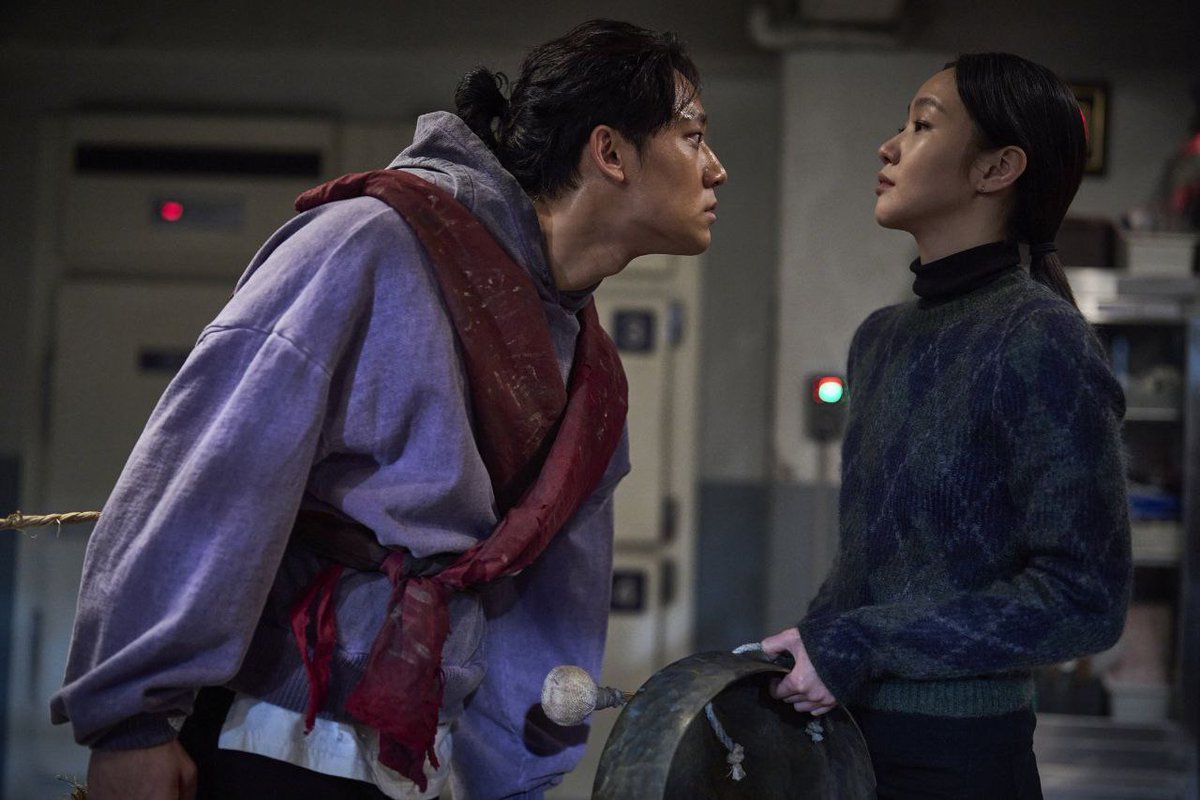
The supernatural world of Korean folk horror movie Exhuma grows larger with the arrival of prequel spinoff webtoon Maengjong this weekend, Variety reports today.
Naver Webtoon debuts Maengjong on May 30.
The series hails from Haemuri (Olgami) and will trace the high school origins of how shaman duo Hwarim and Bonggil, played by Kim Go-eun and Lee Do-hyun in the 2024 film, came together to face occultish threats.
The story is set to begin when “Hwarim, who has been concealing her identity following a childhood encounter with a snake spirit called Jin, crosses paths with Bonggil at their school.”
Variety notes that Exhuma director Jang Jae-hyun participated in the project’s early concept stage.
“We are presenting ‘Maengjong,’ a new series capturing the appeal of the horror-occult genre, ahead of the full summer season,” said Lee Jeong-geun, Naver Webtoon’s Korea webtoon content leader. “With the high school story of Hwarim and Bonggil, who left a strong impression in the film ‘Exhuma,’ enhanced by Haemuri’s characteristic tense direction, we expect it will be a welcome work for genre fans.”
“It is meaningful that the spin-off story of ‘Exhuma,’ loved by many audiences, expands by meeting the new grammar of webtoon,” said Lee Hyeon-jeong, managing director of the film business division at Showbox, which distributed the film. “We hope it will be a fresh experience for both film fans and webtoon readers.”
Exhuma was a breakout hit in 2024, becoming the first Korean occult film to surpass 10 million ticket buyers and the country’s highest-grossing film of the year. I wrote in my review that “the intricately woven Exhuma delivers one of the year’s biggest surprises in horror so far.”
The bond between Hwarim and Bonggil was one of the film’s highlights, making this prequel webtoon a must for fans.

You must be logged in to post a comment.