Comics
Review: Vince Churchill’s The Butcher Bride Has Cult Classic Written All Over It

Last week we brought readers an exclusive interview with “THE DEAD SHALL INHERIT THE EARTH” author Vince Churchill, whose newest book “THE BUTCHER BRIDE” looks to fill the void for anyone looking for some 70s nostalgia. Now today we have my review of the horror shock-writer’s newest offering that promises to test the tolerance level of even the most disenchanted of readers. Read on for the full review.
 Its very rare that you come across a writer who isn’t afraid to buck the trend of his peers and write the type of story that he or she wants to write. Many times writers hands are tied by what the publishers will allow or by what they think their readers will deem “enough” for their own personal late night dose of macabre before they lay down their books and turn the lights out for the night. And in many ways this sort of cookie-cutter approach to the genre has been widely embraced by readers. So if you’re looking for a good piece of safe horror fare then Vince Churchill is definitely not for you. But if you want to read a real piece of horror fiction that isn’t afraid to get its hands dirty, then read on for the full review of 70s sexploitation inspired “The Butcher Bride”.
Churchill’s follow up to his widely successful “THE DEAD SHALL INHERIT THE EARTH” is a pretty big departure from his space/zombie hybrid novel that won him much of his acclaim. The story itself is one part sexploitation meets revenge plot ala “I SPIT ON YOUR GRAVE” and 2 parts supernatural teen slasher. 30 years ago a young maid named Marlie was brutally sexually assaulted at a Halloween party by her lover Michael, and various party-goers at the behest of Michaels’ fiance Janine. Marlie’s life is spared (unlike any shred of her dignity or her sanity) and from there the scorned lover tale takes a more macabre turn as the blood starts spraying and Marlie, dressed in Janine’s wedding gown and wielding a pair of sewing scissors, goes on a murderous rampage that even Jason Voorheese would applaud.
The first thing readers are going to notice is the blatant sexuality that is placed throughout the story. There is no way around it, and if you find issue in it then this isn’t the book for you. I myself even had to take a step back at times, but for all intents and purposes it works well for the story being told. Think your mother erotic-romance novels save for any of the idiotic romantic plot-points, because with any slasher worth its weight, when there is any of the old bump & grind going on you can bank on something horrible around the corner. The horrible things done to Marlie at the hands of her attackers makes her actions completely believable and understandable given the malicious and humiliating way in which they were carried out. This isn’t your ma-an-pa’s hidden gang-bang porno with the label reading ‘nature special’ that is for sure.
It’s obvious that Churchill watched a lot of late 70s grindhouse cinema in his time, and obviously the right ones. The book itself has two very different distinct feels going to it. The first part of the story, as we are introduced to the tragedy at the party, and the second half (which is in fact the bulk of the book as the first act closes after about 50 pages) that is the legacy the mansion leaves behind. As is the case with most stories like it we find ourselves in a time around modern day where the town has mostly moved on from the tragedy, but in this towns case moving on means that instead of mourning the loss of so many of their neighbors they are going to have a yearly festival to commemorate the event.
This is where we meet the group of characters we will be following throughout the rest of the story as they make the perilous decision to spend a weekend at the infamous home of ‘The Butcher Bride’. To keep this as spoiler free a review as possible I’ll simply say that it doesn’t end well. The characters themselves are likable enough, although it is a bit obvious what the eventual outcome will be for most of them. The eventually bloodbath that ensues is actually more entertaining than frightening though as the ghost of Marlie Downing possesses a sarcastic, quick witted personality that is reminiscent of Freddy Krueger, and there seems to be witty little one-liner in there for each gruesome kill. This aspect takes away from the actual emotional weight of the story at times however as it can tend to be funny at points where a little bit more of a dramatic touch would be appreciated. But then all the other characters seem to take a back seat to Marlie, and even when she isn’t on page or in a scene you somehow find your mind wandering to the books protagonist. I would even go as far as to say that the character of ‘The Butcher Bride’ could find herself becoming a cult icon given time and the right exposure, a character that truly leaves the reader begging for a sequel.
The book itself is a quick read at well under 300 pages, and you can probably get through it in a full evening. The over all presentation of the book is actually quite good as it goes against genre norms of using dark colors for the cover, instead going with a bright white and red design that is slick and eye-catching. The long and the short of it: you wouldn’t overlook this one on the shelf of your local book store.
All in all Churchill’s “The Butcher Bride” is a fantastic book with a lot going for it. Purposely going out of its way to be perverse and blunt, the book reads like a piano falling on your head and the scribe pulls no punches. And even though the perverse nature of the story could end up being its biggest flaw for some, for others it is a refreshing throwback that harkens back to the hay day of grindhouse and the truest days of freedom of expression within the genre. Serving as a follow up to “THE DEAD SHALL INHERIT THE EARTH” the story may not be a true contemporary horror ‘classic’ like its predecessor, but it has cult classic written all over it. And for a book like this that might just be the biggest compliment ‘The Butcher Bride’ could ever ask for.
4 Out of 5 Skulls

Comics
‘Spider-Noir’ Comic Changes Explained: How the TV Series Reinvents Marvel’s Darkest Spider-Man

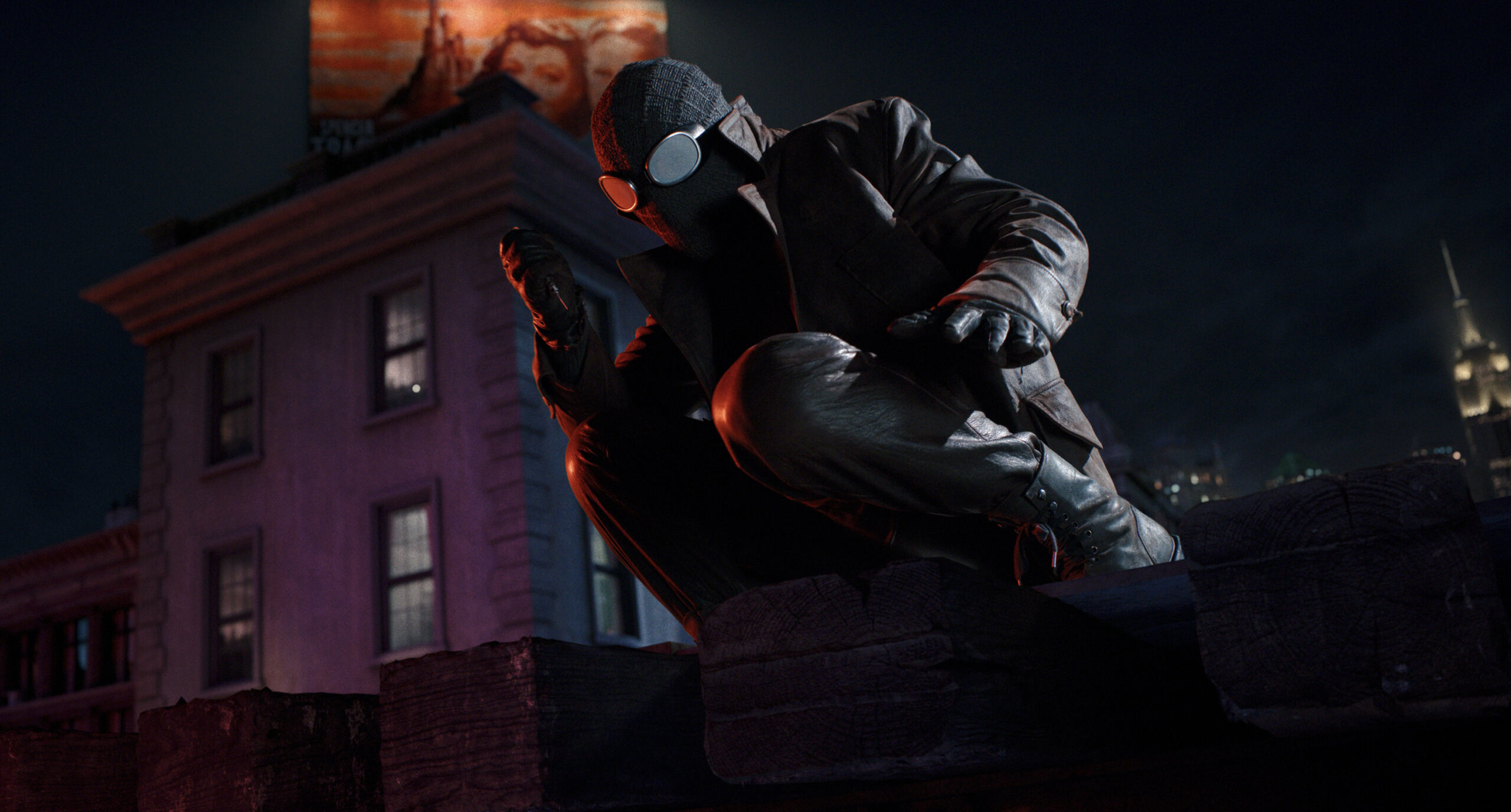
A little while back, I wrote an article chronicling the Hellraiser franchise’s affinity for Film Noir and touched on how that genre has, historically, always been connected to horror.
This connection can be observed in everything from the cannibalistic serial killers of Frank Miller’s Sin City to the disturbing criminal plots fueling neo-noir thrillers like Stuart Gordon’s underrated King of the Ants. That’s why it came as no surprise when I finally sat down to watch all eight episodes of Prime Video’s recently released Spider-Noir series and was confronted with plenty of classic horror tropes.
What did come as a surprise, however, was how showrunners Oren Uziel and Steve Lightfoot approached these horror elements when compared to the 2009 comic book that the show is based on. From the heavily altered rogue’s gallery to an equally terrifying yet completely different origin story for Nicolas Cage’s take on the webslinger, there are plenty of changes here that I feel might be of interest to genre fans.
With that in mind, I’d like to invite readers to take a closer look at all the adjustments that Spider-Noir made to the story in order to bring this incarnation of Spider-Man to life in all of its monochromatic glory (unless you watched the True-Hue color version of the show, in which case you’ll be treated to a surprisingly comic-booky palette that you don’t usually see on television).
The Dark Origins of Marvel’s Spider-Man Noir

Our first order of business should be to examine the origins of the Noir comics themselves. Originally published as part of the Marvel Noir alternate universe that reimagined several characters as hard-boiled crime-fighters, Spider-Man Noir became the most successful book in the entire run. This highly politicized story about Peter Parker coming to terms with the capitalist evils of the Great Depression seemed to have struck a nerve with audiences looking for a darker take on the wall-crawler, which is likely why we’d soon see several sequel stories as well as a video game adaptation of the character in 2010’s underrated Spider-Man: Shattered Dimensions.
Of course, it wasn’t just Spider-Man’s darker disposition that made this version of the character a hit, as 1930s New York City was depicted as being much more hostile than what we generally see in the standard Marvel Universe. From Peter’s powers coming from an Eldritch Spider God that spawns man-eating arachnids to Vulture being an ex-Freak-Show Gimp with a taste for human flesh, you can definitely understand why this Web-Head isn’t pulling his punches.
Unfortunately, this alternate universe was a little too popular for its own good, with each subsequent sequel/adaptation further diluting the political anger and classic horror influences that fueled the original comic-book run in order to appeal to a wider audience. Spider-Man Noir was nearly unrecognizable once we got to the Spider-Verse crossover that turned the character into a household name, though this would at least lead to an interesting adaptation in 2018.
The Classic Horror Influences Hidden Throughout Spider-Noir

Jack Huston as Sandman in ‘Spider-Noir’
When Phil Lord and Chris Miller finally translated Spider-Man Noir to the big screen, with Nicolas Cage bringing the character to life in an unexpected case of pitch-perfect casting, he was still mostly relegated to comic relief as his nazi-punching antics and over-the-top edginess were played for laughs. However, while this version of the character had little to do with the comics that spawned him, Spider-Noir’s newfound popularity eventually resulted in the announcement of a darker live-action spin-off – a spin-off that I was cautiously optimistic about.
While the showrunners ultimately decided to go in a completely different direction than the 2009 comic, the new team of writers appeared to understand Noir as a genre in ways that even the folks at Marvel Noir couldn’t quite grasp. That’s likely why 2026’s Spider-Noir boasts plenty of horror elements, just not in ways we’ve seen them before.
The series is obviously borrowing tropes and aesthetics from period-accurate monster movies, with Universal’s 1930s output being a particularly big influence. From the re-imagining of Sandman and Tombstone as tragic figures to The Spider even being operated on by a mad scientist with hilariously antiquated techniques, this bizarre collection of super-powered freaks could have easily shown up in a classic creature feature.
The scares aren’t all retro, however, as the showrunners also injected plenty of body-horror into the mix during their attempt at unifying the origin stories for all these larger-than-life characters. Hell, the Spider himself is now revealed to have gained his powers after being bitten by a half-mutated Man-Spider during World War I, and the aforementioned mad scientist keeps a disturbing collection of failed experiments in her basement, proving that not all of her patients were lucky enough to simply gain superpowers after being experimented on.
Nicolas Cage Reinvents Spider-Man Noir for Television

Ben Reilly/Spiderman (Nicolas Cage) in SPIDER-NOIR
Photo: Aaron Epstein/Prime
© Amazon Content Services LLC
I also really appreciate how Cage insists on depicting Ben Reilly as an arachnid trapped inside of a human body, with his uncanny physical performance and classic Hollywood impressions keeping your eyes glued to the screen while also providing some of the show’s funniest moments.
I still think it’s a shame that the character is no longer politically motivated, and I miss the detail about Uncle Ben having been cannibalized by Vulture after his social activism ruffled too many feathers, but at least this time our protagonist actually feels like someone who could have been written by Raymond Chandler if he were a fan of Superheroes.
In fact, the writers nailed the snappy back-and-forth that Noir authors like Dashiel Hammett used to refer to as the “riposte”, and it’s fun to see supervillains being depicted as horrific movie monsters instead of specialized henchmen – with The Spider feeling like just as much of a Freak Show attraction as the rest of them. Purists might be put off by the lack of reverence for the source material, but I think that’s a small price to pay when even the show’s most clichéd moments intentionally harken back to the golden age of Hollywood.
That’s why I’d argue that Amazon’s Spider-Noir isn’t really an adaptation, but rather an equally valid take on the same premise that inspired Marvel back in 2009. And in a world filled with recycled storylines that only serve to advertise future releases, I’d rather have two completely different visions of the same character than a straight-up retelling of the same handful of ideas.
At the end of the day, there’s enough space inside this comic fan’s heart for both man-eating Vultures and a Cronenberg-inspired Man-Spider. And if you’re also a fan of nostalgic creature features with comic book flair, I’d highly recommend this street-level superhero story with a spooky twist.

You must be logged in to post a comment.