
Comics
I Sell The Dead out Oct 7

Image comics is coming out with a comic adaptation of the movie, I Sell the Dead. The story is about a famous group of grave robbers and their misadventures, with writing by Glen McQuaid and art by Brahm Revel. I’m really loving the retro cover so I hope the inside is just as good. Hit the jump for a synopsis.
 When 19th Century justice catches up with the infamous grave robbers Grimes and Blake, the condemned Blake reveals to the peculiar clergyman, Father Duffy, who you can never… ever… trust a corpse. From Glenn McQuid’s motion picture starring Dominic Monaghan, Larry Fassenden and Ron Perlman.


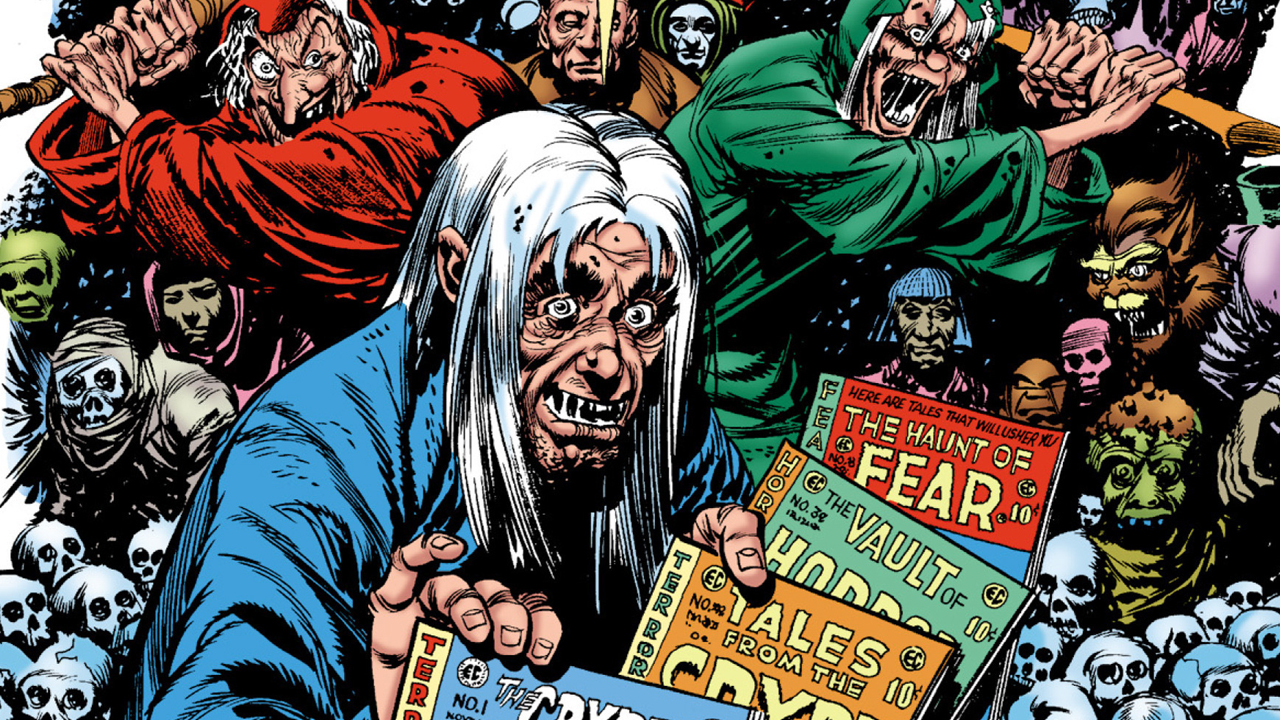
Tales from the Crypt has been influential in keeping EC Comics alive in the public conscience, even after going off the air thirty years ago. That classic horror show pulled from multiple stables within the iconic comic publisher, but it also didn’t adapt everything. Even the ones the producers did pick weren’t always faithfully retold on screen.
So while it might seem like Tales from the Crypt covered plenty of EC Comics’ works, a lot still remains unadapted.
These ten great stories would have made fine additions to the series.
“Bats in My Belfry!” (Tales from the Crypt)

When an actor named Harry began to lose his hearing, a friend put him in contact with a special “doctor”. After receiving the gift of super-hearing—a taxidermist implanted a bat’s auditory system inside of Harry—the protagonist learned about his wife’s affair. On top of that, she and her paramour were planning to kill Harry. Of course, they didn’t realize Harry had transformed into a humanoid vampire bat.
Something Tales from the Crypt didn’t do enough of, on account of whatever reason (budget and time restraints seem most likely), was stories about monsters. But Crypt once had the best contacts in the business, so you can bet that were-bat would have been in good hands.
“The Beast of the Full Moon!” (The Vault of Horror)

Tom and his girlfriend, June, were fearful of the werewolf who’d been on a recent murder spree in their area. Tom already suspected his brother Andrew, who may have been infected after a trip to Corocoa. And when Tom had an encounter with the werewolf, he stabbed the creature’s right paw before it could flee. Later, Tom’s suspicions were all but confirmed when he saw Andrew’s bandaged right hand.
So, Tom laid a trap for the monster—a pit—, and he waited nearby with a gun full of silver bullets. One thing led to another, and Tom ended up in the pit with the werewolf. Luckily, someone above shot and killed the beast. That’s when Tom saw Andrew above ground and June in the pit, the latter dead from her gunshot wound.
While Tales from the Crypt did have lycan episodes, like “Werewolf Concerto” and “The Secret”, there was still room for one more. With the comic having such a small cast, though, it may have been too easy to figure out the culprit. But surely someone on staff could have punched up the original story for television.
“Pipe Down!” (The Haunt of Fear)

Lila hated her older husband, Andrew. After beginning an affair with a handyman named Howard, Lila plotted Andrew’s death. She and Howard got away with Andrew’s murder, but now they couldn’t marry for a year; otherwise, it would look suspicious. In the meantime, Lila purchased a pet monkey that was born on the same day that Andrew died.
When Howard found what looked like evidence of Lila having another lover—he spotted a lit cigar and two half-empty glasses—Howard flew into a rage and murdered his girlfriend. That’s when the cops arrived, saying a phone operator reported the disturbance. However, all she heard on the other end of the phone was an animal’s shriek. Once Howard was arrested, Lila’s monkey went back into the house, picked up a book, and smoked a pipe. Just like Andrew used to do.
This story would have fit in with the wackier episodes of Tales from the Crypt. There are quite a few of those—especially later on as the series moved away from the more macabre material. “Pipe Down!” also spices up the typical adultery-and-murder plots that were so common in EC’s output.
“Swamped” (The Haunt of Fear)

Deep in the Okefenokee Swamp, a cannibalistic hermit fed on those who traveled near his shack built over the water. He fed on visiting hunters and then disposed of their remains beneath his home. Anyone who revolted or came after him only ended up in the quicksand. Finally, though, the hermit suffered the same fate as his victims; he, too, slipped into the muddy graveyard below his crumbling shack. Yet now waiting for him were the hungry souls desperate to get back at their killer.
It’s unclear who the writer was behind “Swamped”, but their work here is intense. The insight and colorful descriptions are unexpected for that mere tale of the cannibal who got his just desserts. That kind of writing, along with Reed Crandall‘s artwork, makes this one of the most engaging stories from EC’s horror run.
“The October Game” (Shock SuspenStories)

Mitch, a deeply resentful and growingly mad father and husband, hosted his young daughter’s Halloween party. Kids and other parents soon all piled into the basement. The night of fun then ended with one last parlor game: Mitch passed around the body parts of a witch (an arm, her heart, and so on). One of the young guests assumed these were really things like chicken innards.
Mitch’s wife, Louise, looked for her daughter among the crowd, wondering if Marion was scared. That’s when Louise realized the girl wasn’t there—or alive. She begged everyone not to turn on the lights in the basement, out of fear of them seeing what Mitch had done to her poor daughter. Unfortunately for Louise, her plea was in vain.
Tales from the Crypt usually refrained from child-endangered stories, and it much rather focused on adult characters. But the show also lacked Halloween entries, apart from Season Six’s “Only Skin Deep“. Perhaps the need for Halloween, as a validation of any eerie goings-on, was unnecessary.
This Ray Bradbury adaptation (originally a short found in Weird Tales) is well deserving of a read. It’s a glowing example of suspense storytelling. The comic also never shows a lick of violence, yet it feels incredibly violent.
“Strictly from Hunger” (The Vault of Horror)

A posse of men stood before a cave, awaiting something horrible inside. One of the men, Doc, explained the uncanny and dangerous creature; he’d seen it before. Doc told everyone about how his patient, Pete, was diagnosed with a malignant, cancerous lump on his arm. There was nothing Doc could do to help him. Pete then sought assistance from an old witch in the mountain. Using magic, she made sure Pete would never die, although his cancer remained intact and unhealed.
Over time, the cancer cells in Pete’s body consumed all his healthy cells. To keep living, Pete turned into a giant blob that ate others’ healthy cells. Back in the present story, the posse fought the emerging creature until it retreated into the cave. The characters all finally blocked the entrance to prevent Pete from ever escaping again.
Obviously, Tales from the Crypt didn’t have the budget to support a story like this one, but imagine if it did. A body horror episode of this degree could have been fantastic, not to mention outright disgusting.
“Marriage Vow” (The Haunt of Fear)

Martin and Eva’s marriage was no longer a happy one. Eva, who’d become controlling and slovenly a few years after their wedding, refused to let Martin out of her sight. “Till death do us part,” she would always say. Eventually, Martin killed Eva; he loosened the wrought iron bars on the balcony where Eva liked to spend time, and she fell to her death. However, Eva didn’t stay dead, as she came back as a zombie intent on honoring the “till death” part of their vows.
EC did more than its fair share of stories like “Marriage Vow”, as did Tales from the Crypt. Spousal murder was pretty common. This comic, though, delivers a strong implication as the zombified wife tells her husband to “come to bed”. That line makes a reader’s imagination run wild.
“Dog Food” (Crime SuspenStories)

A prisoner named Tom swore revenge on the warden, Lester, after a fellow prisoner was tortured and killed under his command. However, to get past Lester’s voracious guard dogs, so that he could enter his house and kill him, Tom started saving meat from his meals. The other prisoners also contributed to his collection.
Tom set off on his journey to Lester’s dog-guarded house, but he ran out of meat before reaching his destination. So, Tom did the next best thing and fed parts of his own body to the dogs.
Once again, Reed Crandall elevated a gruesome, vengeful story with his realistic style. It’s so lurid. At any rate, it was just too graphic for Tales from the Crypt to adapt—and that’s really saying something here.
“Master Race” (Impact)

Carl Reissman was on a subway, remembering his “bloody war years” in Germany. Even after a decade had passed, he remained paranoid. And as he spotted a certain other passenger coming his way, a man in all black, Carl became afraid and started running. His mind flashed back to the events of the Holocaust during this “chase”.
Finally, before Carl fell on the tracks and in the path of an oncoming train, he revealed he wasn’t a prisoner in a concentration camp; he commanded one. The stranger in black said to those onlookers, asking what happened; he didn’t even know the victim. This Carl had simply run from him on the platform.
While Tales from the Crypt did occasionally go beyond what was available in their more horror-centric source material—the war-themed Two-Fisted Tales, for instance—it didn’t ever go near Impact. This short-lived series is considered toned down for EC. Even still, that didn’t make “Master Race” any less shocking. It’s a potent entry that wouldn’t have fit in with the Tales from the Crypt show we now know, but nonetheless, it’s a thought-provoking piece of storytelling.
“Forty Whacks!” (Crime SuspenStories)

A twenty-two-year-old woman named Fanny was frustrated by her parents; they flipped out when she put on makeup. However, when the daughter discovered a mysterious hatchet in her attic, she became possessed by a strange power and did the unthinkable. One after the other, Fanny used that hatchet to kill her parents.
The detective assigned to Fanny’s case was interrupted by his wife and son. The former had an out-there theory: the hatchet belonged to the infamous Lizzie Borden, and it was now capable of causing children to kill their own parents. The detective didn’t buy his wife’s idea, but that was until his entranced son picked up the murder weapon and took a swing at his pop.
Here, EC dipped into historical crime for a ghoulish story that sounds like something out of Friday the 13th: The Series. Maybe it’s a bit in bad taste, but that has never stopped Tales from the Crypt—which is why we love it.
You must be logged in to post a comment.