Editorials
Time to Revisit… ‘Gremlins 2: The New Batch’

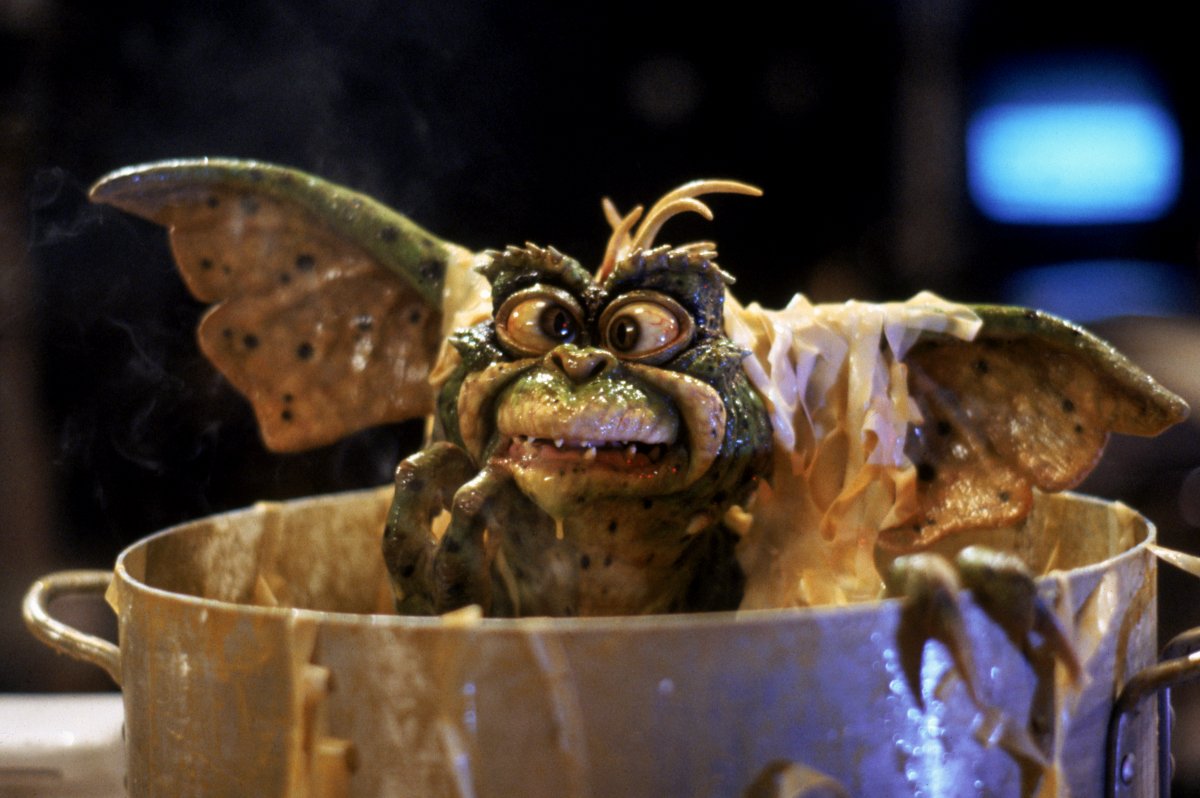
In this edition of “Time to Revisit…” I take a look back at Joe Dante’s underrated 1990 sequel Gremlins 2: The New Batch, which came about four years too late on the heels of its hit predecessor but nevertheless managed to live up to (or arguably top) the first film in almost every way imaginable.
Agreeing to direct only after Warner Bros. wooed him back with the promise of full creative control over the finished product, Dante infused the film with a go-for-broke sense of wit and an anarchic spirit, transforming what could’ve been a rote Hollywood sequel into a genuinely subversive piece of popular entertainment.
While at the time this off-the-wall sensibility resulted in general indifference from moviegoers and the film’s ultimate failure at the box-office, it is nevertheless a genuinely inspired work that more than deserves a reconsideration by modern critics and audiences.
Beloved Favorite: Gremlins (1984)
Number of votes on IMDB: 48,577
The Plot: After his unusual new pet – a furry “mogwai” named Gizmo – is exposed to water, suburban teenager Billy Peltzer inadvertently unleashes a mob of deviant pint-sized monsters.
Why it’s so celebrated: Gremlins was one of the top-grossing films of the 1980s and a critical success, initially making nearly $150 million domestic on a modest $11 million budget. Executive-produced by Steven Spielberg, the film catapulted director Joe Dante into the Hollywood stratosphere and launched the career of writer (and future A-list director) Chris Columbus. Following in its wake came a host of copycat “small monster” movies (though it has been claimed that both Ghoulies and Critters were conceived prior to Gremlins‘ production period) as well as a belated 1990 sequel. In the present day the film is warmly remembered as a must-see classic of popular cinema and an essential entry in the ’80s-era Amblin canon.
Why it’s time to backburner it for awhile: There’s no doubt that Gremlins is a fun and surprisingly dark ’80s genre film (that Phoebe Cates Santa monologue never gets old), but it’s been widely celebrated ever since its release and Christ, we all know it’s good. By contrast, its less commercially-successful sequel gets largely overlooked despite the fact that it’s the equal of, and arguably better than, its predecessor. Which of course brings me to…
Beloved Favorite: Gremlins 2: The New Batch (1990)
Number of votes on IMDB: 25,512
The Plot: Billy Peltzer must deal with another round of gremlin mayhem after a new horde of the nasty creatures are unleashed in a high-tech New York skyscraper.
Why it’s not so celebrated: First off, I should take a moment to mention that there is a cult of ardent Gremlins 2 fans out there, and moreover I’m certainly not the first online journalist to champion the film. But when looked at overall, it still remains a woefully underrated effort. One obvious reason for its box-office failure (it ended up making slightly over $40 million on a $50 million budget) was the fact it took six years for the film to come out, an eternity in Hollywood sequel-dom. On a creative level, the movie proved far too “out-there” for the majority of moviegoers, with an audaciously satirical and self-referential tone that perhaps proved too smart for its own good.
Why it deserves a revisiting: Gremlins 2 is quite literally one of the purest distillations of a popular director’s style ever released by a major studio. Granted full creative license by Warner Bros. in exchange for agreeing to direct the film, Dante made the most of his near-unprecedented artistic freedom by making the film a highly-subversive meta-commentary on modern life, and even went so far as to poke fun at the original for its plot holes (“What if they’re eating on an airplane and cross into a different time zone?”). His insertion of a seemingly endless bounty of gleefully unexpected gags, including one famous scene in which the gremlins “sabotage the film reel” (changed to a less-effective bit in the VHS version but later reinstated on DVD), brings the enterprise to a level of inspired absurdity that never feels labored .
And yet for all of its artistic bravado, Gremlins 2 still works as popular entertainment. Loaded with clever slapstick moments, striking set design, mostly-excellent effects and sequences of exuberantly over-the-top action, the entire film plays like candy for the eyes. Regardless of how it was received at the time, Dante proved with the film that he was capable of melding his cerebral sensibilities – apparent from the very beginning of his career with intelligent genre efforts like Piranha and The Howling – to an aesthetically stimulating, popcorn-friendly visual palette. His delight in being given the opportunity to make exactly the movie he wanted is apparent in every frame, each one alive with a striking depth of visual detail.
It’s a shame, then, that unlike the first movie, a Gremlins 2 Blu-ray has yet to see the light of day. While it may be that Warner Bros. is simply waiting for the film’s 25th anniversary to come up like they did with the original, I’d guess the real reason is that they just don’t see the value in it. And why should they? It’s a creation representative of nearly every studio executive’s worst nightmare – a bigger-budget sequel that refuses to play by the rules.


Editorials
‘Bloodstone: Subspecies II’ Revisited: A Bigger, Bolder Follow-Up to Full Moon’s Vampire Cult Classic

Horror sequels are a peculiar thing. In most cases, follow-ups to scary movies tend to retread the same formula with different victims and more over-the-top scares. This is because audiences tend to be more interested in the antagonists of these pictures than anything else, with even main characters becoming disposable when the time comes to produce a sequel.
That’s why some of the most memorable horror sequels are the ones that actually manage to hold onto interesting survivors from previous films while also pushing the story forward instead of having the same thing happen again to a different group of people. From Scream 2 to Dream Warriors (and arguably even The Exorcist III: Legion), there are quite a few of these innovative sequels to go around.
However, if there’s one franchise that deserves more attention when discussing bigger and better continuations that make the most of episodic filmmaking, it has to be Ted Nicolaou’s Subspecies.
The Full Moon classic spawned an indie horror icon, but bizarre sequel Bloodstone: Subspecies II is even more beloved than its predecessor.
Building a Bigger Vampire Saga

While the film itself takes place almost immediately after the events of the first movie, Bloodstone only entered production a couple of years after the release of the original as both Charles Band and Nicolaou weighed the pros and cons of returning to Romania to continue the series. In an effort to maximize efficiency, the team decided to invest in a trilogy where parts II and III, now fully written by Nicolaou, would be filmed simultaneously over the course of a single grueling shoot.
Much like the first Subspecies, Bloodstone’s low budget meant that the filmmakers once again had to cut corners and re-use as many of their resources as possible. Thankfully, the process was much easier this time around as Nicolaou, with the help of Romanian cinematographer Vlad Paunescu and his wife Oana, became more acquainted with local customs and made new friends. Shooting abroad still came with its own unique set of challenges due to a lack of translators and the occasional safety concerns, but the crew managed to make things work by filming things guerrilla-style and setting up shop in abandoned caves and real medieval ruins.
The director’s newfound contacts, coupled with the relative success of the first movie, meant that he was basically given free rein over an assortment of shooting locations usually considered off-limits for indie horror. That’s why Bloodstone features insanely ambitious lighting and effects work even during scenes shot in the middle of a bustling Bucharest. The filmmakers went so far as to project Radu’s Nosferatu-like shadows over local monuments as if he were a Romanian boogeyman, an idea that was actually encouraged by local cinephiles.
In fact, many of the more elaborate scenes here had originally been planned for the first movie before being discarded due to the lack of available resources. It was only with the support of Romanian fans and filmmakers that Bloodstone was able to give Radu a chance to be even more menacing the second time around.
Michelle’s Transformation Takes Center Stage

However, when it came to the American part of the crew, not everyone was able or willing to return for another round of Romanian adventuring. That’s why Radu’s human-loving half-brother Stefan (Michael Watson) is unceremoniously killed off at the beginning of the film while the role of Michelle had to be recast. Denice Duff took over for Laura Mae Tate, with the character now being joined by her sister, Rebecca, played by Melanie Shatner (yes, that Shatner).
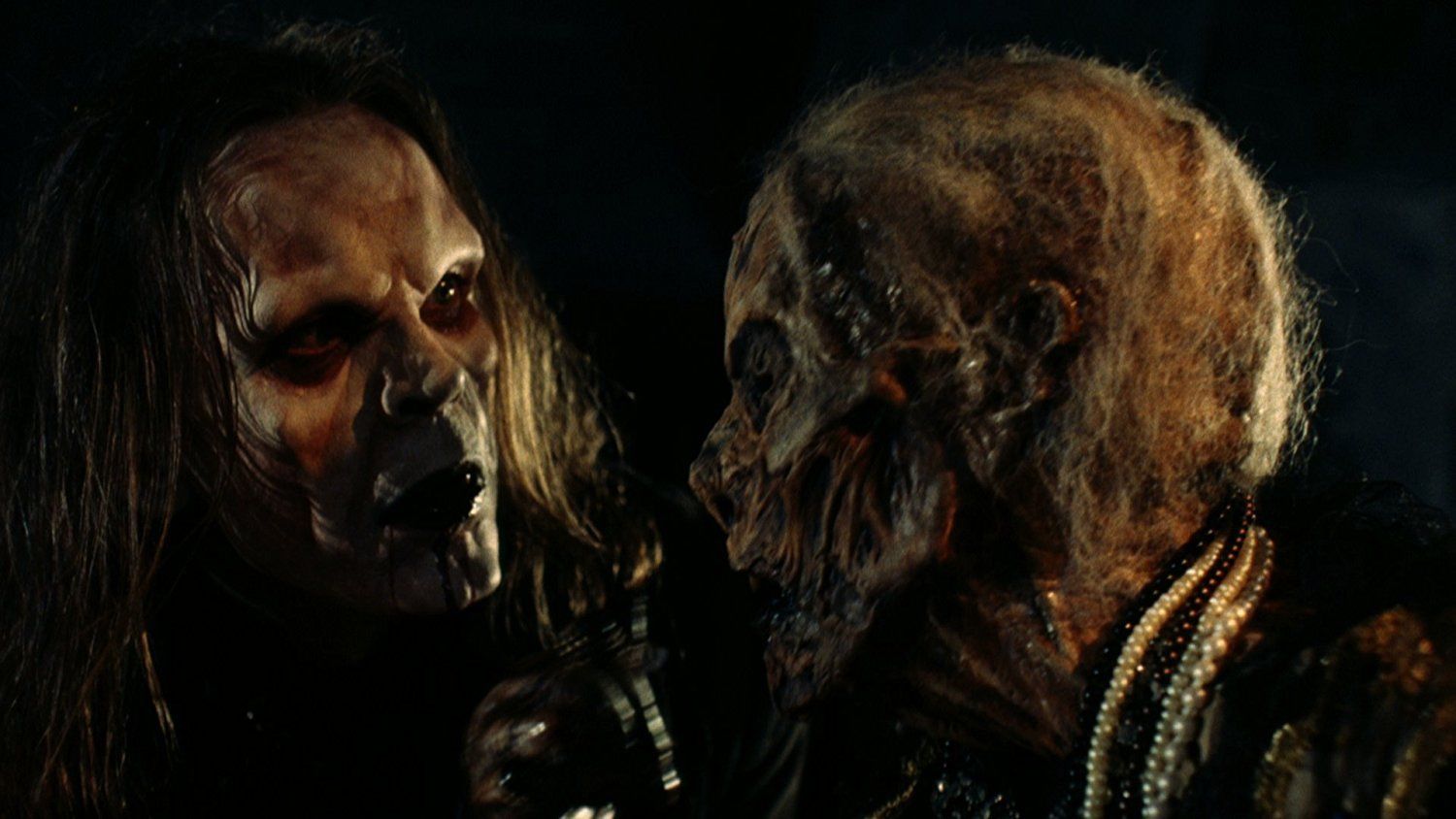
In the finished film, we follow Michelle as she awakens to her new life as a vampire and discovers that Radu has murdered her lover. Struggling with grief and her newfound bloodlust, Michelle contacts her sister overseas, with Rebecca soon travelling to Romania on an ill-advised rescue mission. Meanwhile, Radu (Anders Hove) reaches out to his undead Mummy (Pamela Gordon, underneath heavy layers of impressive makeup effects) and promises to deliver her the coveted Bloodstone artifact while also making Michelle his eternal consort.
Revisiting the movie, I was impressed with how introspective this story is when compared to the original. The sequel assumes that you’re already familiar with the previously established characters, so the story wastes no time in exploring the immediate aftermath of the previous film’s events. From Michelle’s reluctant transformation into a creature of the night to Radu’s obvious mommy issues, Nicolaou is way more interested in pushing these characters into new and uncharted territory rather than recycling existing plot points.
Practical Effects and Gothic Atmosphere Still Impress

Yet, much like the first film, it’s Romania itself that makes the movie worth watching. The ruins of Castle Vladislav are even more majestic now, and visiting the moody streets of Bucharest with its surprisingly punk-rock nightlife made for a nice change of pace when compared to the original film’s quiet village setting. Once again, the abundance of interesting locations makes the movie feel much more expensive than it really is, with the filmmakers surrounding our characters with a living, breathing environment that would be impossible to recreate in a studio.
The increased freedom also allowed Nicolaou to flex his filmmaking muscles and tackle more ambitious blocking/composition in the sequel. The low budget and tropey script mean that the visuals don’t always work, but it’s consistently clear that this neo-expressionist style could only come from a passionate team attempting to pay homage to the shadowy horror classics of yesteryear. If the retro atmosphere isn’t enough for you, there’s enough practical gore here to satisfy even the most demanding of horror hounds!
Radu himself is also far more interesting now that Hove is more comfortable working alongside an international crew, with the actor having gone on record explaining that, while he spent more time drinking vodka than working while shooting the first movie, the sequel was a much more creatively satisfying experience for everyone involved. The character’s relationship with his abusive Mummy is also a highlight of the expanded mythology, especially since the practical effects that bring her to life are just as freaky now as they were back in ’93.
My only real gripe with the horror elements of the picture comes from the glaring absence of the diminutive stop-motion minions from the first film, though I guess the surprisingly entertaining addition of Professor Popescu (Michael Denish) and his archeological antics mostly make up for that.
Bloodstone: Subspecies II is obviously the middle chapter of a trilogy, with the ending feeling a lot less definitive than its predecessor as several plot threads are left to dangle in the wind, but I appreciate how the flick explores new ground while remaining faithful to nearly all the ideas that made the original such a good time. While I don’t think it’s as big of an improvement over the first movie as some fans make it out to be, Bloodstone is definitely worth revisiting if you’re a fan of old-fashioned vampire yarns.
Tune in next time for the thrilling conclusion to this initial trilogy, Bloodlust: Subspecies III!
You must be logged in to post a comment.