Editorials
Special Feature: Exorcism: An Overview Part 1

Based on the non-fiction book by Matt Baglio, the upcoming film The Rite (releasing January 28) tells the story of a disillusioned young American man (Colin O’Donoghue) who travels to the Vatican to study exorcism and finds faith through his encounters with demons. Leading up to the film’s release, Bloody-Disgusting will be putting out a series of six articles dealing with specific aspects of exorcism, a practice that has become a staple of the horror genre ever since the release of William Friedkin’s 1973 blockbuster The Exorcist. In this first installment, B-D’s Chris Eggertsen gives a general overview of the exorcism phenomenon, shedding light on the legends and stories that gave rise to the practice in the first place and highlighting the real-life case that inspired The Exorcist.
The term “exorcism” stems from the Greek word “exorkizen”, meaning “to bind by oath”, and is said to have first come to use sometime in the early second century. In Christian religions the practice stems from the New Testament of the Bible, particularly the synoptic gospels (Matthew, Mark, and Luke), in which Jesus would cast out demons from possessed people as a demonstration of his Messiahship. He also granted his apostles the same power (and, to a lesser degree, his disciples), which is why those of a higher religious authority in the Christian faith (i.e. priests) are seen as qualified to exorcise demons from the bodies of possessed people. The passages that describe exorcism in the New Testament (perhaps the most famous one has the demons inside a man declaring, “My name is legion: for we are many”) are what gave rise to the practice in the Roman Catholic Church, in addition to other sects of Christianity, and it is a tradition that carries on into the 21st century.

Perhaps the most famous early case of exorcism happened in 1633/34 with what became known as the “Loudun Possessions” (the basis of Aldous Huxley’s 1952 novel The Devils of Loudun and Ken Russell’s controversial 1971 film The Devils), in the town of Loudun, France. In 1632 several Ursuline nuns at the local convent began acting strangely, engaging in bizarre behavior such as throwing themselves on the ground, going into convulsions and shouting obscenities. The nuns then began claiming that a handsome priest by the name of Urban Grandier, who’d made many political enemies during his time at a neighboring parish, had been appearing to them in dreams and seducing them. After a series of bizarre public exorcisms in which the nuns would expose themselves and contort their bodies into overtly sexual positions, Grandier was convicted of making a pact with the Devil and burned at the stake.
Another notable case occurred in the United States over 300 years later with 14-year-old Roland Doe (known alternately as Robbie Mannheim or John Hoffman, depending on your source), who was thought to be possessed by demons following a series of strange occurrences in his Maryland home. The supposed demonic manifestations included scratching sounds on the walls, levitating household objects, and furniture moving on its own across the floor. These episodes would always occur in Roland’s presence, and the boy also began exhibiting strange behaviors such as defecating on the walls and lashing out violently at those around him. After medical and psychiatric evaluations turned up nothing, priests were called in and the boy was exorcised 30 times over a period of two months, after which the “supernatural phenomena” were said to have ceased.
While doubts remain regarding the more sensational details of the Roland Doe case, it was nevertheless what inspired author William Peter Blatty to write his 1971 novel The Exorcist, which became a massive bestseller and was later adapted into the blockbuster 1973 film. It is during this period that exorcism became a bona fide pop cultural phenomenon and entered into the lexicon of ordinary Americans of all faiths and backgrounds.
The film’s success can be partially contributed to the controversy that came to surround it, including genuine outrage expressed by many in the religious community – some of who believed that an evil force capable of causing madness had been burned into the celluloid – as well as to its shocking nature, which reportedly caused vomiting, fainting, and other horrified reactions from audience members (with some even going so far as to claim that individuals had been committed to mental institutions or killed themselves after seeing it). Needless to say, the film’s enormous success led to several rip-offs, sequels and parodies and opened the door for a wave of religious horror films that has ebbed and flowed ever since.
Be sure and check out Part 2 of our exorcism overview, where we delve into how an exorcism is actually performed and the ways in which the practice endures even into the 21st century.




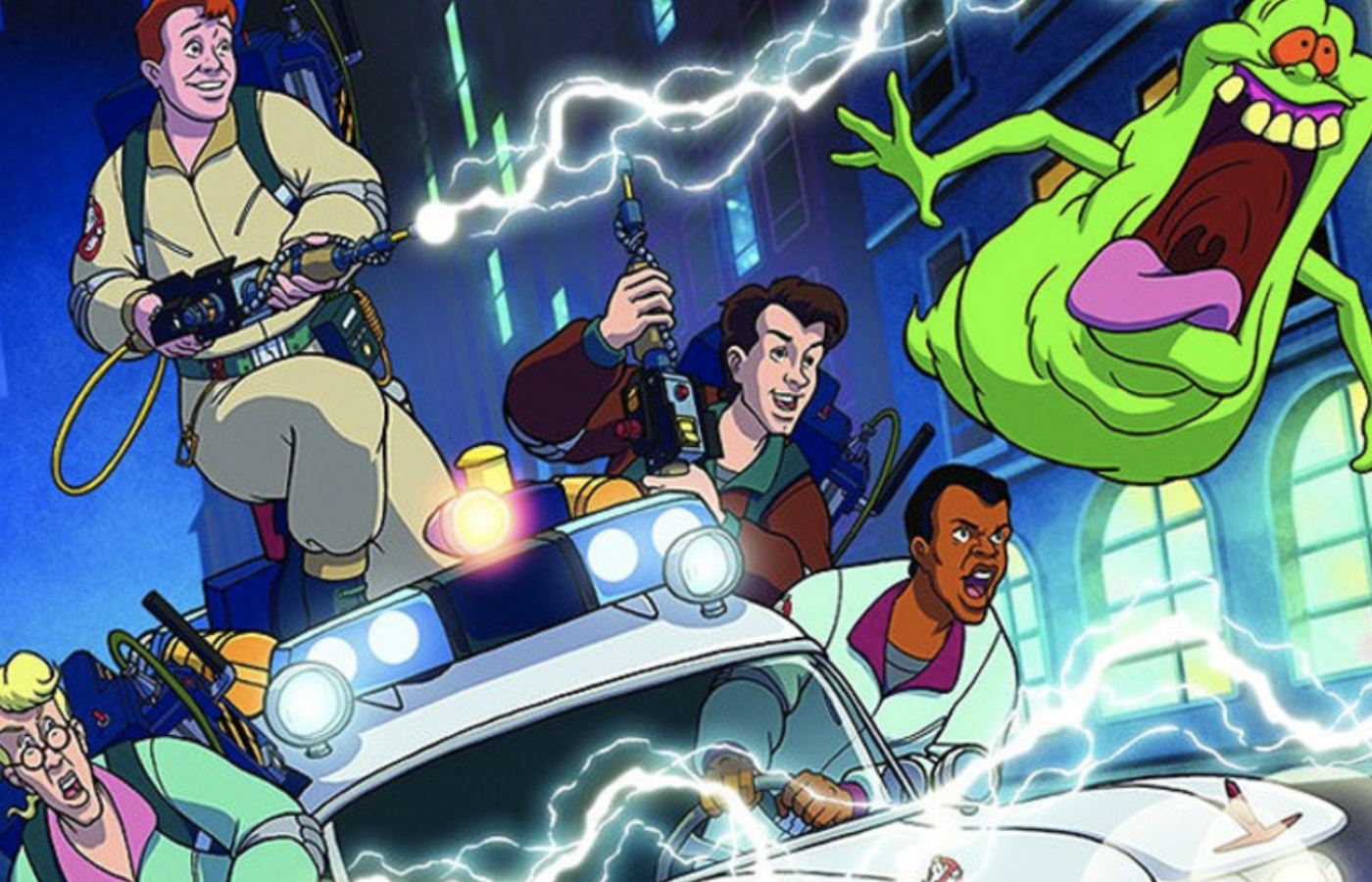
No conversation about cartoons based on live-action movies is ever complete without mentioning The Real Ghostbusters.
This animated continuation is, warts and all, a notable example of turning a hit movie into a hit series. And although the new target demographic skewed a little younger, even kids-at-heart could partake in the further adventures of Peter Venkman, Ray Stantz, Winston Zeddemore and Egon Spengler.
For a good part of its run, the show required fans to wait at least a week for more Ghostbustin’. That’s torture for a kiddo. Luckily, though, the entire series, or at least most of it, is now available for streaming.
So, as you revisit The Real Ghostbusters on Tubi—for now it’s just the first five seasons there—use this guide to help prioritize some must-see episodes.
The Boogieman Cometh

“The Boogieman Cometh” (Season 1)
Season One’s “The Boogieman Cometh” is a classic episode featuring one of the show’s more iconic villains. It’s hard to forget the unique character design used for the Boogieman (whose creepy voice was provided by Ray and Slimer’s actor, Frank Welker). In this story, Egon is reunited with that bump-in-the-night entity who haunted his own childhood, all while trying to keep him away from his latest targets: the brother and sister claiming to have the Boogieman in their closet. Although the Ghostbusters do save the day here, the Boogieman eventually returns (“The Bogeyman Is Back“). That same episode also features the love-’em-or-hate-’em Junior Ghostbusters.
Mr. Sandman, Dream Me a Dream

“Mr. Sandman, Dream Me a Dream” (Season 1)
You could say the namesake of “Mr. Sandman, Dream Me a Dream” had good intentions for putting mankind to sleep for the next few centuries—he wanted to end war and keep everyone dreaming. Sounds nice until you remember that whole free will business. But when it seems like the Ghostbusters have lost to their latest foe, the last one standing, Winston, gains a sudden ally. Janine’s dream of becoming a Ghostbuster is manifested, and she helps put this rogue spirit to bed.
When Halloween Was Forever

“When Halloween Was Forever” (Season 1)
Before the show’s execs capitalized on Slimer’s popularity by making him the focus of later episodes, early stories like “When Halloween Was Forever” better utilized that gooey ghost. Here, the spirit of Halloween itself, Samhain, hopes to make the holiday a permanent thing by stopping time. And who does the embodiment of All Hallows’ Eve use in his nefarious plot? Slimer, of course. Thankfully, the lil’ green bud knows where he really belongs, and Samhain is banished (at least until Season 3’s “Halloween II 1/2“).
Night Game

“Night Game” (Season 2)
Because Season Two was rather long, in comparison to other seasons, it accumulated quite a few solid episodes. One of the most beloved, though, is that ultimate good-versus-evil story, “Night Game“. Winston gets to shine here as he participates in a battle that was 500 years in the making. Except this time, the fighting is done on the baseball field. The other-dimensional settings in The Real Ghostbusters are always great, but the one here is particularly memorable.
Drool, the Dog-Faced Goblin

“Drool, the Dog-Faced Goblin” (Season 2)
Not all ghosts and whatnot were bad in The Real Ghostbusters. As “Drool, the Dog-Faced Goblin” showed, some were actually benevolent. Sadly, it took a lot of convincing, and one very heroic act, for Peter and the others to see past this goblin’s grotesque appearance. The heroes find more than one shapeshifter at a sideshow carnival in the Poconos; a sinister Class-4er called the Metamorph does a swell job of menacing the Ghostbusters before they finally realize Drool’s not their culprit. The good guys indeed win here, but that victory is a bittersweet one.
The Collect Call of Cathulhu

“The Collect Call of Cathulhu” (Season 2)
While “The Collect Call of Cathulhu” does misspell “Cthulhu” in the title (probably to avoid legal issues), it is clearly the Old One in this Lovecraft-inspired episode. The story kicks off with the Necronomicon being stolen by the deity’s modern-day cult, who then raise their ancient god at Coney Island. From there, the Ghostbusters’ typical methods don’t work on the big guy, so they seek advice from an old issue of Weird Tales (or “Wierd Tales”, as it’s spelled on screen). That build-up to the finale comes with a decent amount of dread before the Ghostbusters, as well as a scholar named Alice, face off with one of the show’s most powerful entities.
Knock, Knock

“Knock, Knock” (Season 2)
A number of Real Ghostbusters episodes could be reworked into big-screen features, but perhaps “Knock, Knock” is the most hopeful. It helps that this story feels in step with the first two movies. Here, some ignorant construction workers accidentally uncover and open an ancient door in the subway. What’s behind said door is none other than those unspeakable evils that only the Ghostbusters can quell. A good deal of the imagery here is prime for adaptation.
The Grundel

“The Grundel” (Season 3)
One of the darker episodes, which was written by the prominent J. Michael Straczynski, is “The Grundel“. Here, a boy is being influenced by the titular entity, a type of ghost who ultimately turns his targets into new Grundels. The episode does have something of an after-school special quality to it, but that doesn’t take away from the eerier moments. For more Grundel lore, be sure to check out the episode “Grundelesque” from the sequel series, Extreme Ghostbusters.
Standing Room Only

“Standing Room Only” (Season 4)
It’s no secret that The Real Ghostbusters experienced multiple changes after the second season. Out of all of them, though, retooling the show so that Slimer would get more of the spotlight is maybe the most egregious. Thankfully, Season Four (the first to be called Slimer! and the Real Ghostbusters) didn’t completely obey that new directive; episodes like “Standing Room Only” felt more like the old days. The focus here was on the well-being of the city and its people, rather than on the series’ green mascot (or the Junior Ghostbusters). In the episode, Peter’s new ghost attractor isn’t to blame for the ensuing chaos; the ghost-eating Mee-Krah is what’s really imperiling everyone. And the Ghostbusters must dish out everything they have to avoid a doomsday situation.
The Halloween Door

“The Halloween Door” (Season 5)
While many fans will skip the later seasons in their rewatches, episodes like “The Halloween Door” are still worth checking out. This colorful helping of Halloween pandemonium premiered on primetime, so the animation is better than usual. And save for a random musical moment, it’s an enjoyable event. Here, a group of anti-Halloweeners tries to cancel the holiday, but they only end up making things worse by unleashing a baddie named Boogaloo.
The first five seasons of The Real Ghostbusters are available on Tubi, starting on July 15.
You must be logged in to post a comment.