Editorials
E3 2015 Horror Game Wish List


Hide the children, it’s almost time for the latest installment in our annual celebration of all things video games and the last thing you want getting between you and the deluge of headlines we’re about to witness is a son or daughter who isn’t capable of appreciating this wondrous occasion because they’re too busy crying about how you haven’t taken them for a walk in three days, or whatever it is parents do with their kids.
The Electronic Entertainment Expo is that magical time of year when the makers, sellers and buyers of video games flee their homelands to journey to the City of Angels for four straight days of gaming goodness. Without E3, June would be the second worst month of the whole year, beaten only by the absolute worst month, which we all know is August. August sucks.
I’m sure you don’t remember my wish lists from previous E3’s — and if you do, you’re an X-Man and you should really consider finding a better use for your gift because memorizing old articles of mine is both weirdly specific and an entirely useless ability in the grand scheme of life — but for all you non-mutants, you should know that what I want rarely matches up with what we get.
Let’s see if I can keep that streak going with this year’s wish list.
These games are in no particular order, but if they were, the Friday the 13th game would likely claim the #1 spot. We’ve seen nary a screenshot or second of gameplay footage from this one, leading me to believe it won’t be hitting the October release date they originally promised.
Aside from Until Dawn, which I’m sure will be shown in some capacity, the only other slasher game I see coming this year is Slasher Vol. 1: Summer Camp, which, like F13, is an asymmetrical multiplayer game in which a player-controlled psychopath must hunt down a team of player-controlled teens.

Even more of an enigma than the F13 game is Sony Bend’s oft-rumored project. Rumor has it it’s an open-world survival horror game. It’d be great if that were true, so long as it has nothing to do with zombies. We have plenty of those to choose from now thanks to Dying Light, Resident Evil, Dead Island 2, DayZ and H1Z1, as well as at least two more Walking Dead games. I’m not tired of the undead, I’m just craving a reprieve from the constant smell of rot.
Before State of Decay even had a name — it was first announced under the code-name Class 3 — developer Undead Labs has been open about their plans to use it as the foundation for an even more ambitious open-world zombie game, code-named Class 4.
With the obligatory XBO port of State of Decay finally behind them, the studio is free to focus completely on the next big thing. I can’t imagine they’ll have anything substantial to show off in time for E3, but there’s a chance we may get a CG trailer. I’d also settle for a title.
Dead Island 2 may take the stage this month, but the smarter move would be to save the good stuff for Gamescom in September, or possibly even whatever this year’s incarnation of The Game Awards ends up being called. I can’t say that I’m looking forward to watching those for another year, even with the world premieres the show brings with it. That won’t keep me from enduring them again, because you’re worth it.
The only other high profile zombie games I’d like to hear from belong to Capcom. The focus should stay on the Resident Evil 0 remaster that’s coming later this year. However, if Capcom really wants to impress, they might mention Resident Evil 7. I assume they’ll want to follow up the success of Revelations 2 with another episodic game, which may mean more Revelations for us.
And with that, Resident Evil concludes the itchy, tasty portion of this wish list.

On the supernatural front, we have the possibility of an Alan Wake remaster, a Western release for Fatal Frame V and, if we’re lucky, we’ll hear something from Frogware’s Call of Cthulhu game. That one has been quiet for awhile. Games that are based on the works of H.P. Lovecraft have had a rough time staying out of development limbo, so even a “Yes, it’s still on the way” statement from Frogware would be fantastic.
Is Draugen a supernatural horror game? Whatever it is, it’s been quiet long enough that I’m beginning to worry about its health. Developer Red Thread Games has said they’d like to crowdfund it, potentially for a 2015 release. Mid to late 2016 is looking more likely as far as a release window, and that would give them plenty of time to raise some funds to help realize it. Until then, some new footage would be a swell way to remind us Draugen still exists.
Kodoku is one of those rare sorts of video games that can be immediately identifiable solely because of a distinctive art style. I’m not sure what the official term for it is, or if there even is a term to describe this delightfully strange-looking game. I also don’t think it’s necessary.
What’s more important is that you approach this interactive acid trip like you would a real one and make sure you have a safe place to play it in, and that you surround yourself with people you trust.
Before we go, here are a few miscellaneous things I’d also like to see at E3:
– Release dates for Predator in Mortal Kombat X, The Forest (PS4), DayZ (PS4) and Grave (XBO)
– A look at that upcoming Bloodborne expansion
– What’s next for Creative Assembly (Alien: Isolation) and Tango Gameworks (The Evil Within)
– Literally any news regarding the future of Condemned, Dead Space and Silent Hill
– For Konami to spend their entire conference apologizing to us for everything they’ve done. They can open with a heartfelt speech, followed by some crying, then Kojima needs to come on stage and kick a Konami exec in the balls, followed by even more crying. It will all end with a surprise appearance from Guillermo del Toro where he looks directly into the camera to tell me, personally, that everything is going to be okay.
– To not have to mention Left 4 Dead 3 in next year’s list.




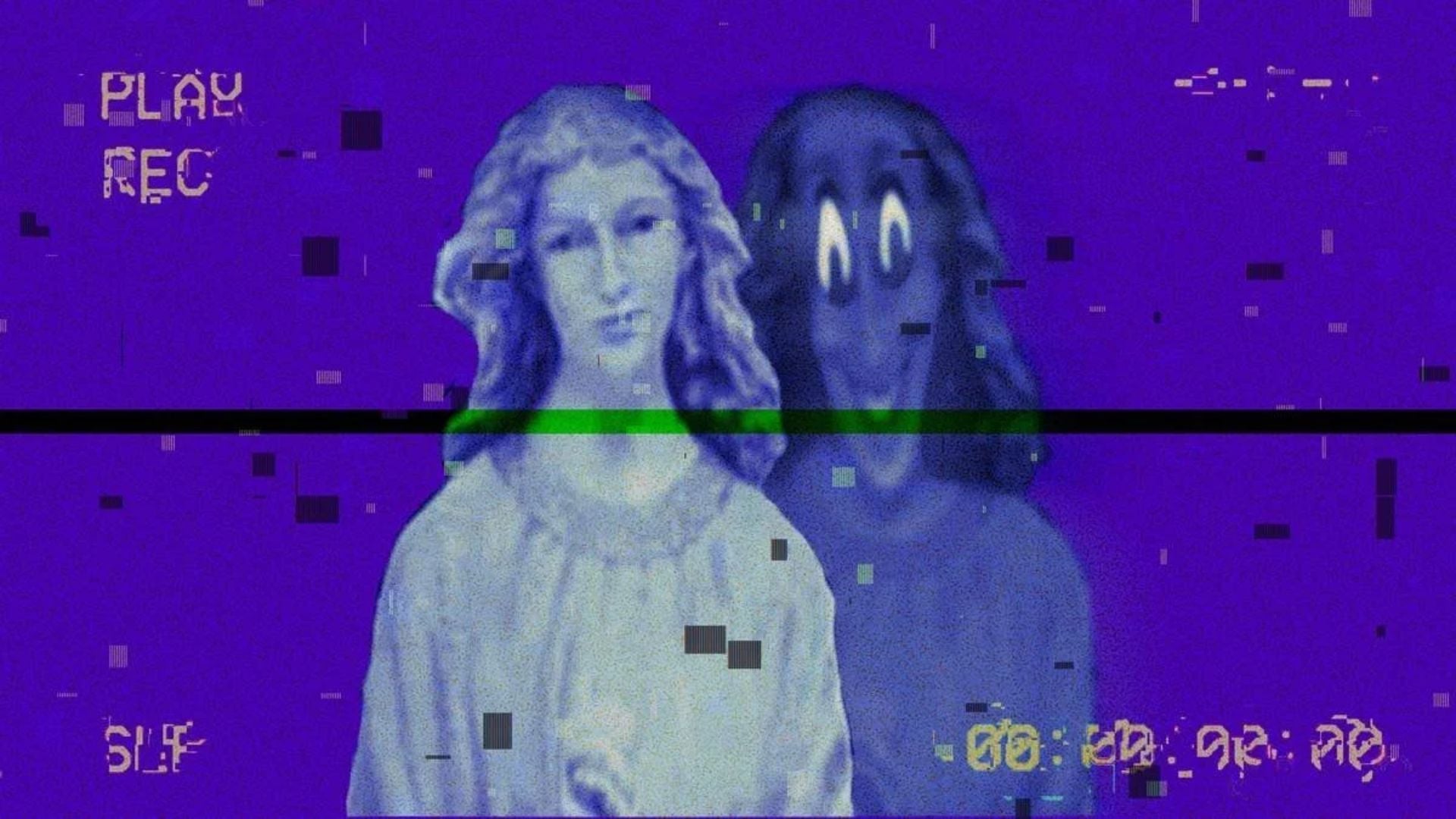
I first heard about The Mandela Catalogue through a couple of nephews who were obsessed with the ARG’s sinister mythology. It was only after watching Wendigoon’s in-depth analysis of the series that I realized just how deep this rabbit hole goes.
In fact, I’d already been exposed to the nightmarish visuals of Alex Kister’s YouTube creation for years at that point without even realizing that it was the origin of several viral “cursed images” and spooky memes that had leaked into the wider internet – with this viral element actually being a part of the Catalogue’s overarching narrative.
Flash-forward to 2026 and the unprecedented success of Kane Parsons’ Backrooms has led to Hollywood betting on horrific internet properties with existing fanbases, which means that Kister’s unique hybrid of both religious and analog horror is finally headed to the big screen with a script written by Kister himself alongside Tyler Clifton.
While this news shouldn’t be too surprising if you’ve been keeping up with the ongoing success of The Mandela Catalogue (both myself and Wendigoon having previously predicted that the series would inevitably make the jump to theaters one day), plenty of horror fans are likely confused as to why so many folks are excited for what appears to be a Hollywood adaptation of a series of creepy .jpeg images under a VHS filter.
With that in mind, today I’d like to invite fellow readers to accompany me as I explore the origins of Alex Kister’s viral hit and attempt to explain exactly why we should all be excited about the Mandela Catalogue adaptation!
From High School Writing Project to Internet Horror Phenomenon

The first seeds of The Mandela Catalogue were sown when Kister was still in high school and developed a writing project subverting religious tropes in a world where biblical history had been altered by demonic forces. A little while later, Kister came across an analog horror contest on Reddit and decided to adapt his ideas into a standalone video where he would edit a religious kids’ cartoon –The Beginner’s Bible: The Nativity, to be specific- into something far creepier. This is how the iconic Overthrone video was born, with this viral short film taking on a life of its own as fans demanded more eerie content from Kister.
Though the video was originally meant to be a one-and-done sort of affair, with Kister actually regretting some of its primitive visuals and considering the editing amateurish and “YouTube-Poop-like” when compared to his current standards, fan reaction and free time during the COVID-19 pandemic encouraged the (then) seventeen-year-old filmmaker to continue producing content set in this same world. The Mandela Catalogue name was inspired by the Mandela Effect conspiracy theory, as the series would slowly begin to explore the subtle horror of alternate histories.
Inspired by existential dread brought on by extended periods of quarantine as well as a personal crisis of faith, Kister continued to expand his alternate timeline where the rise of Christianity had been prevented by what was presumably the Devil disguised as the Archangel Gabriel. This alternate course of fictional events led to the existence of certain paranormal anomalies that had come to be accepted as “normal” by the 1990s, which is why most of the series’ supernatural horror is presented in such a matter-of-fact manner.
Most of this background information and religious lore is delivered by increasingly cryptic broadcasts and in-universe PSAs, as well as the occasional found footage video, that often have to be decoded by clever viewers. Of course, it’s the consistently disturbing imagery that made the series so popular – much of which was originally created by Kister on a smartphone!
The Alternates: Horror’s Most Unsettling Modern Monsters

The show’s early episodes mostly take place within the fictional Mandela County in Wisconsin and depict life in a world where demonic entities are capable of using media to enter our reality. This process usually involves scaring victims into killing themselves and then repurposing their bodies as horrific doppelgangers referred to as “Alternates”. This terrifying phenomenon has become so common that local police already have specialized procedures in place to deal with the issue, though this usually consists of simply ignoring calls for help so as to avoid spreading so-called “Metaphysical Awareness Disorder” any further.
Over time, Kister would expand this mythology and incorporate different kinds of Alternates into the mix, though the story never stopped deconstructing religious concepts. The series’ second volume exponentially increased both video quality and the overall narrative scope as we began to follow the lives of characters who had already grown up in this dystopian hellscape where the government is forced to prohibit religion, television, and even mirrors in the hopes of mitigating the damage done by the ongoing invasion of otherworldly entities.
The really interesting part comes into play when you realize exactly how the Alternates make use of scary media in order to spread their demonic influence, with the analog horror of it all being a diegetic part of the story and something of a memetic trap orchestrated by the false Gabriel.
I particularly appreciate how some characters begin to suspect that there’s something wrong with their version of reality and that things weren’t meant to play out this way, especially when Mark utters the haunting line “who have I been praying to all this time?” That’s why I think The Mandela Catalogue is an effective piece of religious horror even if you don’t subscribe to the Christian worldview, as the mere idea of a world where evil has already won is a universally terrifying concept in and of itself. Not only that, but the series’ uncanny analog imagery alone is already worth the price of admission, as you’ve likely already noticed by looking at the pictures accompanying this article.
Why The Feature Adaptation Could Be Horror’s Next Big Success

It’s actually been a whole year since Kister first announced that he had been working on a feature-length screenplay for a Mandela Catalogue movie since 2022, with his proposed story following an ensemble of high-school graduates who uncover a supernatural conspiracy after the mysterious disappearance of a fellow student. This premise sounds similar to narrative elements present in the series’ second volume, but I’m pretty sure that Kister is going to go the Kane Parsons route and make the movie more of a spin-off than a re-imagining of its source material.
While notable Hollywood producers like Aaron B. Koontz, Scott Stuber, and Steven Spielberg himself are backing the upcoming project, I feel like there’s no one better to adapt this deeply personal exploration of faith and the dark side of communication than the person who first came up with it. That’s why I can’t wait to see Kister’s work on the big screen, as I have a feeling that this young filmmaker is the next one on the list about to make cinematic history – especially since this is clearly a passion project that has been in the works for years at this point!
That being said, there’s always a chance that the film could end up unleashing a fresh wave of Alternate incursions, but I guess that’s just a risk we’ll have to take.
You must be logged in to post a comment.