Editorials
E3 2015 Horror Game Wish List


Hide the children, it’s almost time for the latest installment in our annual celebration of all things video games and the last thing you want getting between you and the deluge of headlines we’re about to witness is a son or daughter who isn’t capable of appreciating this wondrous occasion because they’re too busy crying about how you haven’t taken them for a walk in three days, or whatever it is parents do with their kids.
The Electronic Entertainment Expo is that magical time of year when the makers, sellers and buyers of video games flee their homelands to journey to the City of Angels for four straight days of gaming goodness. Without E3, June would be the second worst month of the whole year, beaten only by the absolute worst month, which we all know is August. August sucks.
I’m sure you don’t remember my wish lists from previous E3’s — and if you do, you’re an X-Man and you should really consider finding a better use for your gift because memorizing old articles of mine is both weirdly specific and an entirely useless ability in the grand scheme of life — but for all you non-mutants, you should know that what I want rarely matches up with what we get.
Let’s see if I can keep that streak going with this year’s wish list.
These games are in no particular order, but if they were, the Friday the 13th game would likely claim the #1 spot. We’ve seen nary a screenshot or second of gameplay footage from this one, leading me to believe it won’t be hitting the October release date they originally promised.
Aside from Until Dawn, which I’m sure will be shown in some capacity, the only other slasher game I see coming this year is Slasher Vol. 1: Summer Camp, which, like F13, is an asymmetrical multiplayer game in which a player-controlled psychopath must hunt down a team of player-controlled teens.

Even more of an enigma than the F13 game is Sony Bend’s oft-rumored project. Rumor has it it’s an open-world survival horror game. It’d be great if that were true, so long as it has nothing to do with zombies. We have plenty of those to choose from now thanks to Dying Light, Resident Evil, Dead Island 2, DayZ and H1Z1, as well as at least two more Walking Dead games. I’m not tired of the undead, I’m just craving a reprieve from the constant smell of rot.
Before State of Decay even had a name — it was first announced under the code-name Class 3 — developer Undead Labs has been open about their plans to use it as the foundation for an even more ambitious open-world zombie game, code-named Class 4.
With the obligatory XBO port of State of Decay finally behind them, the studio is free to focus completely on the next big thing. I can’t imagine they’ll have anything substantial to show off in time for E3, but there’s a chance we may get a CG trailer. I’d also settle for a title.
Dead Island 2 may take the stage this month, but the smarter move would be to save the good stuff for Gamescom in September, or possibly even whatever this year’s incarnation of The Game Awards ends up being called. I can’t say that I’m looking forward to watching those for another year, even with the world premieres the show brings with it. That won’t keep me from enduring them again, because you’re worth it.
The only other high profile zombie games I’d like to hear from belong to Capcom. The focus should stay on the Resident Evil 0 remaster that’s coming later this year. However, if Capcom really wants to impress, they might mention Resident Evil 7. I assume they’ll want to follow up the success of Revelations 2 with another episodic game, which may mean more Revelations for us.
And with that, Resident Evil concludes the itchy, tasty portion of this wish list.

On the supernatural front, we have the possibility of an Alan Wake remaster, a Western release for Fatal Frame V and, if we’re lucky, we’ll hear something from Frogware’s Call of Cthulhu game. That one has been quiet for awhile. Games that are based on the works of H.P. Lovecraft have had a rough time staying out of development limbo, so even a “Yes, it’s still on the way” statement from Frogware would be fantastic.
Is Draugen a supernatural horror game? Whatever it is, it’s been quiet long enough that I’m beginning to worry about its health. Developer Red Thread Games has said they’d like to crowdfund it, potentially for a 2015 release. Mid to late 2016 is looking more likely as far as a release window, and that would give them plenty of time to raise some funds to help realize it. Until then, some new footage would be a swell way to remind us Draugen still exists.
Kodoku is one of those rare sorts of video games that can be immediately identifiable solely because of a distinctive art style. I’m not sure what the official term for it is, or if there even is a term to describe this delightfully strange-looking game. I also don’t think it’s necessary.
What’s more important is that you approach this interactive acid trip like you would a real one and make sure you have a safe place to play it in, and that you surround yourself with people you trust.
Before we go, here are a few miscellaneous things I’d also like to see at E3:
– Release dates for Predator in Mortal Kombat X, The Forest (PS4), DayZ (PS4) and Grave (XBO)
– A look at that upcoming Bloodborne expansion
– What’s next for Creative Assembly (Alien: Isolation) and Tango Gameworks (The Evil Within)
– Literally any news regarding the future of Condemned, Dead Space and Silent Hill
– For Konami to spend their entire conference apologizing to us for everything they’ve done. They can open with a heartfelt speech, followed by some crying, then Kojima needs to come on stage and kick a Konami exec in the balls, followed by even more crying. It will all end with a surprise appearance from Guillermo del Toro where he looks directly into the camera to tell me, personally, that everything is going to be okay.
– To not have to mention Left 4 Dead 3 in next year’s list.




Editorials
‘Bloodstone: Subspecies II’ Revisited: A Bigger, Bolder Follow-Up to Full Moon’s Vampire Cult Classic

Horror sequels are a peculiar thing. In most cases, follow-ups to scary movies tend to retread the same formula with different victims and more over-the-top scares. This is because audiences tend to be more interested in the antagonists of these pictures than anything else, with even main characters becoming disposable when the time comes to produce a sequel.
That’s why some of the most memorable horror sequels are the ones that actually manage to hold onto interesting survivors from previous films while also pushing the story forward instead of having the same thing happen again to a different group of people. From Scream 2 to Dream Warriors (and arguably even The Exorcist III: Legion), there are quite a few of these innovative sequels to go around.
However, if there’s one franchise that deserves more attention when discussing bigger and better continuations that make the most of episodic filmmaking, it has to be Ted Nicolaou’s Subspecies.
The Full Moon classic spawned an indie horror icon, but bizarre sequel Bloodstone: Subspecies II is even more beloved than its predecessor.
Building a Bigger Vampire Saga

While the film itself takes place almost immediately after the events of the first movie, Bloodstone only entered production a couple of years after the release of the original as both Charles Band and Nicolaou weighed the pros and cons of returning to Romania to continue the series. In an effort to maximize efficiency, the team decided to invest in a trilogy where parts II and III, now fully written by Nicolaou, would be filmed simultaneously over the course of a single grueling shoot.
Much like the first Subspecies, Bloodstone’s low budget meant that the filmmakers once again had to cut corners and re-use as many of their resources as possible. Thankfully, the process was much easier this time around as Nicolaou, with the help of Romanian cinematographer Vlad Paunescu and his wife Oana, became more acquainted with local customs and made new friends. Shooting abroad still came with its own unique set of challenges due to a lack of translators and the occasional safety concerns, but the crew managed to make things work by filming things guerrilla-style and setting up shop in abandoned caves and real medieval ruins.
The director’s newfound contacts, coupled with the relative success of the first movie, meant that he was basically given free rein over an assortment of shooting locations usually considered off-limits for indie horror. That’s why Bloodstone features insanely ambitious lighting and effects work even during scenes shot in the middle of a bustling Bucharest. The filmmakers went so far as to project Radu’s Nosferatu-like shadows over local monuments as if he were a Romanian boogeyman, an idea that was actually encouraged by local cinephiles.
In fact, many of the more elaborate scenes here had originally been planned for the first movie before being discarded due to the lack of available resources. It was only with the support of Romanian fans and filmmakers that Bloodstone was able to give Radu a chance to be even more menacing the second time around.
Michelle’s Transformation Takes Center Stage

However, when it came to the American part of the crew, not everyone was able or willing to return for another round of Romanian adventuring. That’s why Radu’s human-loving half-brother Stefan (Michael Watson) is unceremoniously killed off at the beginning of the film while the role of Michelle had to be recast. Denice Duff took over for Laura Mae Tate, with the character now being joined by her sister, Rebecca, played by Melanie Shatner (yes, that Shatner).
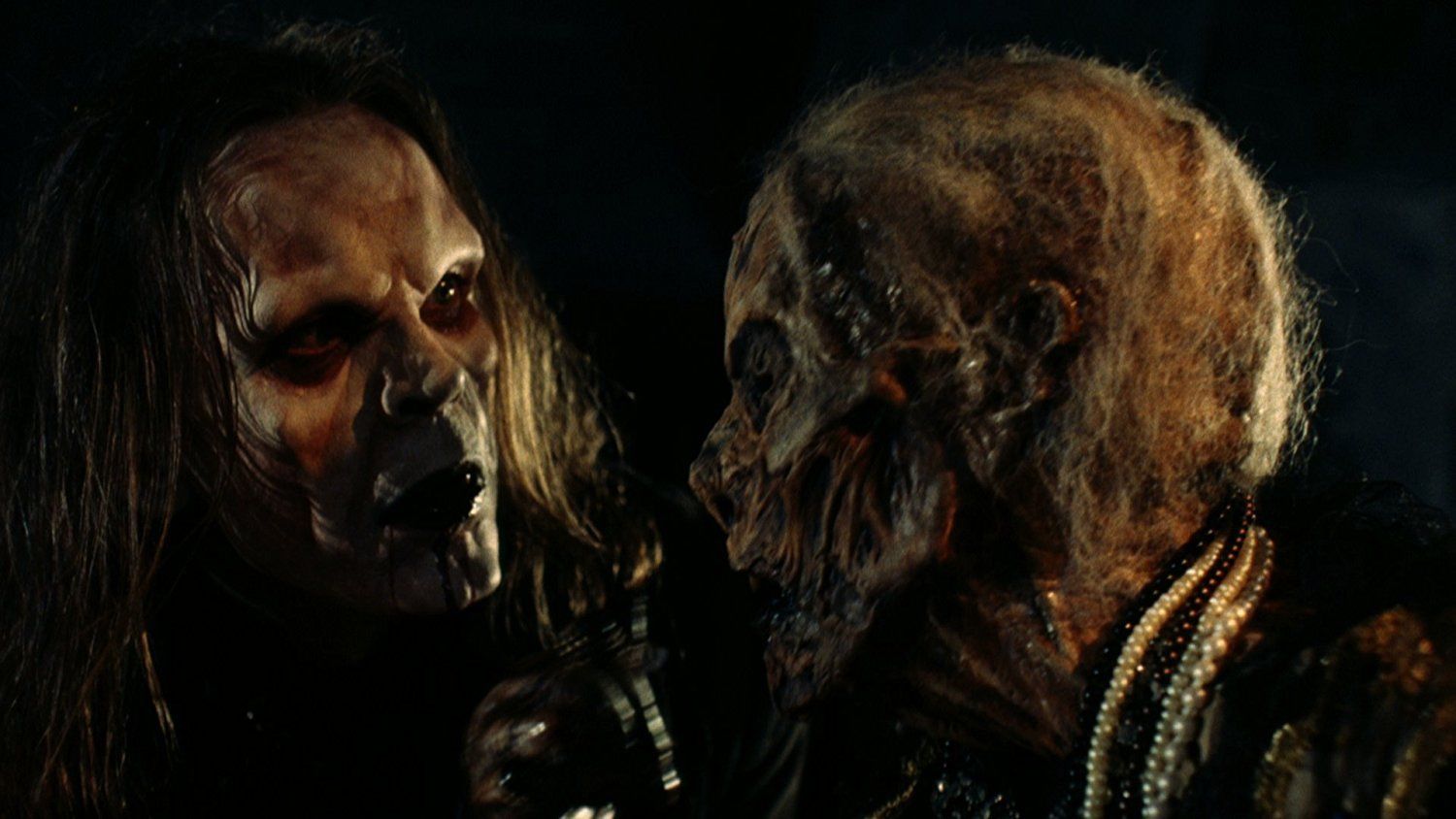
In the finished film, we follow Michelle as she awakens to her new life as a vampire and discovers that Radu has murdered her lover. Struggling with grief and her newfound bloodlust, Michelle contacts her sister overseas, with Rebecca soon travelling to Romania on an ill-advised rescue mission. Meanwhile, Radu (Anders Hove) reaches out to his undead Mummy (Pamela Gordon, underneath heavy layers of impressive makeup effects) and promises to deliver her the coveted Bloodstone artifact while also making Michelle his eternal consort.
Revisiting the movie, I was impressed with how introspective this story is when compared to the original. The sequel assumes that you’re already familiar with the previously established characters, so the story wastes no time in exploring the immediate aftermath of the previous film’s events. From Michelle’s reluctant transformation into a creature of the night to Radu’s obvious mommy issues, Nicolaou is way more interested in pushing these characters into new and uncharted territory rather than recycling existing plot points.
Practical Effects and Gothic Atmosphere Still Impress

Yet, much like the first film, it’s Romania itself that makes the movie worth watching. The ruins of Castle Vladislav are even more majestic now, and visiting the moody streets of Bucharest with its surprisingly punk-rock nightlife made for a nice change of pace when compared to the original film’s quiet village setting. Once again, the abundance of interesting locations makes the movie feel much more expensive than it really is, with the filmmakers surrounding our characters with a living, breathing environment that would be impossible to recreate in a studio.
The increased freedom also allowed Nicolaou to flex his filmmaking muscles and tackle more ambitious blocking/composition in the sequel. The low budget and tropey script mean that the visuals don’t always work, but it’s consistently clear that this neo-expressionist style could only come from a passionate team attempting to pay homage to the shadowy horror classics of yesteryear. If the retro atmosphere isn’t enough for you, there’s enough practical gore here to satisfy even the most demanding of horror hounds!
Radu himself is also far more interesting now that Hove is more comfortable working alongside an international crew, with the actor having gone on record explaining that, while he spent more time drinking vodka than working while shooting the first movie, the sequel was a much more creatively satisfying experience for everyone involved. The character’s relationship with his abusive Mummy is also a highlight of the expanded mythology, especially since the practical effects that bring her to life are just as freaky now as they were back in ’93.
My only real gripe with the horror elements of the picture comes from the glaring absence of the diminutive stop-motion minions from the first film, though I guess the surprisingly entertaining addition of Professor Popescu (Michael Denish) and his archeological antics mostly make up for that.
Bloodstone: Subspecies II is obviously the middle chapter of a trilogy, with the ending feeling a lot less definitive than its predecessor as several plot threads are left to dangle in the wind, but I appreciate how the flick explores new ground while remaining faithful to nearly all the ideas that made the original such a good time. While I don’t think it’s as big of an improvement over the first movie as some fans make it out to be, Bloodstone is definitely worth revisiting if you’re a fan of old-fashioned vampire yarns.
Tune in next time for the thrilling conclusion to this initial trilogy, Bloodlust: Subspecies III!
You must be logged in to post a comment.