Comics
Its ‘Evil Dead’ Vampire Style In J.C Vaughn’s New Series ‘Vampire PA’

Is it just me or does this look like ‘The Evil Dead’ meets vampires? Details on the project thus far are pretty vague, and besides the promo shots we have gotten passed along it looks like they will stay that way until closer to the stories’ June release date. Beyond the break you’ll find a short synopsis for J.C Vaughn’s (“ZOMBIE-PROOF”) newest horror mini titled “VAMPIRE PA”, a bloodsucker comedy set in Pennsylvania.

 WRITTEN BY: J.C. Vaughn
ILLUSTRATED BY: Brendon Fraim, Brian Fraim
COVERS BY: Mark Wheatley, Jacob Jordan
“From the writer of Zombie-Proof comes this trip to Western Pennsylvania’s oddly vampire-rich environment!
Vampires in suburbia? Dean Marklin didn’t think so. In fact, he didn’t believe in vampires at all. Then he met one. Then he met lots more, and they all wanted to kill him! Now he’s a vampire hunter, and he’s pursued by a beautiful vampire while he tries to hold onto what’s left of normal life. How do you think that’s working out for him?”
“VAMPIRE PA” Hits Stores This June! (MSRP-$3.99)


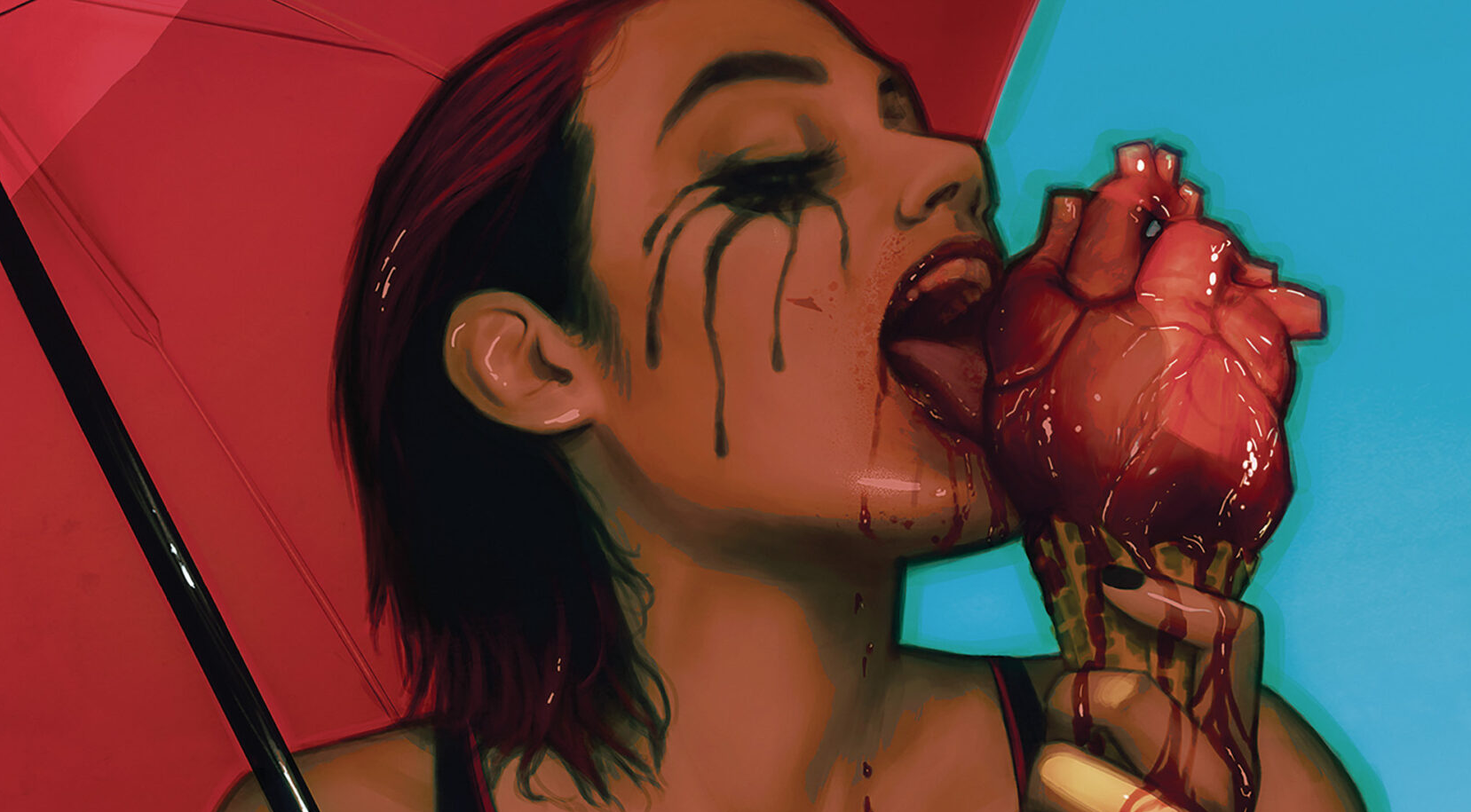
An ongoing horror anthology series from BOOM! Studios, Hello Darkness is back this summer with Issue #23, and BOOM! has provided Bloody Disgusting with an exclusive sneak peek.
The temperature rises and so does the body count, as the horror anthology series returns for another round of summer slashing in Hello Darkness #23, releasing July 22, 2026.
In “Sunday Pt. II,” Ryan North and Giada Belviso send a Bride of Christ over the deep end into madness.
Then, Rich Douek and Stevan Subic lead you down a bloody path to the old west, where a brash young gunfighter seeks a showdown with “The Man Who Outdrew Death.”
Sink into the cool, briny depths of Kelly Williams’s “Old Wounds” when a grizzled light housekeeper hears the call of the sea one final time.
And finally, serve up a preview platter of erotic thriller “Gastronomique,” as a royal spy, Lady Charlotte, embarks on a cat-and-mouse hunt for the deadly cannibal Tarrare, from Marguerite Bennett and Helena Masellis.
Beat the heat with an all-new pool of fresh nightmares and dive right into horror’s deep end!
Peek inside the bloody pages of Hello Darkness #23 below!
Horror fans rejoice in cadaverous delight, because Hello Darkness is a brand new ongoing anthology series featuring what BOOM! Studios is known for–the best in modern Horror, Fantasy, and Mystery, not to mention the darkest stories yet from a murderer’s row of world class creators. Everything from primal fears to modern political horrors will be explored, in the classic style of Creepy and Eerie and the contemporary chills of Black Mirror.


You must be logged in to post a comment.